

Business Operation · 2025
In this section21 topics
- Corporate Information4 items
- Dividend Policy2 items
- Major Shareholders1 item
- Business Strategies Overview5 items
- Material Changes & Developments1 item
- Use of Proceeds from Securities Offerings2 items
- Commitments Made in the Registration Statement1 item
- Group Operating-Structure Policy1 item
- Shareholders with Potential Conflict of Interest1 item
- Relationships Among Major Shareholders1 item
- Shareholders' Agreement1 item
- Shareholding Diagram (Group Structure)1 item
- Income Structure3 items
- Product / Service Characteristics3 items
- Research & Development6 items
- Assets Used in the Business4 items
- Marketing Policy & Competition3 items
- Procurement of Products & Services8 items
- Projects Under Construction1 item
- Debentures & Bills of Exchange1 item
- Convertible Securities1 item
Corporate Information
Company Name
Royal Plus Public Company Limited
Telephone
0-2416-9209
Website
www.royalplus.co.th
ir@royalplus.co.th
Dividend Policy
Dividend Policy
The Company has a policy to dividends payment to shareholders in an amount no less than 40% of the Company’s net profit after tax and contributions as stipulated in the law and Company’s regulations. The Dividend payment will take into account the Company’s operation, financial status and economic outlook to ensure the best interest of shareholders. However, this payment may change based on changes in business operation, finance, liquidity, investment necessity and expansion, business expansion and Company’s cash flow as well as other conditions and limitations in certain debt agreements. The Directors and Company’s shareholders will consider the annual dividend payment after it has been approved by the Board of Directors, except in case of interim payment which the Board of Directors has the authority to approve and report to the next shareholders meeting for their information.
In 2025, the Company did not appropriate any allocation to the legal reserve and did not declare dividend payments, as the Company reported a net loss for the year.
Historical Dividend Payments
| This Year | Last Year | 2 Years Ago | 3 Years Ago | Metric | Description |
|---|---|---|---|---|---|
| 0 | 0.06 | 0.28 | 0.34 | Net profit per share (Baht : Share) | Net profit per share (baht : share) |
| 0 | 0.06 | 0.12 | 0.13 | Dividend per share (Baht : Share) | Dividend per share (baht : share) |
| 0 | 0 | 0 | 0 | Dividend stock ratio (Number of original shares: dividend shares) | Ratio of stock dividend payment (existing share : stock dividend) |
| 0 | 0 | 0 | 0 | Dividend share value per share (Baht : Share) | Value of stock dividend per share (baht : share) |
| 0 | 40.2 | 80.4 | 87.1 | Total dividend payment value (Baht : Share) | Total dividend payment (baht : share) |
| 0 | 93.57 | 42.75 | 41.95 | Dividend payout ratio to net profit (%) | Dividend payout ratio compared to net profit (%) |
Business Strategies Overview
Chairman's Message
Over the past year, the global economy has continued to encounter persistent challenges and rapid changes driven by structural factors and international policy developments, which have had significant impacts on global trade, investment, and business costs. These challenges include the escalation of trade barriers imposed by the United States under the America First policy, ongoing geopolitical tensions across multiple regions, volatility in foreign exchange rates and the appreciation of the Thai baht, as well as the increasingly severe impacts of climate change. Collectively, these factors have disrupted supply chains and increased operating costs, thereby intensifying pressure and uncertainty on the business sector, particularly export-oriented industries. Nevertheless, the Board of Directors remains confident that the Company’s commitment to sustainable business operations under the Environmental, Social, and Governance (ESG) framework, together with strong corporate governance, comprehensive risk management, and effective cost management, will serve as a solid foundation for enhancing organizational resilience and driving stable, sustainable long-term growth.
In 2025, the Company received several prestigious awards and recognitions, reflecting its capabilities, commitment, and achievements in conducting business with responsibility and integrity. These included the upgrade of its certification to CAC Change Agent under the Thai Private Sector Collective Action Against Corruption (CAC), demonstrating transparency throughout the supply chain; the First Prize of the SME Gear Up: Driving Business Growth through ESG project, highlighting the tangible integration of Environmental, Social, and Governance (ESG) principles into the Company’s management practices; and the Superior Taste Award 2025, an internationally recognized award for taste excellence, reaffirming the quality of the Company’s products continuously enhanced through innovation. In addition, the Company achieved an “Excellent and Exemplary” result with a full score of 100 points in the Annual General Meeting (AGM) Checklist assessment for the second consecutive year, received a 5-Star Corporate Governance Rating or “Excellent” (CG Scoring) for the third consecutive year, was ranked in the Top Quartile among listed companies in the Agro & Food Industry Group as well as among companies with a market capitalization between THB 3,000–9,999 million, and attained a SET ESG Rating of “A” for the year 2025. These achievements reflect the Company’s continued commitment to enhancing its standards of business operations in parallel with driving stable and sustainable growth.
Finally, the Board of Directors remains fully committed to performing its duties to the best of its ability in overseeing the Company’s strategy, business direction, and operating performance in alignment with the established vision and objectives. The Board is confident that it will continue to receive the trust and support of shareholders, all stakeholders, and employees, as it has in the past. On this occasion, the Board of Directors would like to express its sincere appreciation and gratitude to all parties concerned.
Dr. Nilsuwan Leelarasame
Chairman of the Board of Directors
Message from Managing Director
In 2025, the business environment continued to face increasingly complex and rapidly evolving challenges, including geopolitical tensions, trade protectionist policies, volatility in the Thai baht, and mounting pressures from climate change, all of which have compelled businesses to accelerate their adaptation efforts. Nevertheless, despite the heightened uncertainty throughout the year, the Company was able to maintain stable operational performance and generated total revenue of 1,325.6 million baht in 2025.
Against this backdrop, the Company considers 2025 to be a “Foundation for Sustainable Growth,” consistent with its strategic emphasis on strengthening its business foundations. During the year, the Company implemented several key strategic initiatives across multiple dimensions, as follows
Enhancement of Production Capacity: Upgraded production capacity to support up to 450 million bottles per year, enhancing flexibility in responding to global market demand.
Proactive Market Penetration and Strategic Partnerships: Successfully expanded market presence through the development of co-branding products in the United States and the expansion of the Original Design Manufacturing (ODM) business in the high-potential Chinese market.
Expansion of Global Network: Building on successful participation in international trade exhibitions, the Company earned the trust of more than 50 new customers, resulting in its products being distributed to export markets in over 116 countries worldwide.
Moving Forward to a New Chapter with the “3S” Strategy in 2026
Building on the strong foundation established over the past year, the Company is well positioned to leverage its accumulated capabilities as a springboard toward the next phase of growth, driven by its three core “3S” strategies, as follows
Scale Fast: Accelerate business expansion by increasing market share in strategic regions and further optimizing production capabilities to achieve maximum efficiency, thereby creating a sustainable long-term competitive advantage.
Spend Smart: Maximize the efficiency of resource and budget management by leveraging technology to enhance productivity and improve profitability.
Sharing Well-being Worldwide: Reinforce the Company’s commitment to responsible business practices by building on its achievements as a sustainable stock (SET ESG Rating at Level A) and maintaining Excellent Corporate Governance standards (5-Star CG Scoring), while striving to deliver health, value, and positive impacts to society and the environment on a global scale.
The continued success and growth of PLUS over the past year have been made possible by the trust and support of all stakeholders. On behalf of the Board of Directors and management, I would like to express my sincere appreciation to our shareholders, business partners, customers, financial institutions, government agencies, and all employees for their dedication and unwavering commitment.
The Company will continue to move forward with confidence, driving the organization toward stable growth and creating sustainable long-term value for all stakeholders.
Mr. Phonsaeng Saebe
Managing Director
Vision
To create quality beverages with continuous innovation by serving great customer experiences worldwide and sustainably enhancing the quality of life.
Objectives
• Business PLUS Values = Creating value for the business, achieving organizational goals.
• Work PLUS Happiness = Working with happiness, enhancing quality of life.
• Heart PLUS Love = Fulfilling love with the heart, moving forward alongside society.
Goals
The Company is committed to creating quality beverage products to meet customer needs for those who love health and natural ingredients with continuous innovation. Expand market base from business partnerships both domestically and internationally under the branding of PLUS products to be known worldwide with great customer experiences and sustainably enhancing the quality of life.
Business Strategies
The vision, mission, business goals and values. The Company has designate the main strategy to steer the Company towards sustainability, with the Board of Directors outlining the business operation policies and strategies for 2024, as follows;
1. Business Strategies
Enhance profitability by acquiring new customers while retaining existing ones.
Strengthen and elevate brand equity at both the product and corporate levels to increase global brand awareness and market confidence.
Develop a distinctive product identity that meets consumer needs and creates differentiation in the marketplace.
Upgrade operational excellence and management practices to align with international standards.
Improve internal production efficiency to maximize productivity, reduce costs, and strengthen cost control.
Invest in advanced manufacturing technologies and foster innovation to develop high-quality and differentiated products.
Expand market presence across 7 regions, focusing on high-potential countries through strategic partnerships with key distributors and entry into new markets.
Systematically manage risks related to foreign exchange, raw material costs, and logistics to enhance supply chain resilience and maintain long-term competitiveness.
Create a learning-oriented work environment that supports employee development, capability building, and workplace well-being.
Operate with a strong commitment to environmental sustainability, minimizing negative impacts, conserving natural resources, and promoting the use of clean energy.
Support sustainable social initiatives by continuously contributing opportunities and sharing success with local communities
2.Operational Strategies
Capacity Expansion: To prepare for future sales growth, PLUS has planned to expand its production capacity through investments in machinery and factory expansion on PLUS-owned land. The company will assess the investment's feasibility, including the suitability of operations, maintaining production quality, and ensuring the shortest possible implementation timeline.
Smart Production: Utilizing technology and innovation to improve the entire production process across the supply chain helps reduce costs, increase efficiency, and enhance profitability. This includes reducing labor by incorporating more machinery and technology into the production process, as well as implementing Smart Warehouse systems for more efficient storage and management of products.
Raw Material Security: Establish long-term contracts with farmers or partners for the supply of coconut water and coconut meat, while also seeking new sources of raw materials with lower costs but maintaining quality standards. This strengthens the company’s competitiveness.
Research and Development (R&D): Focus on developing new products to increase variety, particularly those with high growth potential, such as health drinks, plant-based beverages, or plant-based protein drinks.
Smart Provision: Focus on studying and analyzing rapidly changing consumer behavior to develop marketing campaigns that address the specific needs of each target group. Engaging in activities that connect with consumers to create memorable experiences and strengthen brand awareness. Additionally, a sales team covering all regions is in place to ensure effective market penetration.
3. Human Resource Strategies
Royal "PLUS" Concept and Core Values
The company adopts the Royal "PLUS" concept, which consists of four core values:P (Positivity):Think positively and creatively to promote an inspiring work atmosphere.
L (Loyalty): Foster loyalty to build trust and collaboration between the organization and employees.
U (Unity): Work together in unity to enhance teamwork and efficient collaboration.
S (Sustainability): Strive for sustainability to drive the organization and employees towards long-term goals.
This concept aims to instill a strong organizational culture and create unity among employees at all levels.
Enhancing Work Performance and Efficiency
The company focuses on developing employees' knowledge and skills appropriately, emphasizing Agile Management to enable employees to adapt and work efficiently in an
ever-changing environment.
Integrated Human Resource Management Development
The company collaborates with experts from leading educational institutions to develop a Human Resource Development (HRD) Blueprint, which includes training and developing personnel in all aspects.
The company conducts employee engagement surveys through the Emo-Meter Engagement Survey to gather data and use it in planning systematic and targeted human resource development.
4. Corporate Image Strategies
Building Corporate Image and Brand Recognition: The company focuses on creating a strong corporate image and brand recognition for PLUS through the use of diverse marketing media, especially online platforms such as social media, websites, and other digital platforms. This strategy helps reach a wide and effective target audience.
Promoting Good Corporate Governance: The company adheres to the principles of good corporate governance to build credibility and trust with all stakeholders, while strengthening the organization's long-term stability.
5.Sustainable Strategies
The Company is committed to creating sustainable profitability in order to deliver stable and long-term value to shareholders, while simultaneously enhancing the quality of life for people under the concept of “PLUS Quality of Life for All.” This reflects the Company’s dedication to promoting well-being for all stakeholders by generating positive impacts across the entire value chain, from raw material sourcing upstream to product delivery to consumers downstream. In parallel, the Company supports its long-term Net Zero ambition through investments in clean technologies and efficient resource management.
The Company aspires to become a leader in excellence by developing innovative products that address the evolving needs of modern consumers in terms of nutrition, quality, safety, and sustainability. Beyond delivering enjoyable drinking experiences, the Company’s beverages are designed to promote well-being and bring happiness to consumers at every stage of life.
PLUS prioritizes sustainability management approaches with target in each dimension as follows:
Economic and Governance Dimension
Develop no fewer than 20 new products (NPD) SKUs per year to enhance product diversity and meet evolving market demand.
Achieve sales growth to THB 4,000 million by 2026.
Achieve AGM Checklist with 100 Full Scores by 2025
Achieve CGR Checklist certification with 5 stars by 2025 and to be ranked in the Top Quartile
Achieve CAC Change Agent certification by 2025
Achieve of the Sustainable Stocks (SET ESG Rating) based on the sustainability assessment of the Stock Exchange of Thailand by 2025
Social Dimension
Achieve an employee engagement rate of more than 80%
Turn Over rate of monthly employees less than10%
Achieve a Community Satisfaction rating around the factory of more than 80%
Environmental Dimension
Reduce greenhouse gas emissions by 30% - 40% by 2030
The Carbon Neutrality within 2050
The Zero Emission within 2065
Material Changes & Developments
Material Changes & Developments
| Year | Description |
|---|---|
| 1,998 | • Establishment of Royal Plus Company Limited, with 500,000 baht registered capital and operation in the import and distribution of electronic supplies. |
| 2,011 | • Business type changed to the production and distribution of fruit beverages. • Constructed its first factory (Branch 1) at Phutthamonthon Sai 5, Samut Sakhon Province on the land owned by Mr. Phonsaeng Saebe (with 1 production line) • Registered PLUS’ first brand name in Thailand “COCO ROYAL”. |
| 2,012 | • The factory construction finished. The Production and Export of coconut juice products started with its first destination being the United States of America. • Started developing the fruit beverage with basil seed as its second product. |
| 2,013 | • Started producing and exporting the fruit beverage with basil seed product under the customer’s brand to countries in the Asia-Pacific region • Developed and distributed the fruit beverage with chia seed product, and increased the sales volume of coconut juice products. |
| 2,014 | • Started developing the coconut milk product for export because of its growing demand in Asia region. • Registered the brand name “Nita” in Thailand. |
| 2,015 | • Purchased its second factory in Amphawa District, Samut Songkram Province to increase its production volume by 2 production lines (This factory currently serves as the Company's primary production facility) |
| 2,016 | • Production Development: The company has added machinery for the production of aluminum can products and upgraded the glass bottle production line at the second factory to meet market demand. In December, the company moved all production lines from Branch 1 and consolidated them into four production lines to improve efficiency and reduce production costs. The Phutthamonthon Sai 5 factory continues to be used for product storage and equipment. • January: The Company registered an increase in capital to 110 million baht, up from 50 million baht, by issuing 600,000 new ordinary shares with a par value of 100 baht each, totaling 60 million baht. These shares were offered to existing shareholders in preparation for the expansion of production capacity • October: The Company registered an increase in capital to 150 million baht, up from 110 million baht, by issuing 400,000 new ordinary shares with a par value of 100 baht each, totaling 40 million baht. These shares were offered to existing shareholders in preparation for the expansion of production capacity and, Registered new trademark “COCO COFF” in Thailand. • December: Registered the trademark “Nita” in Lao PDR, Cambodia and Vietnam and registered the trademark “COCO ROYAL” in Lao PDR and Vietnam. |
| 2,017 | • January: Registered the trademark “Nita” and “COCO ROYAL” in Myanmar. • April: The Company registered an increase in capital to 200 million baht, up from 150 million baht, by issuing 500,000 new ordinary shares with a par value of 100 baht each, totaling 50 million baht. These shares were offered to existing shareholders. • May: Registered the trademark “MABU” in Thailand. • December: The Company registered an increase in capital to 250 million baht, up from 200 million baht, by issuing 500,000 new ordinary shares with a par value of 100 baht each, totaling 50 million baht. These shares were offered to 6 investors that unrelated to PLUS at the price of 125.0 baht per share, higher than the fair price as valued by financial consultant using the discounted cash flow method (121.6 baht per share) to use the money as the circulating fund for business operation, with the Company receiving a total of 62.5 million baht. |
| 2,018 | • Registered the trademark “Nita” in Japan and “MABU” in Lao PDR, Cambodia and Vietnam. • September: Received the Thailand Trust Mark (T-Mark), a symbol of exporters of goods and services who are recognized as having an international standard from the Department of International Trade Promotion. |
| 2,019 | • Registered the trademark “BOOM” in Cambodia, Vietnam and Myanmar. • PLUS was selected as 1 of the 5 model SMEs (Small and Medium-sized Businesses) in the SMEs Strategy Program 2019 by the Department of Industrial Promotion, Ministry of Industry to prepare its readiness for the MAI listed companies’ registration. |
| 2,020 | • Changed the corporate brand’s logo |
| 2,021 | • March: Developed the milk tea and vitamin-c beverages products under the brand “MABU BOBA” and “C-BOOM” for sale through Modern Trade (MT) outlets such as supermarkets, convenient store (CVS) and other Traditional Trade (TT) outlets, including those in neighboring countries. • July: Transferred from a Limited Company to a Public Limited Company under the name “Royal Plus Public Company Limited” and changed the par value from par value of 100 baht for 2.5 million shares to 0.5 baht for 500 million shares. • December: An additional production line was added, bringing the total to 5 production lines with a maximum capacity of 200 million bottles per year. |
| 2,022 | • The Company registered a further increase in capital to 335 million baht, with 670 million shares, up from 250 million baht. This included the issuance of 170 million new ordinary shares with a par value of 0.50 baht each, totaling 85 million baht. The shares were offered to the public for the first time (Initial Public Offering) at a price of 4.50 baht per share, raising a total of 765 million baht in capital. PLUS started trading on the Stock Exchange of Thailand for the first time on May 20, 2022, using the securities abbreviation 'PLUS' • Developed the new line of products, the coconut milk and yogurt products under the “COCO ROYAL” brand, serving as an alternative milk (Plant-based). • Certified ISO9001 (Quality Management System: QMS) is the internationally recognized quality management system designed as a business improvement tool to enhance operational efficiency, quality, and excellence within the organization. • Certified ISO14064-1:2018 (Greenhouse Gases Verification Statement) |
| 2,023 | • 25thAnniversary of the Company business operation. • Installed Solar Rooftop 1 MW to utilize clean energy from sunlight, generating electricity for use in the factories. This initiative helps reduce production costs. • The capacity expansion includes the installation of a PET Aseptic Line, increasing the capacity by 150 million bottles per year. • Develop new products for PET Aseptic line production, including Coconut Jelly Juice under the brand 'MABU COCO' and 100% Coconut Juice under the brand “COCO ROYAL" • The Company received a score of 97 as "Very Good" on the quality assessment of the 2023 Annual General Meeting of Shareholders (AGM Checklist) by the Thai Investors Association (TIA). • The Company declared the intention to join the Thai Private Sector Collective Action against Corruption (CAC) on August 11, 2023. • The Company received the Corporate Governance Scoring Report of Thai Listed Companies 2023, achieving the “5 stars” level or “Excellent” rating from Thai Listed Companies by Thai Institute of Directors Association (IOD). • Certified the ISO 14001:2015 Environmental Management System. • Certified the ISO 14064-1:2018 Greenhouse Gasses Verification Statement for the organization. |
| 2,024 | • Launched a new product in PET plastic bottle packaging, including fruit juice with coconut jelly under the MABU COCO brand and 100% coconut water under the COCO ROYAL brand, and expanded distribution to 30 countries within less than a year. • Launched a new alternative milk drink with basil seeds, coconut jelly, and noodle konjac (Non-Dairy Milk Drink with 3in1) under the ZAN MI COOL brand. • The Company received Green Industry Certification Level 3 - Green System from the Ministry of Industry. • The Company received a perfect score of 100 in the Annual General Meeting (AGM) Checklist evaluation, rated as "Excellent" by the Thai Investor Association (TIA). • The Company received a 5-star rating for corporate governance in the annual evaluation for 2024, maintaining the "Excellent" level for the second consecutive year, and was ranked among companies in the same Market Capitalization group (companies with market capitalization between 3,000 - 9,999 million baht), organized by the Thai Institute of Directors (IOD) with support from the Stock Exchange of Thailand. • The Company was certified to join the Thai Private Sector Collective Action Against Corruption (CAC). |
| 2,025 |
|
Use of Proceeds from Securities Offerings
Introduction
-None-
Is There Money Raised from a Securities Offering Still to Report On?
No
Commitments Made in the Registration Statement
Are There Commitments or Conditions from an Offering or Listing?
No
Group Operating-Structure Policy
Description
Shareholding Structure of the Company
1. The Company does not have any subsidiaries or joint ventures.
2. In 2025, the Board of Directors and the Management, including their spouses and minor children, held a combined 57.77% of the total offered and paid-up shares. The Company also has a free-float share proportion of 31.91%, which exceeds the 15% proportion of offered and paid-up shares.
3. The Company does not have a cross-shareholding structure
4. The Company emphasizes the equal treatment of all shareholders
5. The Company disseminates its information and updates through the Stock Exchange of Thailand system and its website. It also provides opportunities for analysts, investors, and other interested parties to meet with its executives to exchange information and receive key updates about the Company.
6. The Company does not have any shareholders’ agreements that may significantly affect itself or other shareholders.
Income Structure
Product / Service Income
| Category | Description | This Year | This Year % | Last Year | Last Year % | 2 Years Ago | 2 Years Ago % |
|---|---|---|---|---|---|---|---|
| Total revenue from operations | Total revenue from operations | 1,325,621.97 | 100 | 1,430,771.92 | 100 | 1,436,617.7 | 100 |
| Coconut Water Group | 961,586.91 | 72.54 | 958,578.62 | 67 | 925,115.09 | 64.4 | |
| Fruit juice mixed with basil seeds | 281,297.32 | 21.22 | 388,855.04 | 27.18 | 430,468.22 | 29.96 | |
| Other juice blends | 68,849.18 | 5.19 | 70,765.43 | 4.95 | 32,106.97 | 2.23 | |
| Milk tea | 552.93 | 0.04 | 4,608.05 | 0.32 | 5,927.78 | 0.41 | |
| Others drinks | 0 | 0 | 291.2 | 0.02 | 14,240.17 | 0.99 | |
| Other income | 13,335.63 | 1.01 | 7,673.58 | 0.54 | 28,759.47 | 2 | |
| Other | Others | 0 | 0 | 0 | 0 | 0 | 0 |
Export Income
| Category | Description | This Year | This Year % | Last Year | Last Year % | 2 Years Ago | 2 Years Ago % |
|---|---|---|---|---|---|---|---|
| Total revenue | Total revenue | 1,325,621.97 | 100 | 1,430,771.92 | 100 | 1,436,617.7 | 100 |
| Domestic | Domestic | 19,427.46 | 1.47 | 12,734.83 | 0.89 | 32,729.72 | 2.28 |
| International | International | 1,306,194.51 | 98.53 | 1,418,037.09 | 99.11 | 1,403,887.98 | 97.72 |
Other Income
| Operating Other Income | Non-Operating Other Income | Share of Profit |
|---|---|---|
| 1710 · As of year: 13335.63 · Description: Total other income · As of yesteryear: 7673.58 · As of year before yesteryear: 28759.47 · 1711 · As of year: 13335.63 · Description: Other income from operations · As of yesteryear: 7673.58 · As of year before yesteryear: 28759.47 · 7708.58 · Description: Other income · As of yesteryear: 7673.58 · As of year before yesteryear: 18981.8 · 5627.05 · Description: Net foreign exchange gain · As of yesteryear: 0.0 · As of year before yesteryear: 9777.67 | 1712 · As of year: 0.0 · Description: Other income not from operations · As of yesteryear: 0.0 · As of year before yesteryear: 0.0 | 1713 · Description: Share of profit |
Product / Service Characteristics
Introduction
Products Type
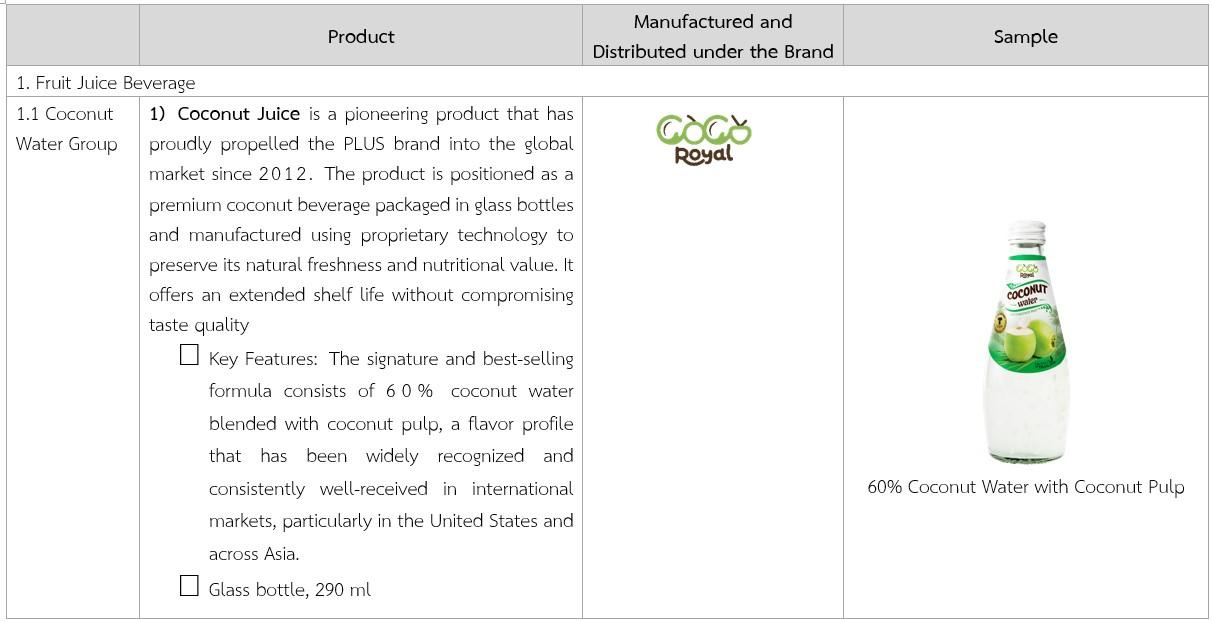
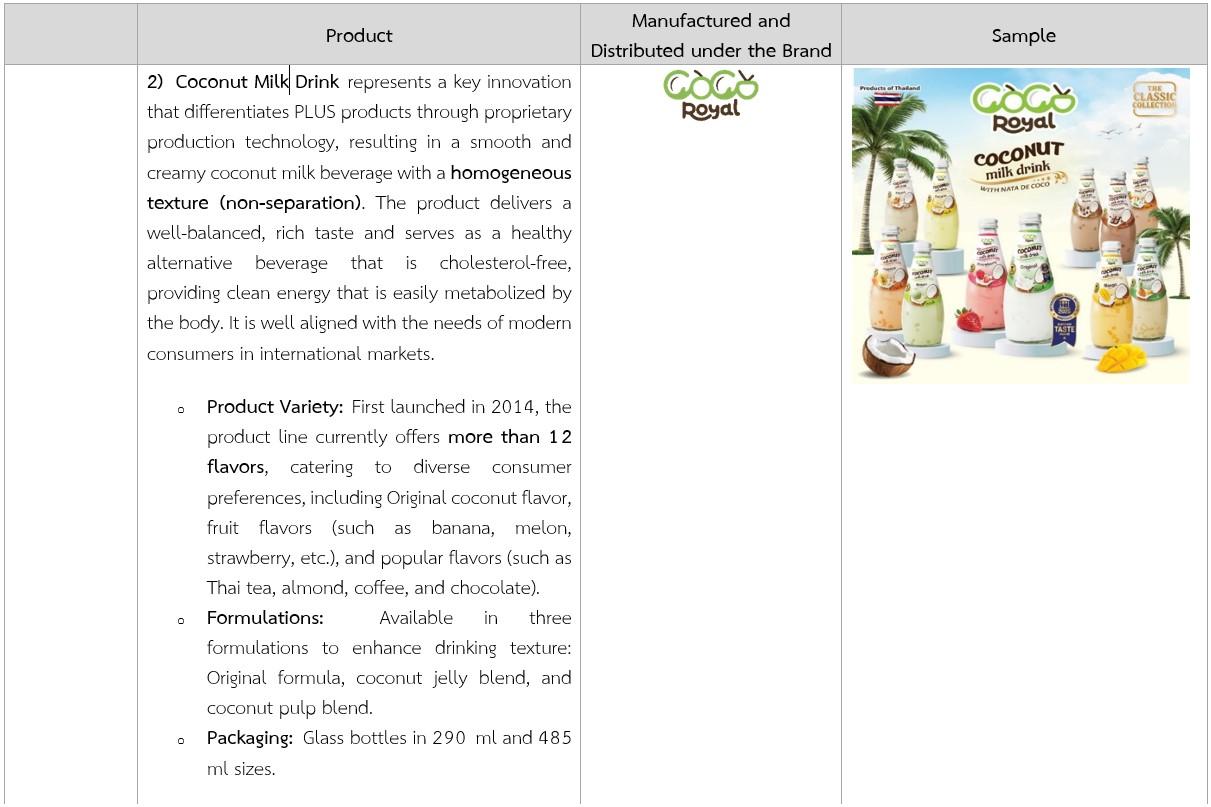
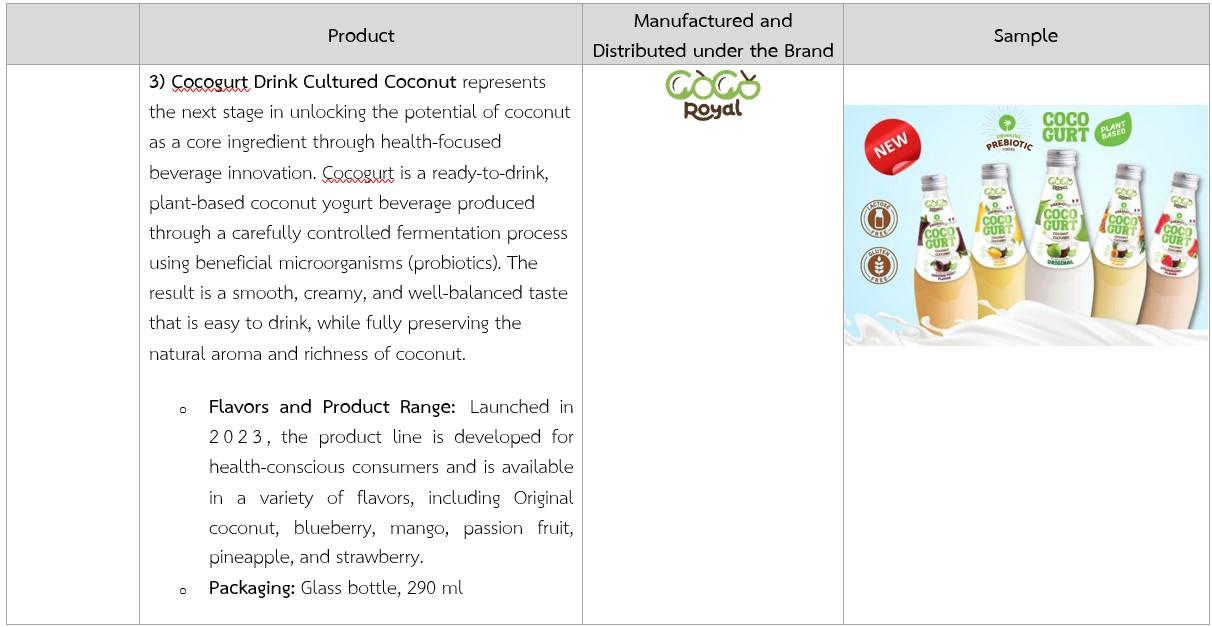
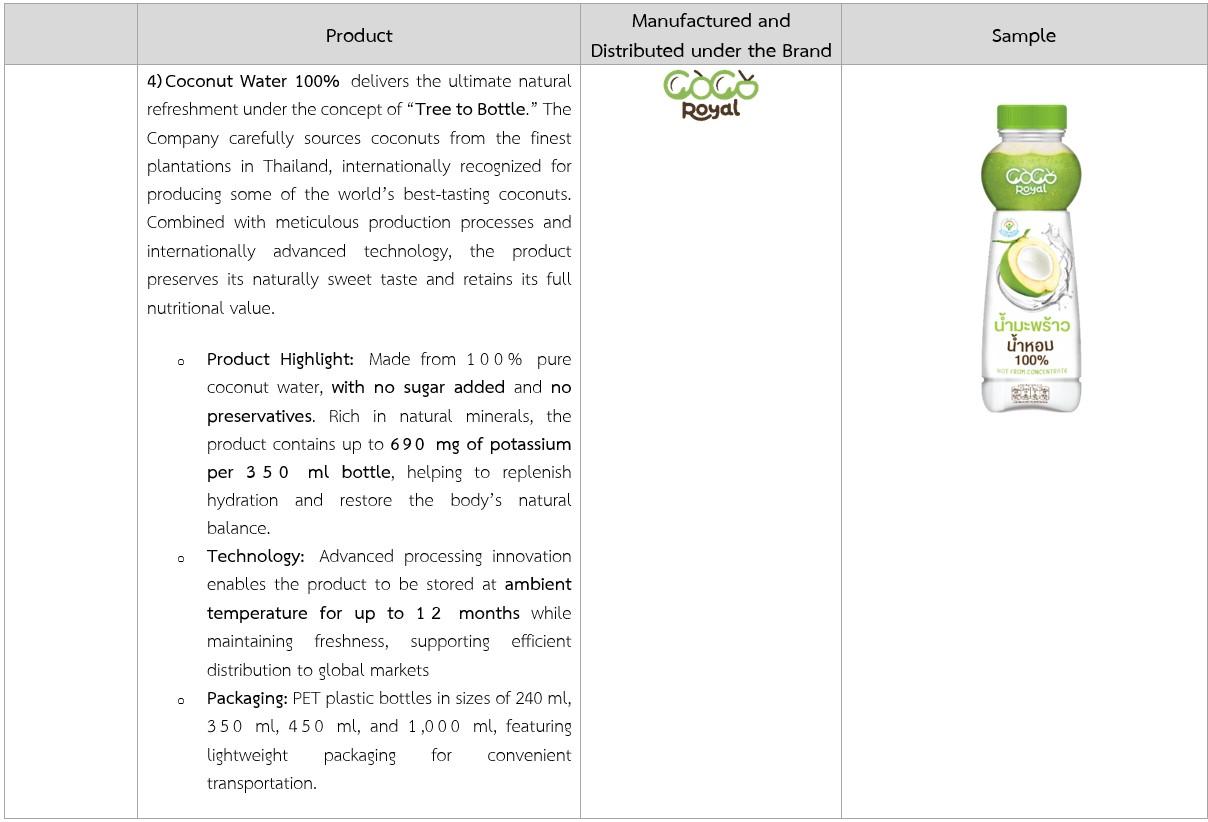
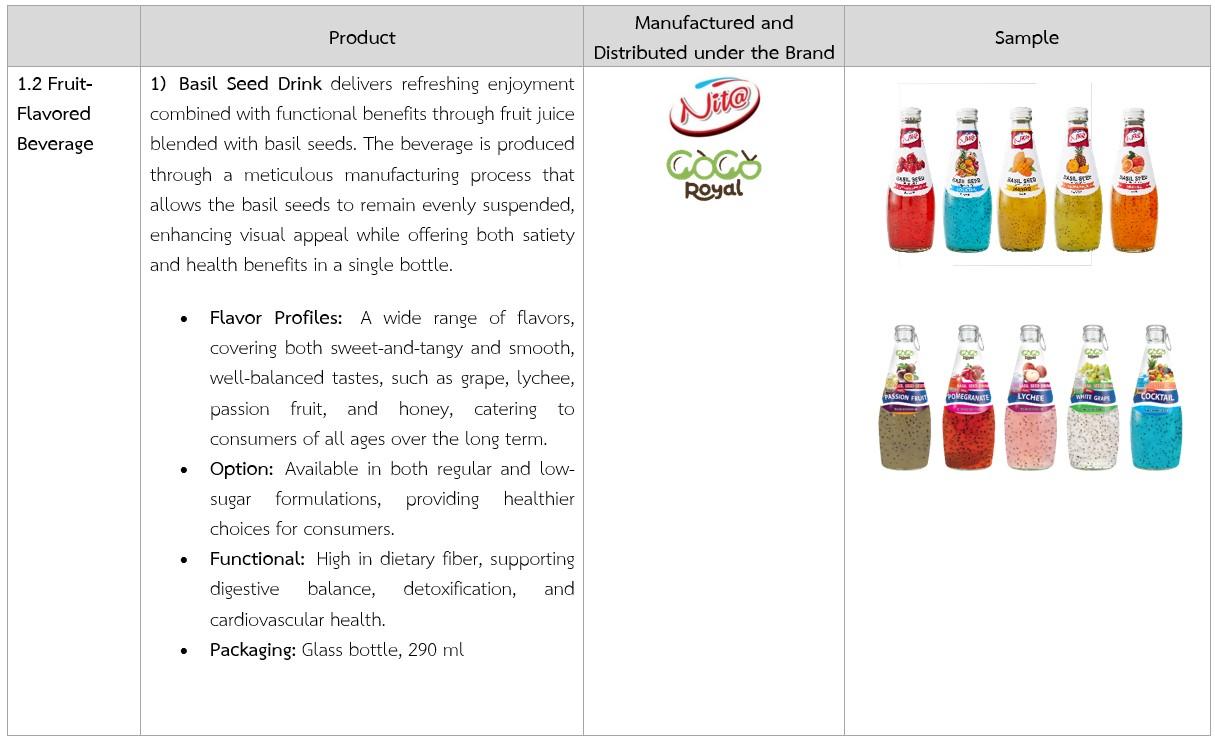
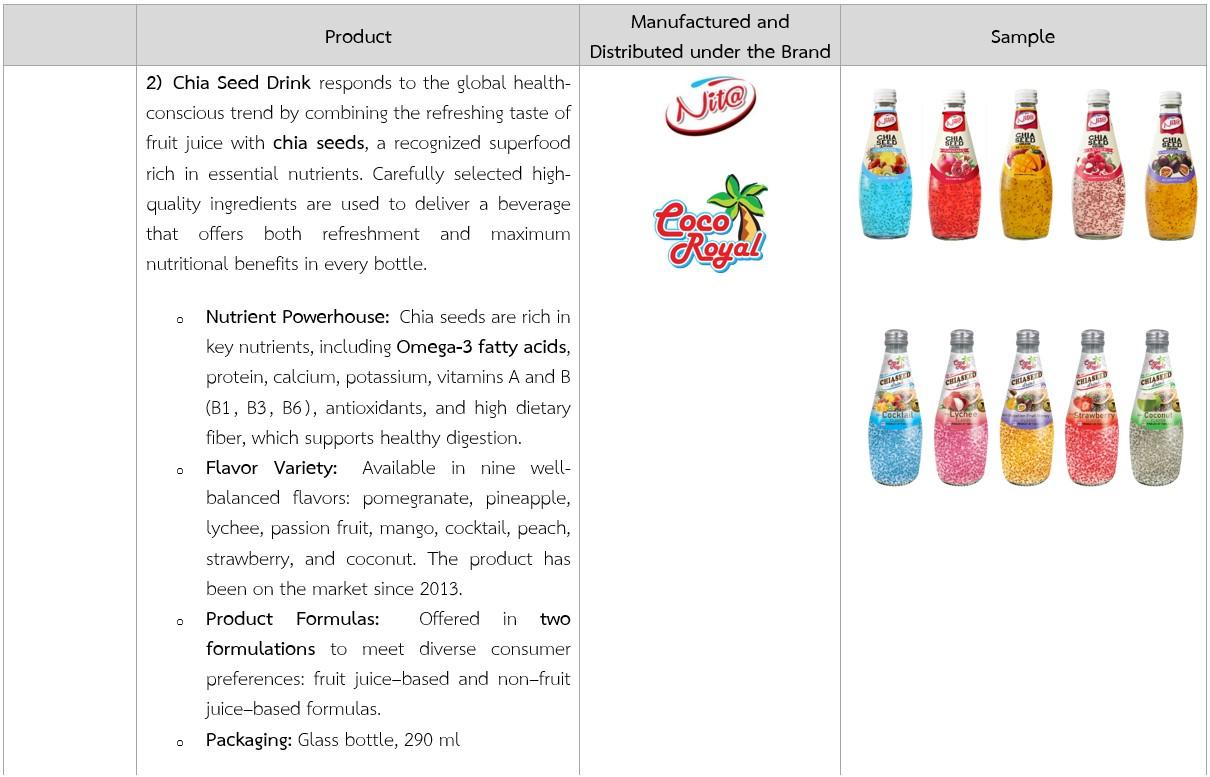
The Company places strong emphasis on research and development (R&D) to create high-quality beverages with distinctive characteristics (differentiation), in line with global health and lifestyle trends. Currently, the Company offers products under 6 quality brands, categorized into 2 main product group as follows:
Fruit Juice Beverages: 100% Coconut Water Beverages, including coconut milk beverages and fruit juice drinks blended with basil seeds or chia seeds, offering a wide variety of flavors
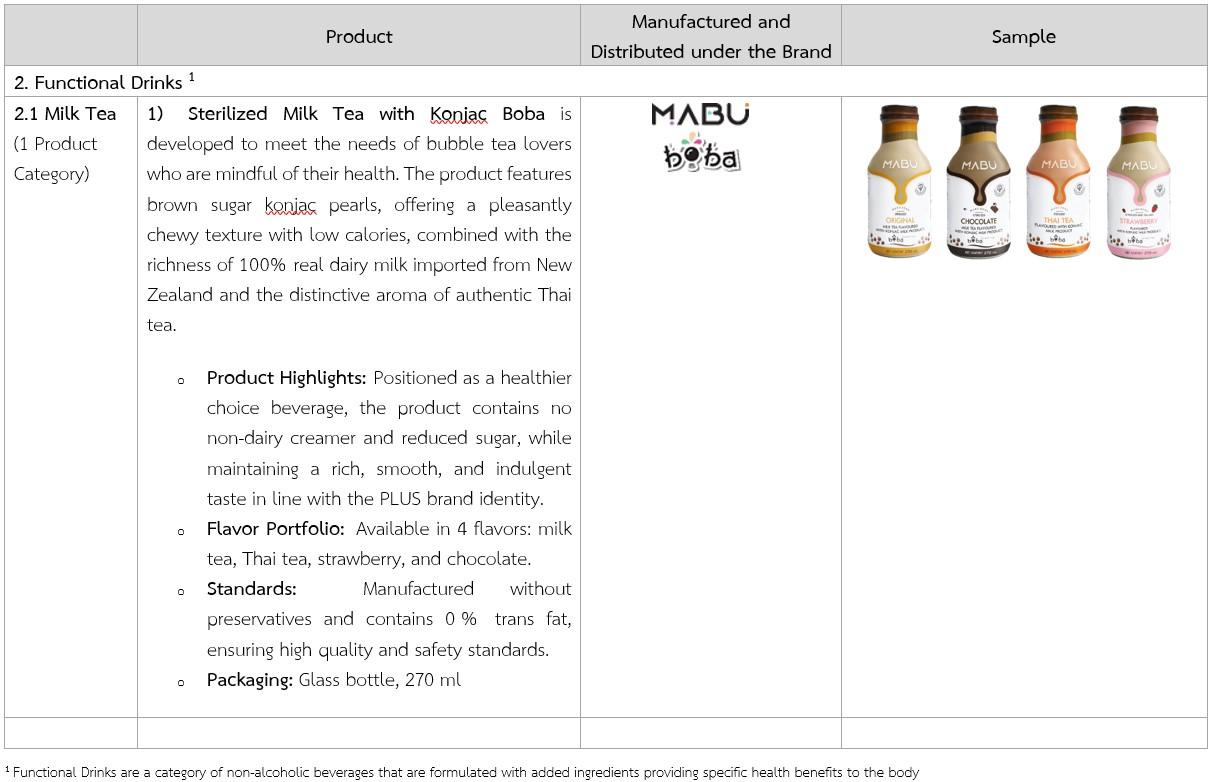
General & Functional Drinks: Functional beverages designed to deliver specific health benefits, supporting consumers’ overall well-being
Business Type
3114
Business Groups
| Business Group | Description |
|---|---|
| Other Beverages |
|
Research & Development
Has R&D Policy (Y/N)
Yes
Introduction
New Product Design and Development
The Company focuses on research and development (R&D), with a focus on creating differentiated and diverse products that effectively meet the needs of target consumers. Meticulous attention to the R&D process, in-depth data collection, and a deep understanding of genuine consumer needs—combined with extensive experience and continuous study of global consumer behavior trends and market research—form the critical foundation for value creation and the delivery of new consumer experiences through high-quality product innovation to global markets.
For the past successes, the Company has successfully developed and expanded coconut milk beverages and 100% coconut water in international markets. Traditionally recognized as key ingredients in savory dishes and desserts, coconut milk and coconut water, sourced from the finest raw material origins in Thailand, have been creatively transformed into refreshing beverages that retain natural nutritional value. These products have gained wide acceptance among consumers worldwide and represent the Company’s product innovations that have introduced new awareness and consumption experiences. They continue to enjoy strong market demand and serve as a foundation for ongoing R&D and future product innovation.
At the policy level, the Company places strong emphasis on fostering an organizational culture that promotes innovation at all levels. Accordingly, the Company has established an Innovation Development Policy as a framework to drive creativity and continuous improvement of internal processes. This policy is integrated into strategic management practices, including annual strategy reviews, process development and improvement planning, and performance monitoring across all functions, ensuring that innovation development is embedded as a continuous and tangible component of the Company’s management mechanism.
In 2025, the Company placed significant importance on encouraging creativity and innovation among employees at all levels through the launch of the “Plus It Happen – Your Idea, Our Future” initiative. The program provides opportunities for employees to propose ideas and develop innovative products with potential for future commercialization. Clear incentives have been established, whereby employees whose ideas are successfully developed and launched to the market are entitled to receive a share of the product’s sales revenue. As the first year of implementation, the program received strong participation from employees, reflecting a corporate culture that actively promotes innovation and employee engagement in a concrete manner.
In addition to product research and development, the Company places strong emphasis on process research and development. The Company supports the enhancement of employee knowledge and skills through education and training in collaboration with leading academic institutions and specialized professional organizations, enabling the application of acquired knowledge to practical operations and systematic process improvement. Under the Lean Manufacturing Project, the Company has applied academic principles and tools to data collection, process analysis, waste elimination, and reduction of non-value-added activities. These efforts have resulted in a more efficient production model, contributing to cost reduction, improved product quality, reduced resource consumption, shorter production lead times, and the establishment of balanced work standards between human resources and machinery. This initiative also lays a critical foundation for future development toward Lean Automation. Furthermore, in 2025, the Company organized Kaizen activities to encourage employees to share ideas for work improvement and develop small-scale innovations that generate positive impacts on operational processes. Guided by the principle that “small changes today are the beginning of greater success tomorrow,” these activities play a vital role in promoting continuous improvement and reinforcing a culture of operational excellence throughout the organization.
Product Research and Development of the Company take the following factors into account;
1. Personnel: Personnel’s expertise in product research and development is crucial to the development success rate. Hence, the Company emphasizes and supports the honing of the research team’s skills via their participation in training programs, academic programs with leading institutions and the fostering of networks with other leading research teams from the private and public sector as well as educational institutions. This network also includes other researchers with expertise in a wide range of areas.
2. Research and Development Method: A well-maintained research and development method will help the research team continue their works with efficiency. To this end, the team is committed to developing products with added values that will gratify consumers. The research team studies marketing and consumer behavior data, designs a research method that seeks to gain customer insight and develops each product with innovativeness. As a result, the whole research process, from design to trial and survey, takes wholly into account what consumers really want.
3. Products: The Company realizes that its products have to satisfy and introduce new experiences to the consumers, in addition to being quality and safe products. This can only be done by the utilization of innovation and the diversification of its products, while making sure that they remain environment-friendly, being able to meet the customers’ demands in a sustainable manner.
The Product Concept
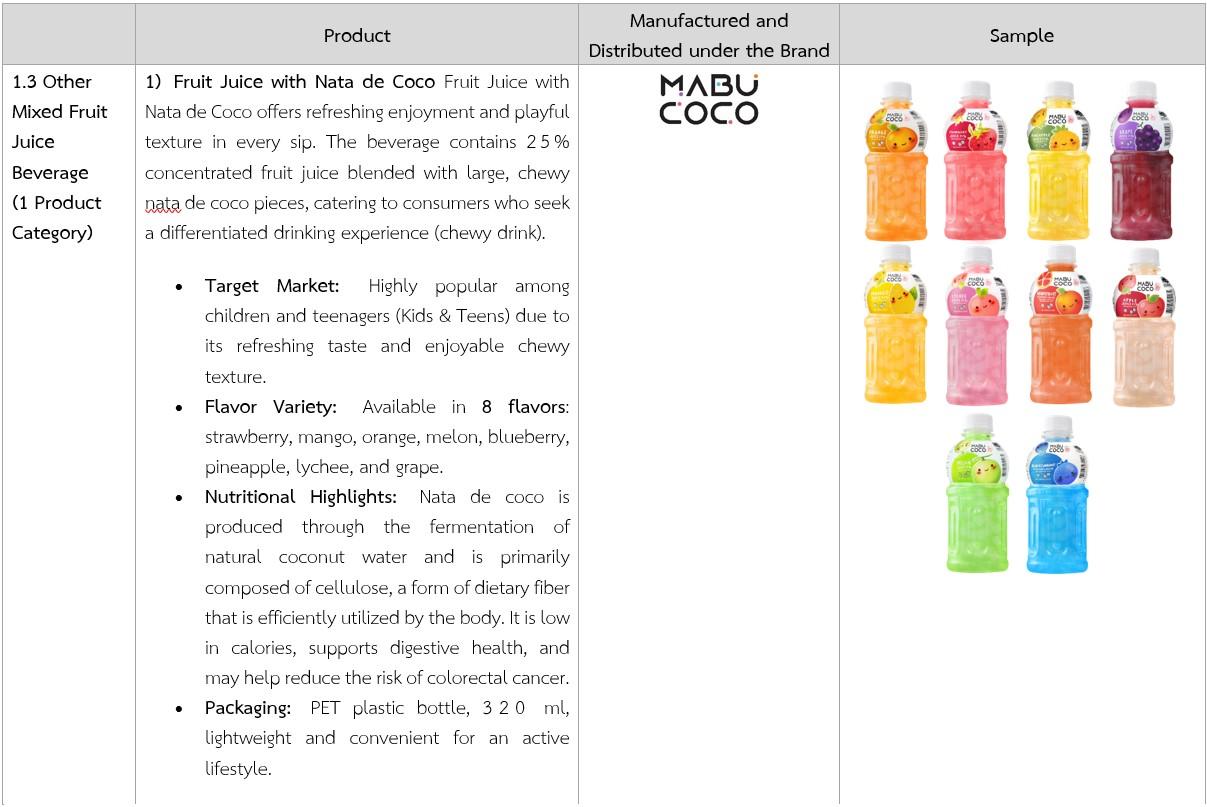
1. Juice with Nata de Coco under the brand “MABU COCO”
Concept: Fun, Fresh & Sustainable
Product Concept: The product is designed to deliver a unique “chewy and enjoyable” drinking experience while promoting health and well-being. It incorporates Nata de Coco, a value-added product derived from coconut water processing, which helps generate sustainable income for Thai coconut farmers under a social enterprise approach. The Nata de Coco is blended with Royal Plus’ proprietary fruit juice formulations and produced under international quality standards, resulting in a well-balanced taste rich in vitamins and minerals. The product is suitable for consumers of all ages (all-generation drink).
Key Highlights:
Variety: Available in a wide range of flavors to suit diverse preferences, including lychee, apple, strawberry, grape, orange, pineapple, and melon.
Value: A natural source of energy and dietary fiber, suitable for everyday consumption.
2. Coconut Water 100% under the brand “COCO ROYAL”
Concept: Authentic Nature: Fresh from Tree to Bottle
Product Concept: Developed to align with the global wellness trend, the product is positioned as a natural isotonic drink that offers more than refreshment. It is made from 100% pure coconut water sourced from premium coconut plantations in Thailand. Rich in magnesium and potassium, it helps restore freshness and supports nervous system function.
Key Highlights:
Technology Driven: Utilizes advanced processing technology that effectively “locks in freshness” and preserves nutritional value for up to 12 months under ambient storage conditions.
Logistics Advantage: Well-suited for export and distribution without the continuous need for cold chain logistics.
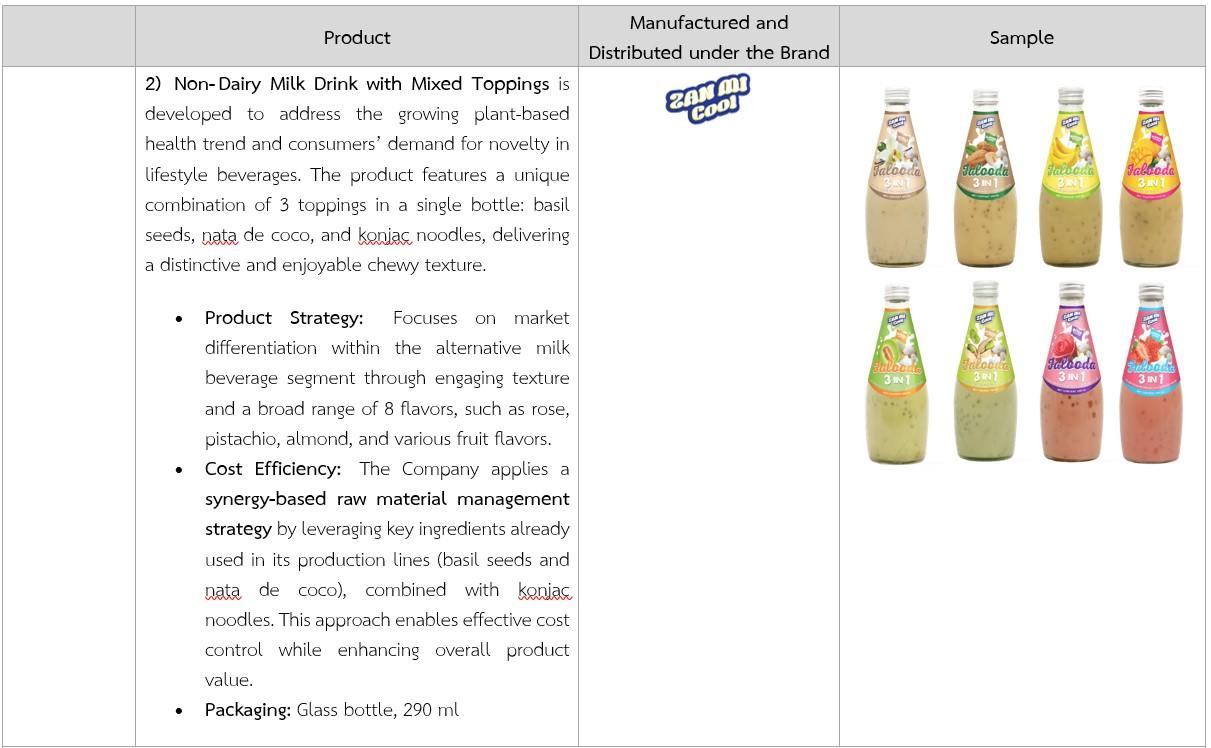
3. 3 in 1 Non-dairy Drink
Concept: Texture Innovation & Resource Synergy
Product Concept: This product redefines the beverage market through a “Multi-Texture Experience,” combining three distinct textures—basil seeds, nata de coco, and konjac jelly—in a single bottle. Built on a non-dairy beverage base with 0% trans fat, it caters to health-conscious consumers seeking novelty and differentiation.
Sustainability & ESG: The product development emphasizes resource optimization and efficient use of raw materials by leveraging core production expertise in basil seeds and nata de coco, combined with locally sourced ingredients. This approach helps reduce import dependency, supports local communities, and reflects the Company’s commitment to sustainable and responsible business practices.
R&D Cost — Label
Research and development (R&D) expenses over the past 3 years (Million Baht)
R&D Cost — This Year
10830.48
R&D Cost — Last Year
3783.95
R&D Cost — 2 Years Ago
1804.17
Assets Used in the Business
Permanent Assets — Description
As stated in Attachment 4, assets used in the company's business operations.
Intangible Assets — Description
As stated in Attachment 4, assets used in the company's business operations.
Has Subsidiaries Investment Policy (Y/N)
Yes
Subsidiaries Investment Policy — Description
The Company has a policy to invest in other companies whose objectives, vision, and growth strategy coincide with those of the Company, and which may generate more revenue or profit if operated together. Investments are also earmarked for other companies whose synergy can help the Company increase its competitiveness and achieve its goal of becoming a leader in the PLUS industry. Subsidiaries, joint ventures, or partner companies may consider investing in more companies when there is a growth opportunity. This consideration process will take into account the plausibility, potential, and risk factors of the investment, with proper investment analysis, and with approval or consent from the Executive Committee, Board of Directors, or the Shareholders Meeting, depending on the case.
Marketing Policy & Competition
Reporting Mode
3117
Marketing Policy (Overall)
Marketing Policy & Strategy
The Company adheres to a customer-centric marketing policy, integrated with innovation. Its business growth strategy is structured around three core pillars to drive sustainable growth and effectively address all target segments, as follows:
1. Product Strategy
(1) OEM Strategy (Original Equipment Manufacturer) International-standard manufacturing with flexibility to meet the needs of businesses of all sizes.
The Company has accumulated extensive experience and expertise in the beverage industry since 2012 and was among the pioneers in Thailand’s glass-bottled coconut water export market. Key strengths that have earned the trust of global customers include:
Production Agility: Highly flexible production lines capable of accommodating a wide range of order volumes, from small-batch production to support start-ups and market testing, to large-scale mass production for global brands.
Quality Commitment: A strong focus on maintaining consistent taste and quality standards, while working closely with customers to develop product formulations tailored to the preferences of target consumers in each market.
(2) ODM Strategy (Original Design Manufacturer) - A Strategic Partner co-creating brands through innovation.
The Company has evolved from being solely a manufacturer to a “co-creator” for its business partners by leveraging its know-how and advanced production technologies to jointly design and develop products with customers seeking to build their own brands.
Innovation Plus Creativity: All products are developed under the principle of combining innovation with creativity to deliver clear unique selling points and differentiation in the marketplace.
Trust & Retention: The ability to address complex and diverse customer requirements serves as a key strategy for long-term customer retention and strengthens trust among new customers seeking internationally standardized products with Royal Plus DNA.
(3) Own Brand Strategy (Plus’s Brand) - Creating a New S-Curve through Strong Brands and Efficient Cost Management
The Company aims to increase the proportion of revenue from its own brands to achieve higher gross profit margins and ensure long-term business sustainability. Key initiatives include:
Product Roadmap: Launching at least two new products under the Company’s own brands annually to stimulate market demand and maintain product freshness.
Cost Synergy & Scale: Leveraging raw material sourcing and production synergies across OEM and ODM businesses to achieve economies of scale, reduce unit costs, and enhance price competitiveness.
Packaging Strategy & Market Expansion: Expanding into the mass market through PET bottle packaging, such as 100% coconut water (Coco Royal brand) and juice with Nata de Coco (Mabu Coco brand), designed to meet on-the-go lifestyle needs.
Global Distribution: Appointing strategic distributors in key regions to expand the reach of the Company’s brands across markets with similar consumer bases, supporting continuous global market share growth.
2. Marketing Strategy
(1) Strategy for OEM Products (Original Equipment Manufacturer)Building Strong Business Partnerships for Mutual Growth
The Company focuses on establishing long-term partnerships with high-potential overseas partners through the following strategies:
Strategic Alliance: Working closely with partners in product planning while leveraging partners’ local market expertise to execute marketing and promotional activities, enabling more precise access to local consumers.
Retention & Expansion: Maintaining existing customer relationships through consistent manufacturing standards, while continuously introducing new products and improving formulations to create upselling opportunities supported by modern and flexible production lines.
(2) Strategy for ODM Products (Original Design Manufacturer) - Expanding into Global Markets through International Platforms and End-to-End Solutions.
The Company adopts a proactive approach to expanding its customer base by building credibility through 2 key initiatives:
Global Exhibition Presence: Regular participation in leading international food and beverage trade exhibitions to enhance brand visibility and engage directly with potential partners, such as ThaiFex (Thailand), Gulfood (United Arab Emirates), FHA (Singapore), and Fine Food (Australia).
Total Solution Provider: Offering comprehensive R&D capabilities that combine innovation and creativity, along with professional label and packaging design services. This ensures customers receive internationally standardized products with strong market differentiation, from production through to final packaging.
(3) Strategy for Own Brand Products - Expanding Thai Brands Globally while Strengthening Domestic Market Leadership.
The Company’s own-brand strategy is segmented into 2 key target markets:
International Market: Expanding the Company’s global footprint by appointing strategic distributors and importers in high-growth markets, while collaborating with partners on trade promotion activities to drive high-margin products into new markets.
Domestic Market: Building strong brand recognition and achieving top-of-mind positioning through an integrated Omni-channel marketing strategy:
Online Marketing (Above the Line):Build brand awareness through social media and leading e-commerce platforms (e.g., Facebook, Shopee, and TikTok) to effectively reach younger consumers.
On-ground Activation (Below the Line):Create direct consumer experiences through exhibitions, product sampling, and on-ground promotional activities, allowing consumers to experience the product’s authentic taste firsthand
Trade Promotion: Implement joint promotional campaigns with distribution partners to stimulate purchase decisions and drive sales growth.
3.Brand Building & Market Expansion
The Company has successfully established strong brand awareness in international markets through its core brands, including Coco Royal, Mabu Coco, Zan Mi Cool, and Nita, and is well-positioned to further expand into broader markets. In 2025, the Company significantly enhanced its production capabilities by upgrading technology in its PET plastic bottle production lines to better meet consumer demand for convenience and agility.
In terms of marketing strategy, the Company focuses on expanding its distribution channels into modern trade nationwide to enhance product visibility among consumers. The Company emphasizes its key value proposition of ‘affordable premium quality,’ together with the ‘Tree to Bottle’ concept, which leverages advanced production technology to preserve the freshness and nutritional value of 100% natural coconut water. These initiatives aim to build a modern brand image that resonates with the lifestyle of the new generation and to establish the Company as a top-of-mind brand among consumers.
4.Safety & Quality Assurance Strategy
The Company is firmly committed to the policy of “Quality First & Safety Utmost”, implementing stringent control measures across all dimensions, including workplace safety and food safety standards throughout the entire supply chain.
Occupational Health & Safety: The Company designs plant layouts and installs safety systems in accordance with international standards to prevent workplace accidents and ensure a hygienic working environment. Regular training programs are provided for production staff and relevant personnel to cultivate safety awareness and enhance operational skills.
End-to-End Quality Control: The Company maintains a dedicated Quality Control (QC) function that conducts rigorous inspections at every stage of the production process, including:
Incoming Inspection: Verification of raw materials and packaging quality, including freshness, expiration dates, and physical characteristics (e.g., color, odor, and weight), to ensure compliance with specifications prior to production.
In process Control: Random inspections of semi-finished products and continuous monitoring of all production stages, including employee hygiene, machinery conditions, and transportation equipment.
Final Inspection: Examination of finished products and packaging prior to delivery, with laboratory testing conducted to detect contaminants and residues, ensuring that all products meet international safety and quality standards.
5. Cost Management & Pricing Strategy
The Company adopts a flexible and cost-reflective pricing strategy to maintain profitability and sustain competitiveness in the global market.
Cost Plus Pricing Model: The Company applies a cost-plus-margin approach to ensure gross margins remain within target levels. This is supported by close collaboration between the sales and accounting teams to analyze and manage cost structures effectively.
Dynamic Pricing Adjustment: Pricing strategies are adjusted flexibly based on key factors, including:
Foreign Exchange Rate Volatility(FX Rates): mitigate risks associated with foreign currency revenues
Order Volume (Economies of Scale): offering more competitive pricing for large-volume orders.
Market Competitiveness: ensuring prices remain competitive in global markets while maintaining the highest quality standards.
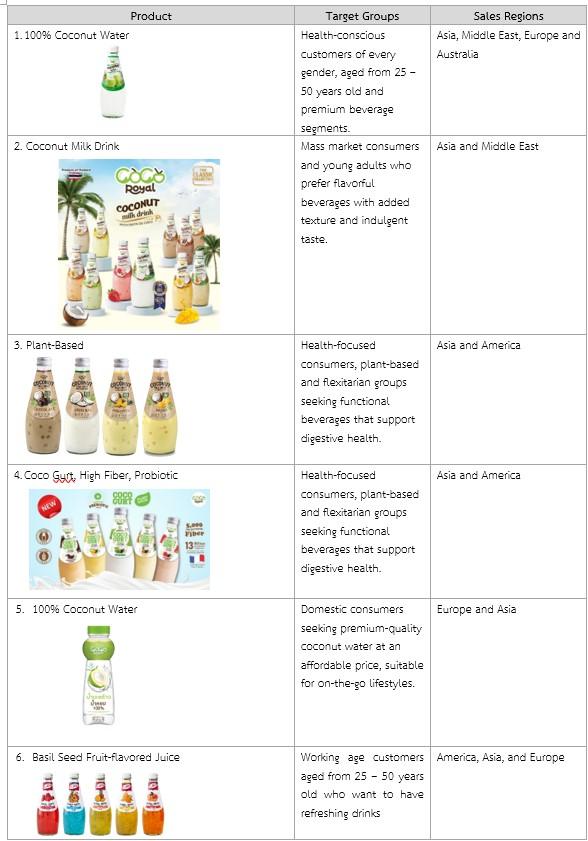
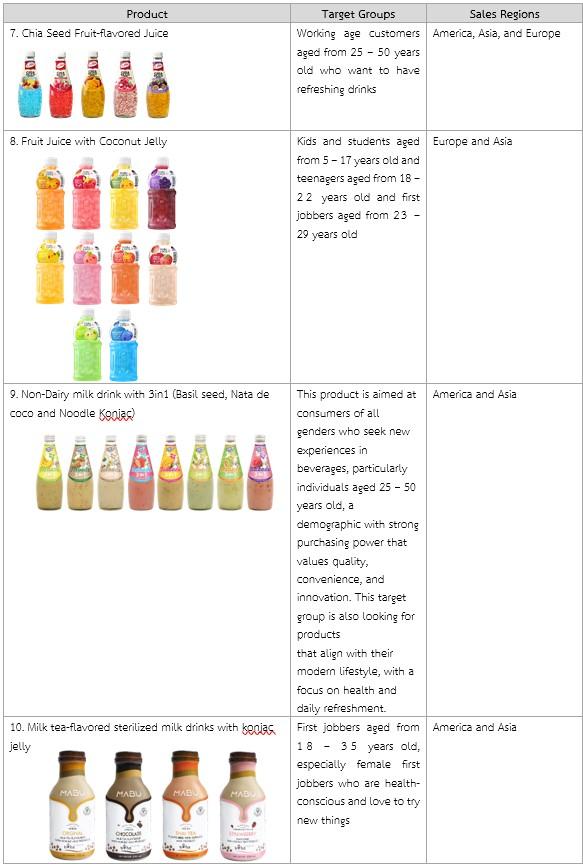
Customer Types and Target Groups
The Company serves both domestic and international customers. Its target customer segments are categorized according to product types, as follows:
Distribution and Sales Channels
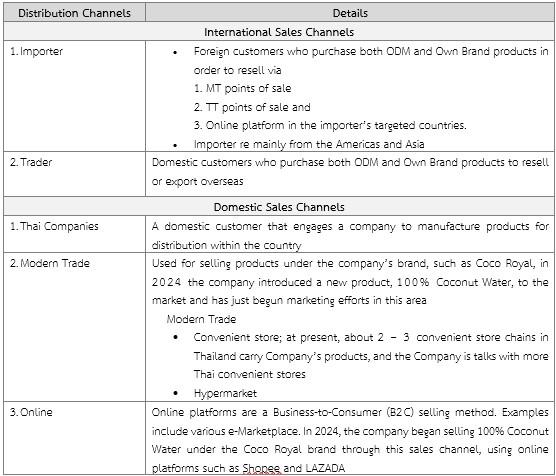
1. Distribution Channels: The Company distributes its products through 2 primary channels:
Modern Trade - This is a strategic channel for domestic market expansion, including supermarkets, convenience stores, and hypermarkets/cash & carry. This channel enhances brand visibility and strengthens brand recognition among a broad consumer base.
Traditional Trade - TT: This channel focuses on community-level access and tourist markets through local mom-and-pop shops and souvenir stores located in key tourist destinations.
2. Credit Term & Payment Policy:The Company maintains a prudent trade receivables and credit management policy to ensure liquidity and mitigate financial risk. Credit terms are determined based on customer classification as follows:
Existing Customers: Credit terms are granted based on payment history and established business relationships. Customers are required to settle payments within 5–7 days after receipt of shipping documents, specifically the Bill of Lading (B/L), to facilitate transactions and maintain long-term partnerships
New Customers: To manage risk, stricter payment terms are applied. Customers are required to make a 50% deposit upon contract agreement and purchase order (PO) confirmation, with the remaining 50% payable within 7 days prior to the delivery date.
Industry & Competition (Overall)
Competitiveness
In 2025, PLUS derived approximately 99% of its total revenue from exports, with around 93.5% generated from coconut water beverages and fruit-flavored beverages with basil seeds. Currently, the Company’s products are primarily exported to the Americas, Asia, Middle East and Europe. Domestic sales in Thailand accounted for a relatively small proportion, representing approximately 1% of total revenue.
Export Overview of Thailand’s Fruit Juice Industry (2025)
Thailand’s fruit juice export performance in 2025 recorded remarkable growth, with total export value reaching THB 33,923.57 million, representing a 33.63% increase compared to 2024, when exports amounted to THB 25,385.74 million. This strong expansion reflects a robust recovery of Thailand’s fruit juice industry following the modest growth of only 0.26% in 2024.
The market structure in 2025 showed a clear shift, with the top three export markets accounting for more than 65% of total export value. The United States remained Thailand’s largest export destination, with export value of THB 11,906.50 million, growing by 1.18%. China ranked second with exports valued at THB 8,059.54 million, despite a decline of 8.13% year-on-year. Meanwhile, the Netherlands experienced exceptional growth of 104.37%, increasing its market share to 7.13%, highlighting significant expansion opportunities in the European market.
Among high-growth potential markets, Spain recorded outstanding growth of 79.22%, followed by Australia at 26.47% and Canada at 7.06%. This trend reflects the rising demand for health-oriented and premium beverage products across Western markets.
In contrast, markets experiencing a slowdown were primarily located in Asia and neighboring countries, particularly the CLMV group. Exports to Cambodia contracted sharply by 56.61%, India declined by 55.74%, and Laos fell by 23.22%. In addition, exports to Singapore and Hong Kong decreased by 14.88% and 13.02%, respectively. Major Asian markets such as Taiwan, South Korea, and Japan also recorded negative growth in the range of 3%–8%, indicating weakening demand and underscoring the need to reassess marketing strategies in the region.
These developments point to a significant geographical shift in trade patterns in 2025, with Western regions—particularly Europe and Australia—emerging as the primary drivers of growth, replacing Asian and neighboring markets that are largely experiencing contraction. The rapid expansion in European markets, notably the Netherlands and Spain, highlights growing demand for high-quality, health-focused Thai products. Meanwhile, the Chinese market and CLMV countries may require strategic realignment to address the notable decline in purchasing power and demand.
In 2025, Thailand’s fruit juice export structure (HS Code 2009.90) underwent a significant geographical shift, with Western markets (Europe and Australia) becoming the main engines of growth, replacing Asian and neighboring markets that were largely in contraction. The exceptional growth in the Netherlands and Spain underscores new opportunities for premium and health-conscious product segments in Europe, while China and CLMV markets may require strategic reassessment in response to the meaningful decline in demand.
Key Figures:
Top 15export markets: Export value of THB 30,331.63million, accounting for 89.43%f total exports.
Other markets: Export value of THB 3,591.94 million, representing a growth rate of 19.18%.
Thailand’s Fruit Juice Export Value by Country, Classified under Customs Tariff Code 2009.90
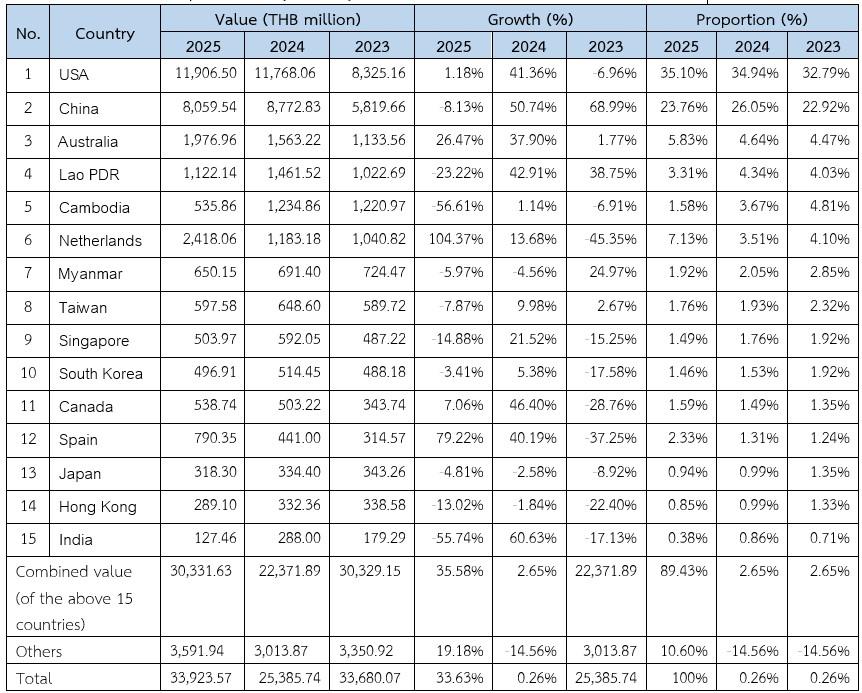
Source: Information and Communication Technology Center, Office of the Permanent Secretary, Ministry of Commerce, in cooperation with the Customs Department. Report Date: 21 January 2026, 17:32:43
Latest Data as of: November 2025
Overview and Industry Trends
The global coconut water market demonstrates strong growth momentum. In 2024, the market was valued at approximately USD 6.35 billion (or around THB 220 billion) and is projected to expand significantly to USD 19.45 billion by 2033, according to Straits Research. This growth corresponds to a compound annual growth rate (CAGR) of approximately 13.25% during the period 2025–2033, reflecting the continued expansion of the global health beverage and natural products industry.
Key market drivers include increasing health consciousness among consumers and a growing preference for natural, low-sugar or sugar-free beverages. Trends such as “natural hydration” and clean-label products, which emphasize ingredient transparency, further support market growth. Coconut water is widely recognized as a natural source of electrolytes, including potassium and magnesium, which aid in physical recovery and muscle function. As a result, coconut water has gained strong popularity among fitness-oriented consumers in several countries, notably the United States and Australia.
In emerging markets, urbanization and rising disposable income—particularly in Asia and Latin America—are driving greater consumption of premium and health-focused products. Pure coconut water continues to dominate the market due to its natural taste profile and authenticity, while flavored and fortified variants are gaining traction, especially among younger consumers seeking product differentiation.
In terms of packaging, UHT cartons (Tetra Pak) remain the leading format due to their logistical efficiency, extended shelf life, and ability to preserve product quality without refrigeration. Meanwhile, PET bottle packaging continues to record steady growth, particularly in markets that prioritize convenience and portability, as well as on-the-go distribution channels such as convenience stores and modern trade outlets. Advances in lightweight PET and recycled PET (rPET) technologies play an increasingly important role in enhancing product competitiveness, in response to evolving consumer preferences for convenience, health safety, and environmentally friendly packaging solutions. From a geographical perspective, the Asia-Pacific (APAC) region remains the largest consumption market, serving as both a major production base and a key consumer market for coconut-based beverages. North America continues to experience sustained growth, driven by health-oriented lifestyles and increasing demand for functional beverages in everyday consumption.
Despite its strong growth potential, the coconut water industry faces certain constraints, including the relatively short shelf life of raw materials and higher costs associated with cold-chain logistics, which may impact pricing. Nevertheless, substantial growth opportunities remain through partnerships with the sports, wellness, and health-related sectors, enabling effective expansion into niche consumer segments. Key global players in the coconut water market include Vita Coco, Harmless Harvest, UFC Refresh, as well as coconut water products under multinational groups such as The Coca-Cola Company and PepsiCo.
With respect to the global coconut milk market, although market size estimates vary across research sources, all indicate a clear growth trajectory. Current market value is estimated at approximately USD 2.05–3.03 billion (or around THB 72–106 billion). Over the medium to long term, optimistic scenarios project market expansion to as high as USD 12.73 billion by 2033, with a CAGR of approximately 17.3%, while more conservative projections estimate growth to around USD 3.7 billion by 2032, with a CAGR of approximately 8.7%.
Growth in the coconut milk market is supported by increasing prevalence of lactose intolerance and the continued rise of vegan and plant-based diets, particularly in Europe and the United States. In addition, heightened health awareness following the COVID-19 pandemic has further driven demand for coconut milk products, which contain lauric acid known for its immune-supporting properties. Coconut milk’s versatility across savory dishes, desserts, bakery products, and plant-based ice cream also contributes to its broad consumer appeal.
From a product perspective, full-fat coconut milk continues to hold the largest market share due to its rich texture and suitability for cooking. Organic coconut milk represents the fastest-growing segment, in line with clean-label trends. In terms of packaging, UHT cartons remain the dominant format, while canned packaging shows notable growth from a sustainability standpoint due to its high recyclability. Regarding flavor profiles, unsweetened coconut milk products account for more than 77% of total demand, aligning with global sugar-reduction policies adopted by many countries.
Within this context, Royal Plus Public Company Limited (“PLUS”) holds a clear strategic advantage as a manufacturer of coconut-based and fruit beverage products, with export sales accounting for approximately 99% of total revenue. Coconut water and basil seed–mixed fruit juice products represent more than 93.5% of total revenue, with market coverage spanning over 116 countries worldwide. As a result, the Company’s competitive positioning is strongly aligned with global industry trends, including demand for health-oriented products, international production standards, premium product segments, and growth opportunities in high-potential regions such as the Americas, Europe, and Asia.
Procurement of Products & Services
Reporting Mode
3117
Procurement (Overall)
The Company’s policy in seeking materials for production takes into account the quality and origins of the materials. The Company entrusts its quality control team to make sure that every material meets its standards, with the current main materials being coconut water, meat and jelly (making up 40.4% of total acquisition), as well as sugar, syrup and food colorings / flavorings (approximately 12.6% of total acquisition), and being packaging, bottle caps, cardboard boxes and labels (approximately 47.0% of total acquisition). The Company acquires the materials mainly from domestic sources (about 95% of its total acquisition), while some materials may necessitate importation from overseas suppliers such as certain types of packaging. The acquisition is done through advanced purchase orders that may be put forward 15 – 45 days in advance depending on the suppliers.
Raw Material Acquisition (Overall)
In the purchasing process, the Company compares prices of the same type of products from at least 3 suppliers on the Approved Vendor List (AVL). This approach helps avoid over-dependence on a single supplier, ensuring price transparency, cost-effectiveness, and material quality. All suppliers are evaluated annually, and efforts are made to maintain good relationships with each partner.
Materials used in fruit and general beverage production
The main materials used are as follows;
1. Fresh ingredients e.g., coconut water, meat, jelly, milk, basil seed and chia seed
Fresh ingredients are the main production materials, with the Company purchasing them through purchase contracts with suppliers in the AVL under a predetermined list of how much to order. The demand for coconut water and coconut meat accounts for more than 50%, while the remaining portion pertains to the demand for other coconut products. The Company will have over 100 coconut water and coconut meat vendors listed in the AVL submit via bidding through an auction process. The Company will select these suppliers based on price, and the number of materials offered on a first-come, first-served basis. The price will follow market prices at the time of purchase and the purchase volume will be clearly elaborated. All incoming orders are subject to quality control. The Company has never faced materials shortage.
For coconut jelly, basil and chia seeds, the acquisition process is similar to that of coconut, with at least 3 suppliers bidding at the same time, and the purchase is made mainly from domestic suppliers.
2. Ingredients for flavoring and other chemicals
After the new product development phase, the research and development team will determine the material requirements for production and communicate these to the acquisition team. The acquisition team will then request ingredient samples from suppliers to ensure that they meet the predetermined quality and price criteria for the new product and, Use Material Requirement Material Requirement Planning (MRP). This Based on the orders received, with information from the sales and marketing departments before placing the order, and primarily ordering from domestic manufacturers and suppliers.
3. Sugar, syrup and other sweeteners
The acquisition team will sample the ingredients offered by suppliers to make sure that they pass the standards set by the research and development, as well as quality control teams. After passing the test, purchase order will be drafted and the prices compared before adding the names of suppliers to the AVL and, for the ordering process, the company will place orders based on the production requirements for each month, primarily sourcing from domestic manufacturers and suppliers.
4. Packaging e.g., glass and plastic bottles, caps, cardboard boxes and labels
The acquisition team will sample the materials offered by suppliers before sending the materials for further check by the quality control team to make sure that every material passes the Company’s standards. Then, the acquisition team will compare prices before adding said suppliers to the AVL and, use Material Requirement Material Requirement Planning (MRP). This Based on the production plan created by the production planning department. The notify the purchasing department to proceed with the ordering. Currently, the company sources packaging materials and product labels from multiple suppliers to reduce the risk of delays in delivery, with a primary focus on ordering from domestic manufacturers and suppliers.
Furthermore, the company's management of raw materials and packaging also takes into account production planning and the supply chain system, which starts from planning the purchase of raw materials and packaging according to the sales plan, production plan, supplier delivery schedules, the ordering process of raw materials and packaging from suppliers, and the appropriate quantity for inventory storage of raw materials and packaging safety stock as defined. The company reserves enough raw materials and packaging to cover production for approximately 2-4 weeks. Generally, the prices of raw materials and main packaging are not subject to rapid changes that would significantly impact the company's orders for raw materials and packaging.
Production Policy (Overall)
Production Policy
(1) OEM Products are products that the Company has been hired to produce based on the recipe, packaging design and brand of the customers. The sales team will discuss with the customers to clarify the actual demands for each product type, with the production planning and material usage being determined and approximated monthly. Then, the planning team will coordinate with the production team to ensure that the number of manufactured goods meet the customers’ demands and are delivered on time. OEM production will depend on the remaining production volume from the main production line.
(2) ODM Products are products made using the Company’s own recipe and packaging design, but labelled for sale under customers’ brands. The sales and marketing team will discuss with the customers regarding the approximation of purchase orders with the marketing plan being handled by the customers. Then, the production planning team will plan the production to meet the purchase volume ordered by the customers.
(3) OBM Products are products made using the Company’s own recipe, packaging design and marketed under the Company’s own brands. The sales and marketing team will plan the production volume based on the approximation of purchase orders and marketing volume. The planning and production teams will then plan the actual production according to the figures decided by the sales team. The figures will take into account the Company’s growth strategy and product competitiveness for each market; these strategies are formulated by the Company’s executives.
Production Process - Glass Bottle Line
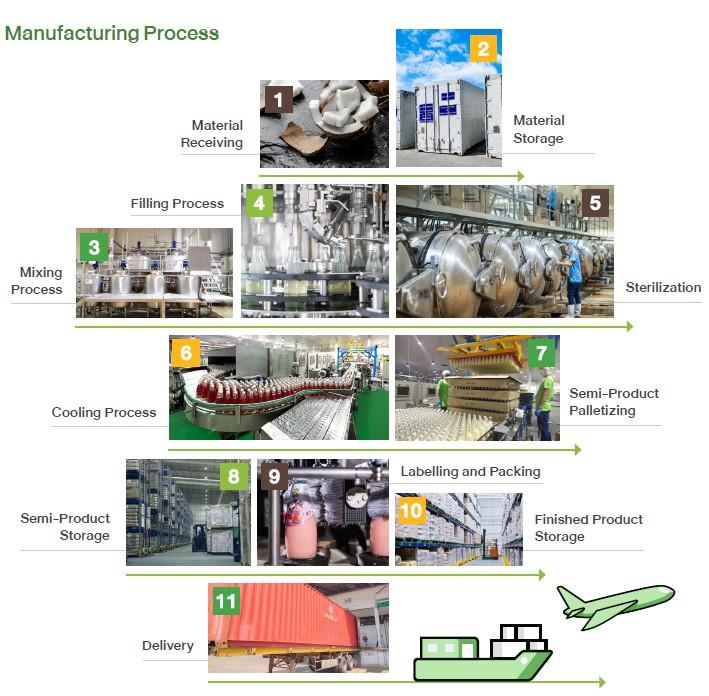
The Company’s Glass Bottle Line production process can be summarized as follows;
1) Material Screening: all production materials such as fresh, dried and process agricultural products as well as packaging and other materials are screened according to the Company’s standards.
2) Material Storage: after the materials are screened, they will be sent to storage where their quality and the storage environments are maintained according to the Company’s standards, which include the normal, cold and frozen storages.
3) Mixing Process: after the production planning is complete, the actual production will begin by mixing each material that has passed the quality control according to the Bill of Material (BOM). After the mixing and quality checking, the materials will be sent to packaging.
4) Packaging: each product is packaged into a pre-arranged packaging and is then sealed. The Company uses advanced machinery that can handle both liquid (such as coconut water, milk coconut and fruit juice) and non-liquid (coconut jelly, meat, basil and chia seeds) ingredients. During the packaging process, the product’s quality is checked again for imperfection.
5) Heat Sterilization: every sealed product will be put on crates and then put through the sterilization process using retort sterilization machines. The process is controlled (temperature, time, pressure among others) according to the criteria set by Process Authority.
6) Freezing: after the sterilization process, the products are put into freezing tunnel to reduce their temperature to prepare for the next step.
7) Product Arrangement: the products are put through the semi-auto palletizing machine before being sent into storage.
8) Semi-finished product storage: the products are kept in a semi-product storage to await quality and food safety control within a specified timeframe.
9) Labelling and Boxing: after the products pass the quality control process, these semi-products will be labelled and boxed, where they will become finished goods.
10) Finished product storage: the finished products are kept in storage to await delivery.
11) Delivery: products are delivered to both domestic and overseas buyers.
Production Process - PET Plastic Bottle Line
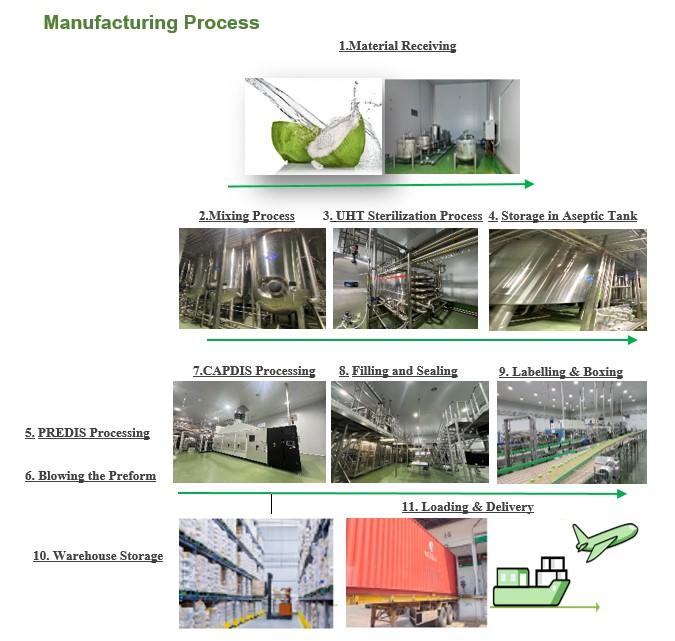
The Company’s PET Plastic Bottle Line production process can be summarized as follows;
1) Material Screening: all production materials such as fresh, dried and process agricultural products as well as packaging and other materials are screened according to the Company’s standards.
2) Mixing Process: after the production planning is complete, the actual production will begin by mixing each material that has passed the quality control according to the Bill of Material (BOM). After the mixing process is completed and meets the defined procedures and quality standards, the product is then forwarded to the sterilization process for further treatment.
3) Ultra-high-temperature (UHT) Sterilization Process: products that have undergone preparation and mixing are then sent to the UHT (Ultra High Temperature) sterilization process. During this stage, the sterilization parameters (temperature, time, and holding time) are closely monitored and controlled to ensure they comply with the specifications set by the Process Authority. After sterilization, the product's temperature is reduced to the required level before being stored in an Aseptic tank to maintain a sterile environment until further processing or packaging.
4) Aseptic Tank Storage: the sterilized product is then stored in an aseptic tank, where its temperature is carefully controlled to maintain the specified requirements.
5) PREDIS Processing: the preform packaging is sterilized using hydrogen peroxide (H2O2), and the chemical concentration is carefully monitored to ensure it meets the specified standard values.
6) Blowing the perform: the sterilized preform packaging is then transferred to the preform blowing machine, where it is heated to the specified temperature and blown into the desired plastic bottle shape.
7) CAPDIS Processing: the cap packaging is sterilized using hydrogen peroxide (H2O2), and the chemical concentration is carefully monitored to ensure it complies with the specified standard values.
8) Filling & Sealing: after the packaging has been sterilized and molded, it is transferred to the filling machine, where the product is filled in a sterile environment and sealed with the cap. Quality checks and controls are carried out according to the specified standards. Once this process is completed, the product is ready for labeling and cartooning.
9) Labelling & Boxing: the product will be conveyed along the conveyor belt to the labeling machine, then packed into boxes in preparation for delivery to the warehouse for storage.
10) Finished product storage: the finished products are kept in storage to await delivery.
11) Delivery: products are delivered to both domestic and overseas buyers.
Production Management
The production centre is located in the Amphawa Factory in Samut Songkhram. The Company utilizes advanced machinery and technology in its production processes. For the glass bottle production line, there are 5 main production lines that can accommodate a variety of packaging products, including glass bottles with screw caps, lug caps, and twist-off caps in various sizes. For the PET plastic bottle production line, there are 2 main production lines: one for aseptic packaging and one for pasteurized products.
The Company emphasizes the enhancement of production efficiency and product quality by using the lean manufacturing system that seeks to reduce production and operational wastes. This will ensure production efficiency alongside cost-effectiveness and maximum resource utilities. The Company also encourages all employees to develop their skills by introducing the Lean Manufacturing Project that acclimatizes operation-level employees with the lean manufacturing techniques and its adoption in real-world use. The surplus personnel as a result of the heightened production efficiency can then be reorganized to work in different functions that prepare the Company for further expansions.
The Company encourages all sectors to work together to achieve common goals, encouraging each team to gather and analyze their data alongside other teams to make each decision made by the teams more precise. Each problem is analyzed using critical tools and collaborative discussion. Moreover, each team is encouraged to use visual control in controlling their operations to familiarize every employee with the technical knowhow and to provide an opportunity for employees to experience work first-hand, while automation is utilized to reduce labor requirements in certain areas.
Production resources are managed to ensure maximum utility. The machinery and technology used will help reduce the energy and water consumption, as well as the heat exchanged in the pipe system and help enhance the machinery capabilities to reduce production wastes. This, in turn, reduces environmental impacts by the utilization of energy from biomass in fueling the steam boilers, in addition to the installation of solar cell roof with an output of 985.36 kWp.
All products are checked to ensure quality with each production process being controlled from the materials selection, screening and evaluation to the production process evaluation to the finished product quality control. All quality control processes are standardized under the Quality Plan, including GHPs, HACCP, ISO9001:2015, ISO22000:2018, FSSC22000, ISO14001:2015 ,HALAL and the inspection by U.S. FDA. and ISO 14064-1:2018.
Currently, the Company operates 5 operation bases as follow;
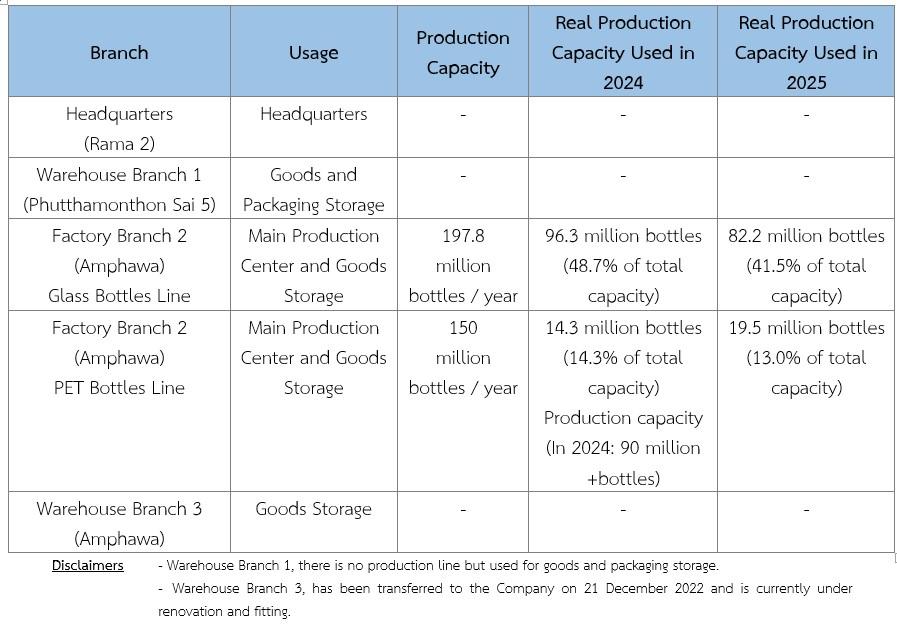
As of 31 December 2025, the Company has 4 production lines and, PET plastic bottle production lines, comprising a total of 2 lines, are located at the second branch factory (Amphawa) as follows:
For glass bottles
1) Line A: for glass bottles
2) Line B: for glass bottles
3) Line C: for glass bottles
4) Line D: for glass bottles
5) Line E: for glass bottles
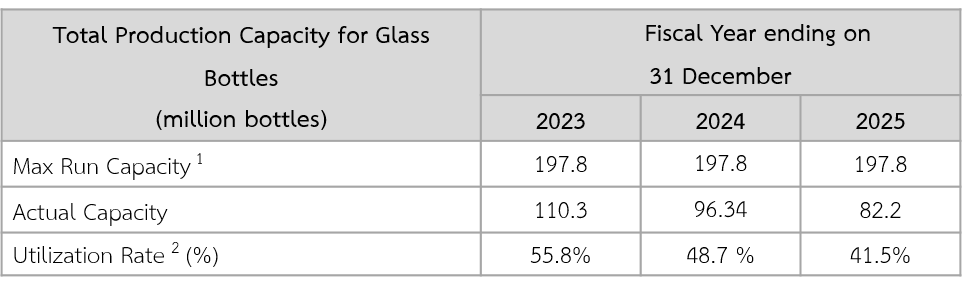
For PET bottles
1) Line A: for PET bottles (Pasteurization)
2) Line B: for PET bottles (Aseptic packaging)
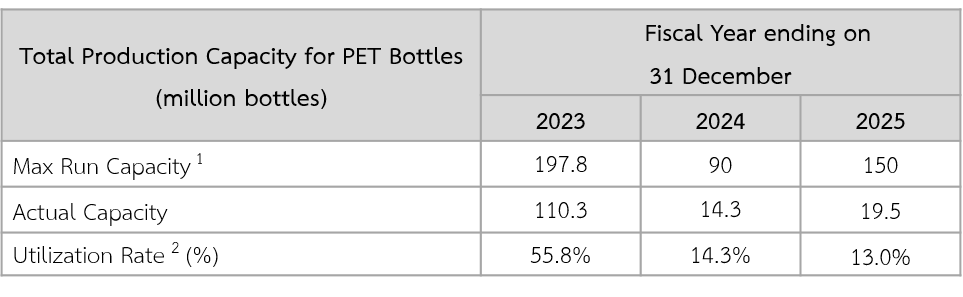
Disclaimers:
1 Max Run Capacity = [total technical production capacity (bottle per minute) x 60 minutes per hour x 20 hours per day x 290 days per year] x OEE (Overall Equipment Effectiveness), with the OEE being the overall effectiveness of the machinery in production line depending on the production hours determined in production plan, usage readiness, production pace and quality of products. PLUS determines its production hours for the whole year based on those during High Season, resulting in high max run capacity. However, as PLUS does not operate at High Season pace for the whole year, the actual capacity may be around 48% - 60% of glass bottles line.
For the PET plastic bottle production line, the Company is currently in the initial phase of capacity expansion. The projected full production capacity is calculated on an average annualized basis.
2 Production Capacity Usage Ratio (%) = Actual Capacity / Max Run Capacity. The utilization rate in 2021 is calculated from 4 production lines as the 5th line is ready for production at the end of 2021.
Environmental Impact Management
The Company places a strong emphasis on ensuring that its operational efficiency aligns with environmental preservation. It controls the impact caused by its business operations and emphasizes environmental management. All operations are controlled to ensure that pollution emissions remain within predetermined standards. As a result, PLUS has never had any disputes or problems concerning the environment and, Currently, the company has been certified by the Ministry of Industry as a Level 3 Green Industry, implementing the Green System.
Distributors (Overall)
Critical Supplier Assessment Criteria
The Company has established guidelines for the effective management and assessment of both existing and new suppliers. Suppliers are categorized to determine appropriate operational strategies as follows:
• Critical Tier 1: Suppliers with high purchase volumes who provide essential or specialized raw materials vital to the Company’s strategic production. These materials are difficult to substitute, and any loss of such suppliers would result in high to very high risk. Examples include key raw material and packaging suppliers. In 2025, there were 1,339 Critical Tier 1 suppliers, accounting for 56.3% of the total number of suppliers.
• Critical Non-Tier 1: Suppliers are those with lower order volumes, supplying goods that are easily replaceable. In 2025, the company had 1,132 Critical Non-Tier 1 partners, representing 53.4% of the total number of suppliers.
• Partners Subject to On-Site Audits: The company places special emphasis on auditing Critical Tier 1 suppliers, particularly in terms of production processes and raw material sourcing, to assess their ability to provide products or services in compliance with the company’s requirements and standards.
These guidelines are part of the company's sustainable supplier relationship management, focusing on reducing risks in the supply chain and supporting business operations to be efficient and aligned with the company's strategy.
Number of Raw-Material Distributors (Overall)
1339
Production Capacity (Overall)
| Item | Unit | Used | Capacity |
|---|---|---|---|
| Factory Branch 2 (Amphawa) | Bottle | 41.5 | 197,800,000 |
| Factory Branch 2 (Amphawa) | Bottle | 13 | 150,000,000 |
Domestic/Overseas Purchase Proportion (Overall)
| Raw Material | Source Country | Value |
|---|---|---|
| Coconut water | Thailand | 139,000,000 |
Projects Under Construction
Has Projects Under Construction (Y/N)
No
Debentures & Bills of Exchange
Has Debentures (Y/N)
No
Convertible Securities
Has Convertible Securities (Y/N)
No