

Sustainability · 2025
In this section51 topics
- Sustainability Policy2 items
- Sustainability Goals & UN SDGs3 items
- Policy Review3 items
- Business Value Chain1 item
- Stakeholder Analysis2 items
- Environmental Sustainability — Overview1 item
- Environmental Policy & Guidelines4 items
- Environmental Policy Review3 items
- Energy — Plan & Guidelines2 items
- Energy — Electricity Consumption1 item
- Energy — Fuel Consumption1 item
- Energy — Targets3 items
- Energy — Performance & Outcomes2 items
- Water — Plan & Guidelines2 items
- Water — Withdrawal, Discharge & Consumption1 item
- Water — Targets3 items
- Water — Performance & Outcomes2 items
- Waste — Plan & Guidelines2 items
- Waste — Generation, Disposal & Recycling1 item
- Waste — Targets3 items
- Waste — Performance & Outcomes2 items
- GHG — Plan & Guidelines2 items
- GHG — Emissions1 item
- GHG — Emissions Verification2 items
- GHG — Principles & Standards1 item
- GHG — Targets2 items
- GHG Targets — Net Zero1 item
- GHG Targets — Carbon Neutrality1 item
- GHG — Performance & Outcomes2 items
- Environmental Legal Incidents1 item
- Social Policy & Guidelines4 items
- Social Policy Review3 items
- Human Rights Due Diligence2 items
- Employees — Plan & Guidelines3 items
- Employees — Workforce1 item
- Employees — Remuneration & Provident Fund1 item
- Employees — Training & Development1 item
- Employees — Occupational Health & Safety1 item
- Employees — Labour Relations1 item
- Employees — Employee Representation1 item
- Employees — Targets2 items
- Employees — Performance & Outcomes2 items
- Customers — Plan & Guidelines3 items
- Customers — Satisfaction Results1 item
- Customers — Targets2 items
- Customers — Performance & Outcomes2 items
- Community & Social — Plan & Guidelines3 items
- Community & Social — Targets2 items
- Community & Social — Performance & Outcomes2 items
- Other Social Management1 item
- Law Violation Incidents1 item
Sustainability Policy
Has a Sustainability Policy
Yes
Policy Description
Royal Plus Public Company Limited is a leading company in the production and distribution of beverages made from raw materials sourced in Thailand, renowned for their international value and quality. From its humble beginnings as a small enterprise, the Company has grown into a thriving business with a production capacity exceeding 450 million bottles per year. Its products are recognized globally and distributed in over 116 countries, establishing it as one of Thailand’s top exporters of fruit juice.
The Company continuously strives to develop products while adhering to the vision of “Creating quality beverages through continuous innovation to provide a great customer experience worldwide and enhance the quality of life sustainably”. As such, the Company recognizes the importance of efficient business operations, aiming to grow together with society in a sustainable manner and benefit all stakeholders, including employees, investors, shareholders, and other stakeholders. Society and the environment are major pillars under the themes of integrity, fairness, transparency, and accountability to all stakeholders.
Sustainability Goals & UN SDGs
Has Sustainability Goals
Yes
Goals Description
Sustainability Management Policies and Goals
The Company's vision emphasizes its role, duties, and responsibilities in setting objectives, goals, and social responsibility policies to create sustainable shared value. It encourages employees to recognize the importance of and contribute to the creation of innovations that add value to the business while benefiting all stakeholders. The Company ensures that management operates with social and environmental responsibility, which is reflected in its operational plans. This approach guarantees that all organizational efforts align with the Company's objectives, key goals, and strategies, while also considering the roles and interests of stakeholders. In addition, the Board of Directors oversees the planning of strategies and directions to align with the United Nations Sustainable Development Goals (SDGs). This includes ensuring that management allocates and manages resources effectively and efficiently, taking into account the impacts and development of resources across the entire value chain to achieve the Company's objectives and goals in a sustainable manner.
The Company has disseminated “Corporate Sustainability Policy" on website (www.royalplus.co.th / Investor Relations / Corporate Governance / CG Policies & Compliance / Corporate Sustainability Policy)
Corporate Sustainability Strategy
The Company is committed to achieving sustainable profits to deliver stable and valuable returns for shareholders, while also enhancing the quality of life for people under the concept of “PLUS Quality of Life for All.” Its goal is to improve the well-being of all stakeholders by creating positive impacts throughout the entire value chain—from sourcing raw materials (upstream) to delivering the final products (downstream). Furthermore, the Company aspires to be a leader in excellence by developing innovative products that enhance consumers' quality of life. By offering nutritious, sustainable beverages, the Company seeks to bring happiness to every moment of life.
In 2025, the Company integrated economic, social, and environmental (ESG) strategies into its business management processes in a systematic manner in order to enhance the efficiency of sustainable business operations and create shared value for all stakeholder groups. Accordingly, the Company established key sustainability goals, the details of which are as follows:
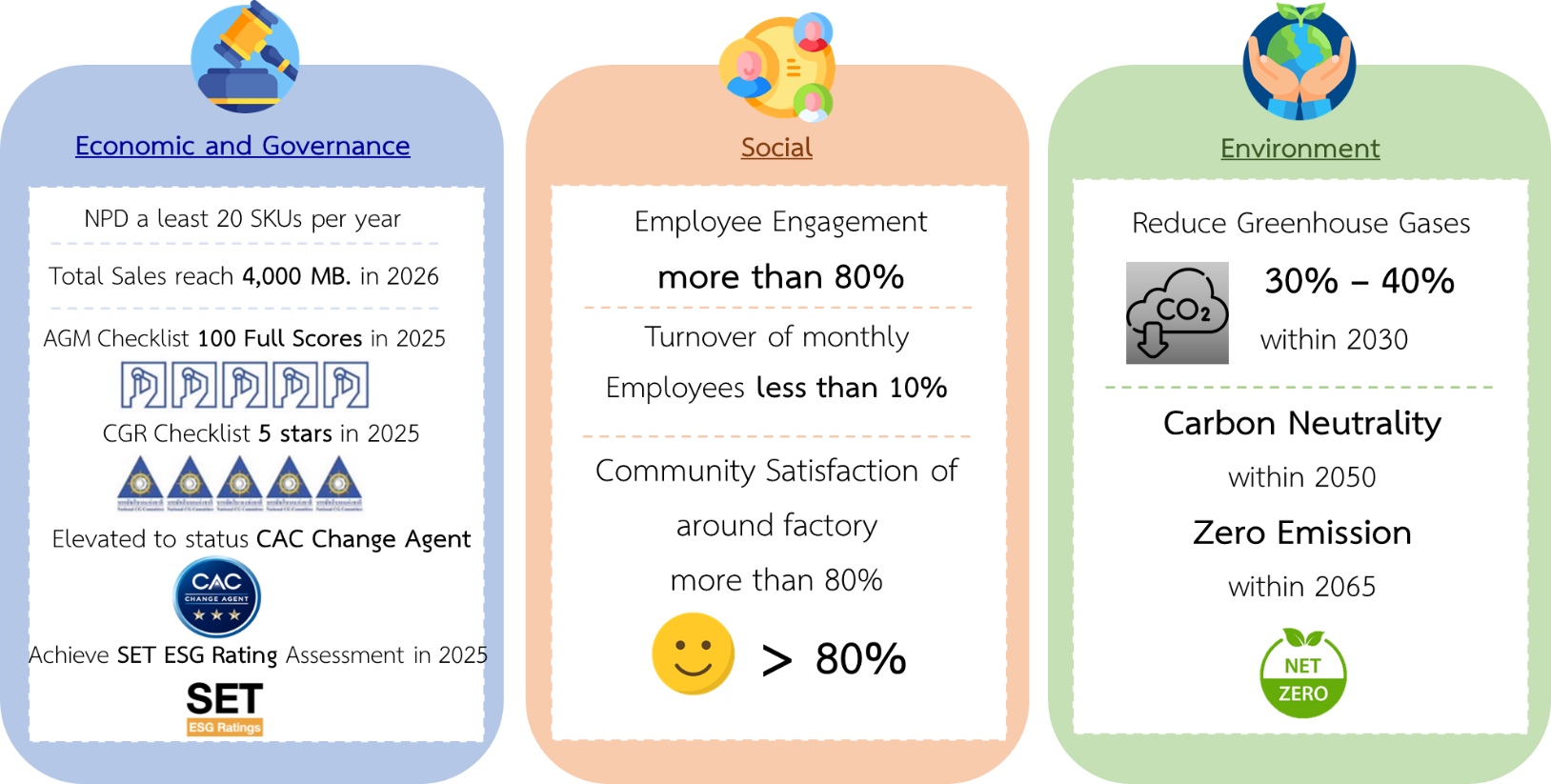
Sustainability Framework
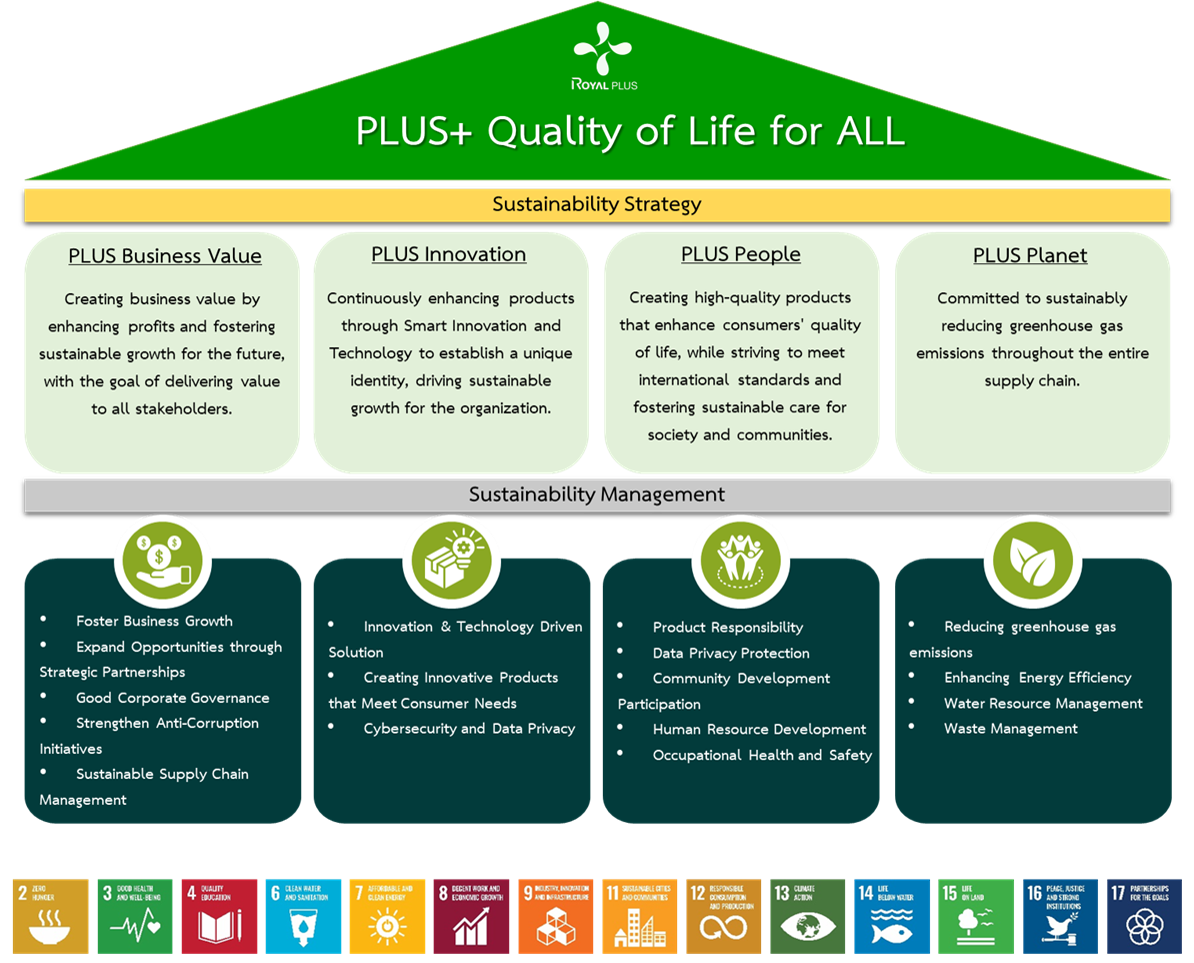
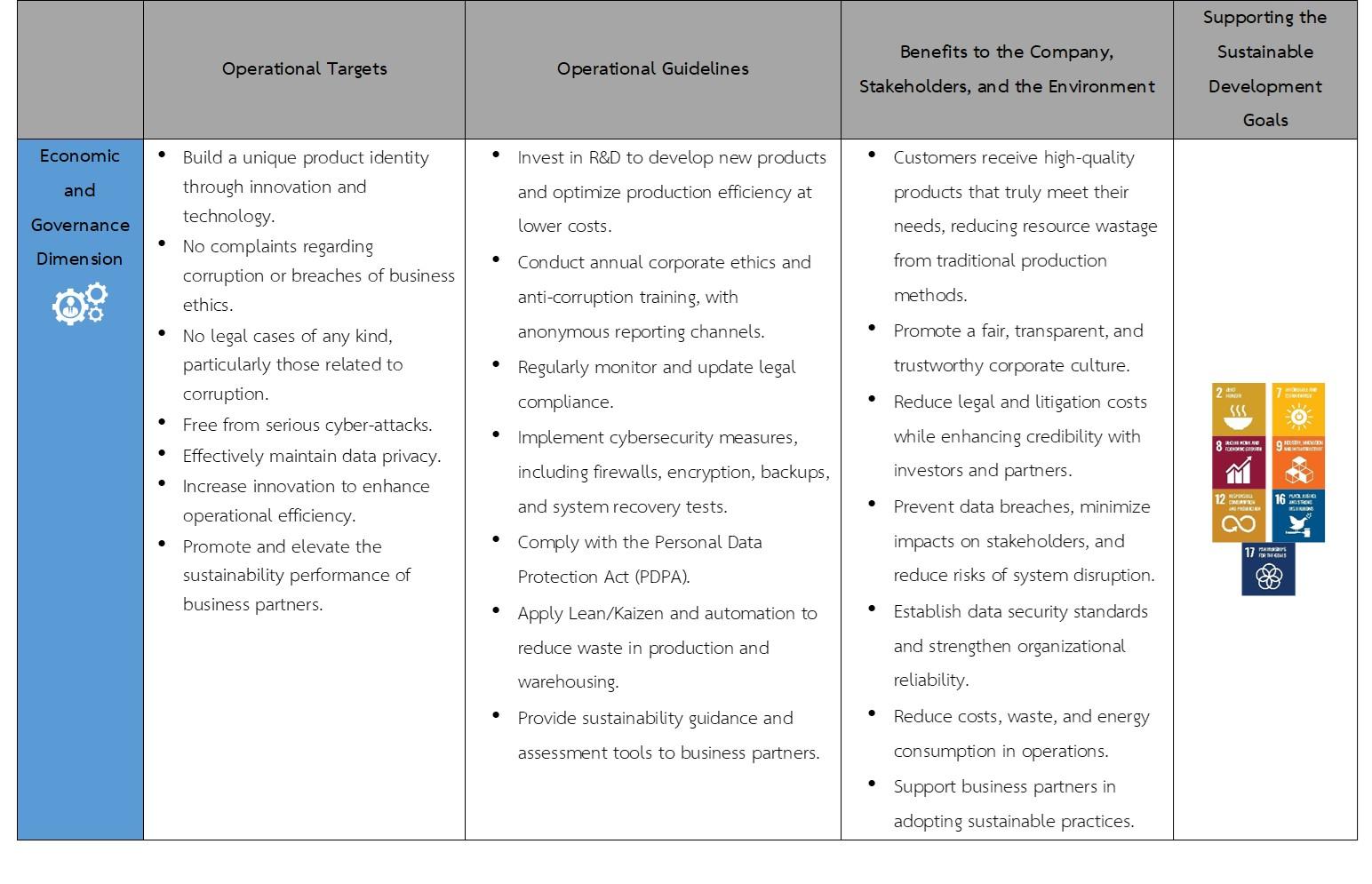
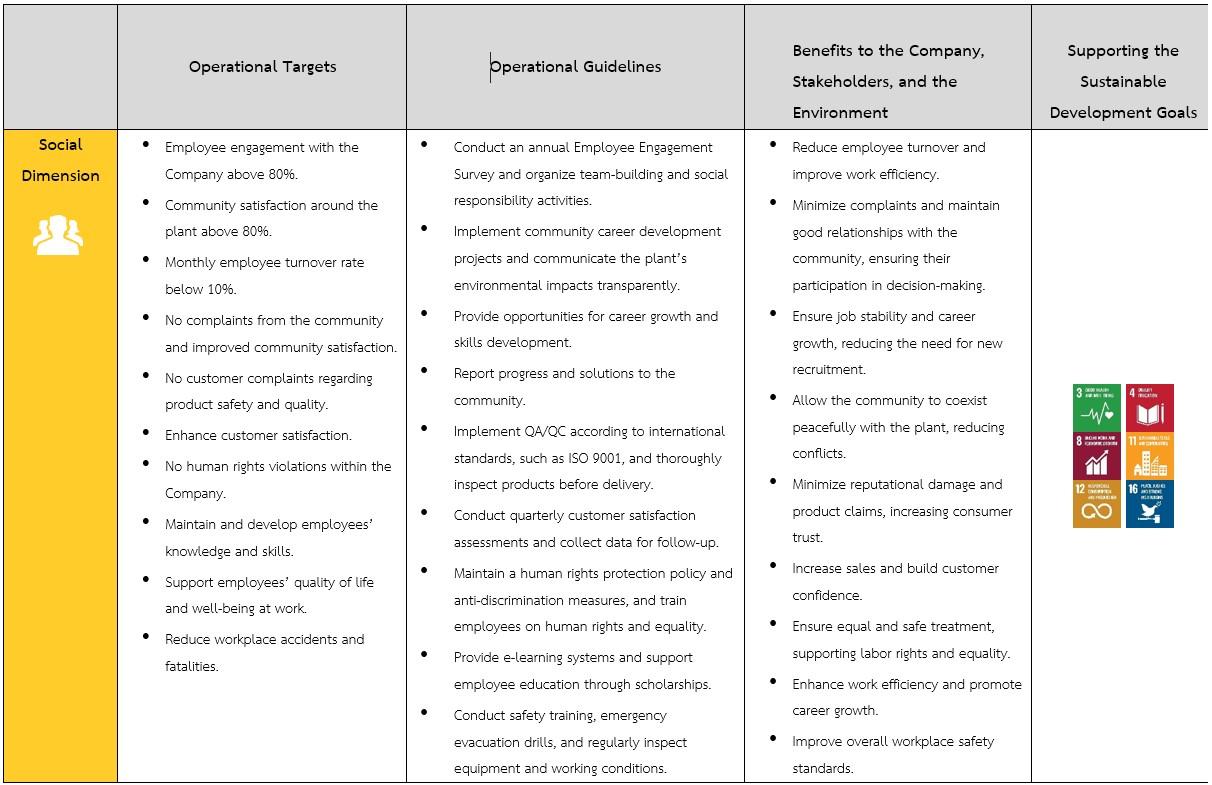
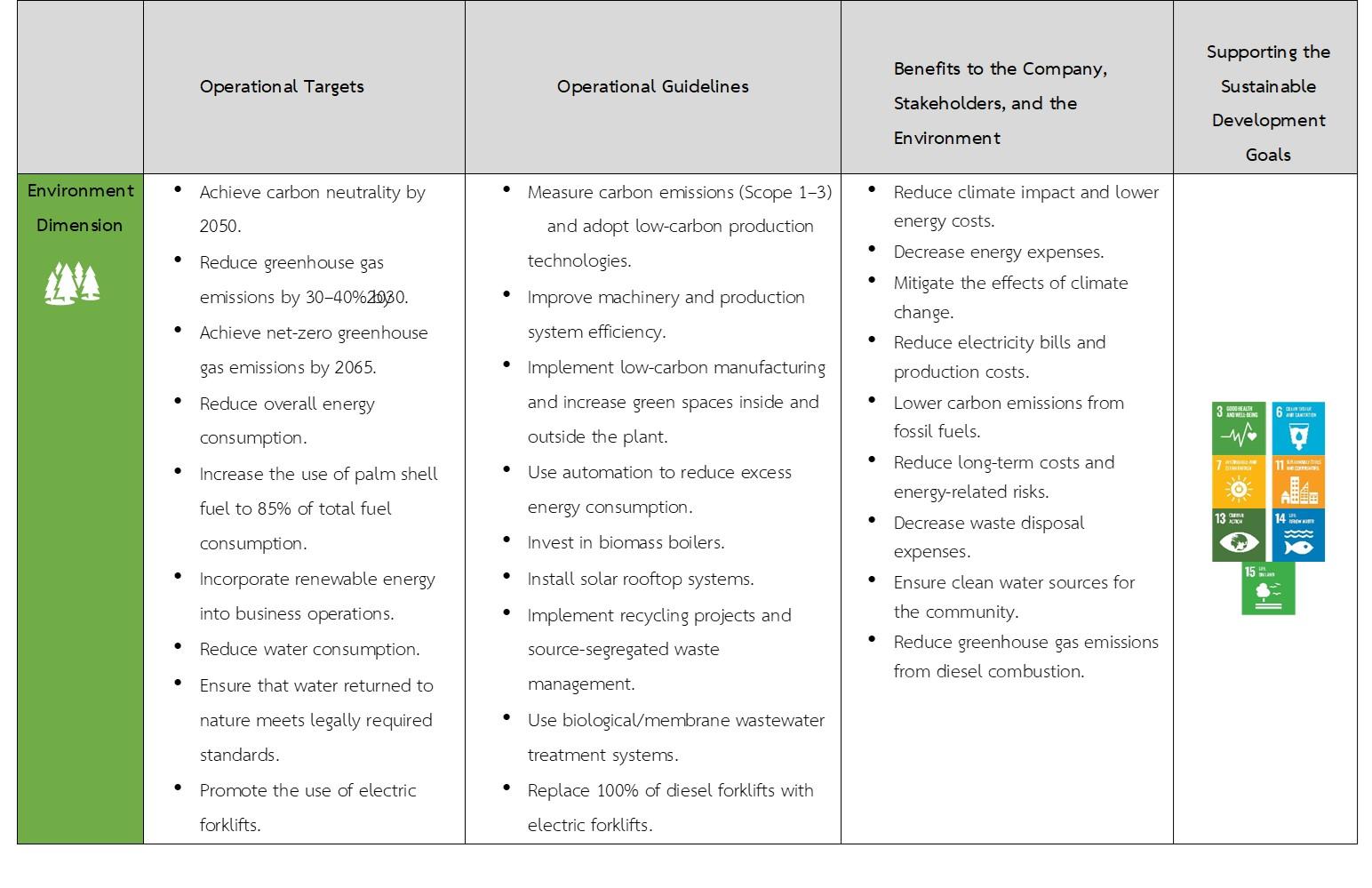
Sustainability Management Structure
The Company has established a Sustainability Committee and supporting working groups to effectively address key sustainability challenges and drive progress. The primary goal is to align operations with planned sustainability initiatives and objectives, ensuring seamless and efficient implementation.
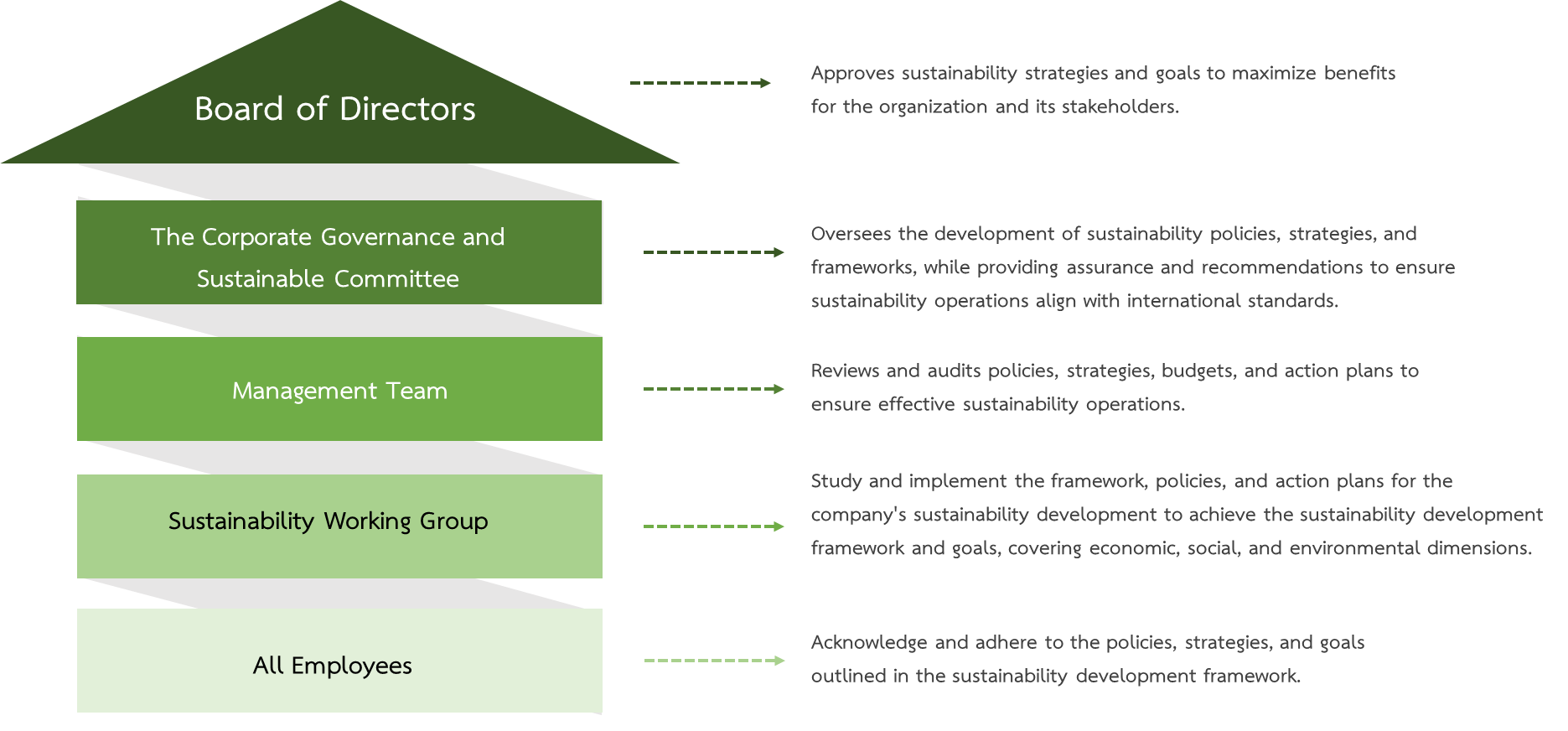
UN Sustainable Development Goals
| SDG Goal |
|---|
| Goal 1 No Poverty |
| Goal 1 No Poverty |
| Goal 2 Zero Hunger |
| Goal 2 Zero Hunger |
| Goal 3 Good Health and Well-being |
| Goal 3 Good Health and Well-being |
| Goal 4 Quality Education |
| Goal 4 Quality Education |
| Goal 6 Clean Water and Sanitation |
| Goal 6 Clean Water and Sanitation |
| Goal 7 Affordable and Clean Energy |
| Goal 7 Affordable and Clean Energy |
| Goal 8 Decent Work and Economic Growth |
| Goal 8 Decent Work and Economic Growth |
| Goal 9 Industry, Innovation and Infrastructure |
| Goal 9 Industry, Innovation and Infrastructure |
| Goal 11 Sustainable Cities and Communities |
| Goal 11 Sustainable Cities and Communities |
| Goal 12 Responsible Consumption and Production |
| Goal 12 Responsible Consumption and Production |
| Goal 13 Climate Action |
| Goal 13 Climate Action |
| Goal 14 Life below Water |
| Goal 14 Life below Water |
| Goal 15 Life on Land |
| Goal 15 Life on Land |
| Goal 16 Peace, Justice and Strong Institutions |
| Goal 16 Peace, Justice and Strong Institutions |
| Goal 17 Partnerships for the Goals |
| Goal 17 Partnerships for the Goals |
Policy Review
Policy Reviewed This Year
Yes
Policy Changed This Year
No
Review Details
-
Business Value Chain
Value Chain Description
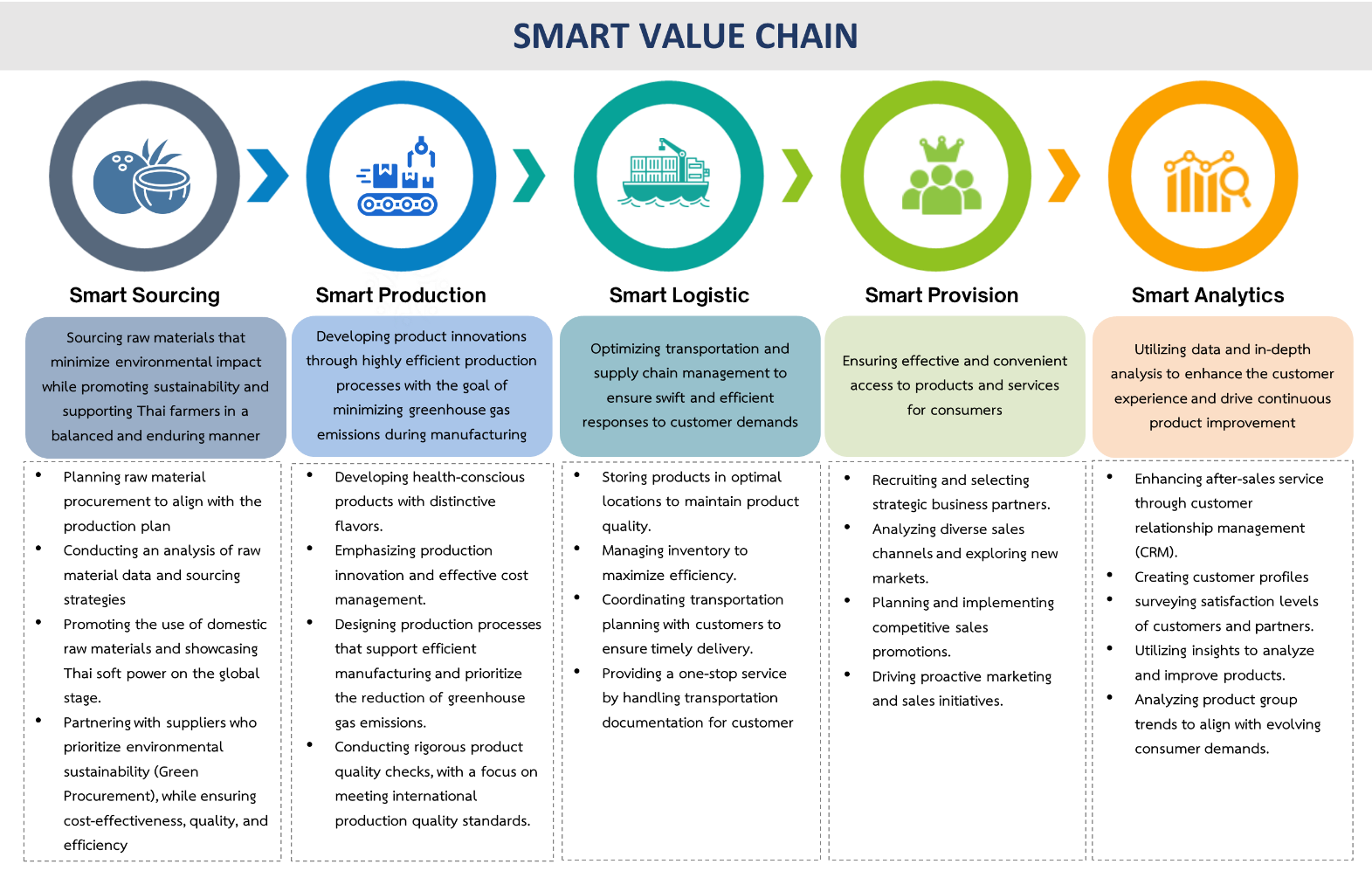
The Company places strong emphasis on holistic value chain management, guided by its vision of sustainable growth. The Board of Directors recognizes its responsibility in setting strategic direction, core objectives, and sustainability policy frameworks to ensure a balanced approach between business growth and impacts on all stakeholder groups. The Company fosters ESG awareness among employees at all levels and encourages innovation that enhances product value while creating shared value for stakeholders across the value chain.
The Board also plays a critical role in overseeing responsible, transparent, and accountable business operations, with due consideration of impacts throughout the value chain. It ensures that sustainability action plans are integrated into the Company’s core strategies, aligning all business units with stakeholder expectations. Resource allocation is managed efficiently to support continuous development across every stage, from raw material sourcing and production processes to logistics management, inventory control, and the delivery of high-quality products to customers.
The Company is committed to elevating value chain standards through the adoption of advanced technologies and innovation to enhance operational efficiency, reduce waste, strengthen supplier capabilities, and promote circular economy principles. These efforts contribute to minimizing environmental impacts, elevating production quality to international standards, and delivering safe, high-quality products to consumers worldwide.
In 2025, the Company defined key sustainability missions to enhance the scope and effectiveness of its sustainability performance. A sustainability strategy framework aligned with the United Nations Sustainable Development Goals (SDGs) was established to strengthen the Company’s competitiveness and support the advancement of Thailand’s beverage industry to global standards. This approach covers the entire value chain, focusing on transparent and fair sourcing practices, environmentally friendly and safe production technologies, efficient logistics and distribution, and enhanced customer experience through data-driven insights to support long-term product development. The ultimate goal is to achieve shared economic growth across the entire value chain and deliver sustainable value to all stakeholders, including farmers, raw material suppliers, business partners, employees, customers, communities, and shareholders.
Stakeholder Analysis
Introduction
The stakeholder management across the business value chain is considered as something that the Company pays great attention. This management covers those who are affected or may be affected by business operations. This is to ensure that stakeholders are treated equally according to the Company's mission, which has the commitment to create sustainable value together with society by taking care of the fair interests of all groups of the Company's stakeholders.
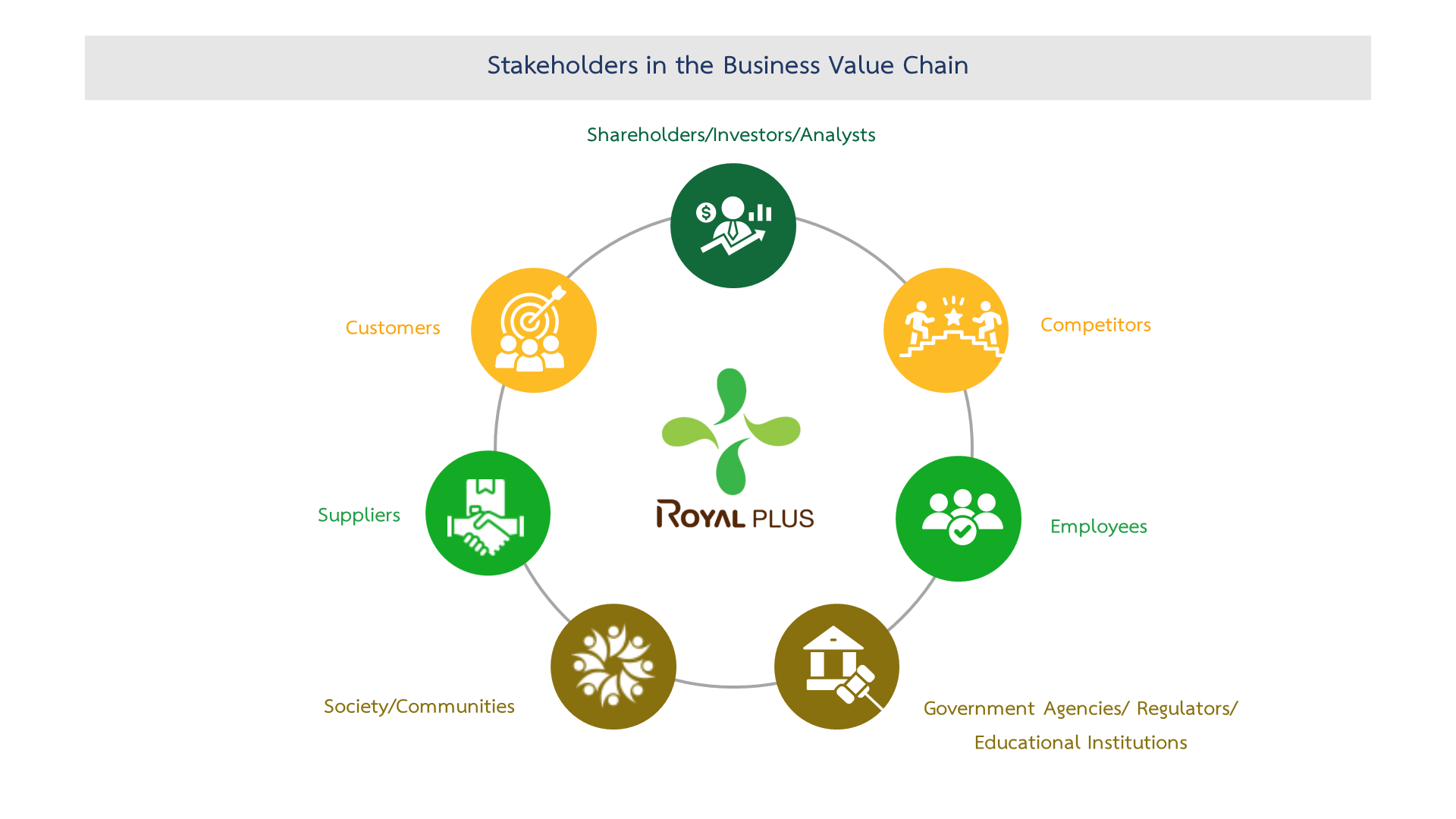
As the commitment in product and service development and investment in diversified innovation to response to the demands of all sectors, hence, the Company has considered activities and operational processes throughout the value chain to identify internal and external stakeholder groups. Additionally, feedbacks have been obtained through a variety of channels, both online and offline, to analyze and respond appropriately to those opinions and expectations of stakeholders. The Company has identified 7 groups of stakeholders shareholders, investors, and analysts; customers; suppliers; employees; society and communities; government agencies/ regulators/ educational institutions; and competitors.
Stakeholder Analysis
| Stakeholder Type | Stakeholders | Stakeholder Expectations | Response to Expectations | Communication Activities |
|---|---|---|---|---|
| External stakeholders | 2904 · Description: Investors or investment institutions · 2905 · Description: Analysts · 2913 · Description: Shareholders | • Good return on investment
• Effective Corporate Governance
• Stability and continuous business growth
• Accurate and comprehensive information disclosure with up-to-date and transparency
• Risk Management System with efficient monitoring and control | • Upholding corporate governance with transparency, fairness, and accountability
• Achieving strong performance and ensuring appropriate dividend distribution
• Disclosing information transparently to all stakeholders
• Developing and implementing strategic business plans effectively
• Managing risks proactively and thoughtfully | 2944 · Description: Annual General Meeting (AGM) · 2949 · Other name: Financial performance presentation quarterly · Description: Others · 2949 · Other name: Analyst Meetings 3 times · Description: Others · 2949 · Other name: Opportunity Day 4 times · Description: Others · 2949 · Other name: Investor Relations Contact Information Phone: 02-416-9209 ext. 1108 Email: ir@royalplus.co.th Website: https://investor.royalplus.co.th/th/home · Description: Others · 2949 · Other name: Annual Shareholder Meeting 1 time · Description: Others · 2949 · Other name: Company Visit 2 times · Description: Others |
| External stakeholders | 2923 · Description: Customers | • Obtaining accurate information of products and services
• Variety of products with delicious flavors
• Nutritional value in products to support health-conscious choices.
• Products with reasonable prices
• Price competition is transparent
• Obtaining quality products and services
• Ability to solve problems promptly as feasible
• Confidentiality | • Corporate governance with transparency, fairness, and accountability
• Having an anti-corruption policy
• Managing quality according to international standards.
• Inviting customers to visit and observe the production line process
• Developing high-quality products that meet customer demands effectively
• Managing customer satisfaction through proactive engagement and service
• Developing and expanding sales channels to reach a wider market.
• Maintaining ethical standards by safeguarding customer data confidentiality | 2938 · Description: Visit · 2947 · Description: Satisfaction Survey · 2949 · Other name: Close coordination with customers at every step of the process. · Description: Others · 2949 · Other name: Collaborative marketing efforts: Encouraging co-marketing initiatives with clients through advertising media for the Company’s products. · Description: Others · 2949 · Other name: Regular customer interactions, including market surveys and online meetings · Description: Others · 2949 · Other name: Sales and Marketing Contact Information: Email: sales@royalplus.co.th Website: https://www.royalplus.co.th · Description: Others · 2949 · Other name: Conduct regular satisfaction surveys. · Description: Others |
| External stakeholders | 2899 · Description: Suppliers · 2900 · Description: Business partners | • Adhering to regulations and requirements in the Company’s procurement process
• Conducting business with transparency, fairness, and equality
• Participate in strengthening long-term, sustainable joint business capabilities.
• Ensuring the confidentiality of supplier information | • Enhancing the efficiency of procurement-related operational processes
• Promoting equality and mutual benefits in partnerships with business partners
• Ensuring the confidentiality of supplier information | 2947 · Description: Satisfaction Survey · 2949 · Other name: Annual raw material quality inspection plan yearly · Description: Others · 2949 · Other name: Supplier Satisfaction Assessment 1 time per year · Description: Others · 2949 · Other name: Provide opportunities for expressing opinions and negotiation. · Description: Others |
| Internal stakeholders | 2921 · Description: Employees | • Providing competitive remuneration with opportunities for career growth and long-term stability within the Company
• Continuously promoting skill development to enhance employee capabilities and performance
• Ensuring a suitable work environment with adequate equipment, welfare benefits, and a strong focus on operational safety
• Equality and fairness
| • Encouraging employees to continuously develop their skills and knowledge
• Establishing regulations and guidelines for occupational health and safety, while promoting employee well-being
• Respecting personal rights and ensuring a fair and inclusive workplace
• Provide opportunities to express opinions
• Implementing a Succession Plan to support career growth and prepare for key leadership positions | 2942 · Description: Internal Meeting · 2946 · Description: Employee Engagement Survey · 2949 · Other name: Communicating relevant information through designated channels at appropriate intervals · Description: Others · 2949 · Other name: Performing annual individual performance evaluations to track progress and achievements · Description: Others · 2949 · Other name: Encouraging feedback and suggestions through various platforms, such as comment boxes and Morning Talk activities · Description: Others · 2949 · Other name: Organizing activities that promote employee Safety and health · Description: Others · 2949 · Other name: Conducting an Employee Engagement Assessment once annually · Description: Others · 2949 · Other name: Holding quarterly internal meetings (Town Hall) to share updates and foster transparency · Description: Others |
| External stakeholders | 2902 · Description: Community · 2928 · Description: Society | • Reducing the environmental impact on surrounding communities
• Adhering safety in production according to the safety standards
• Participating in community development, generating careers and income to build stability for people in the surrounding communities | • Operating in compliance with occupational health and safety standards
• Enhancing resource efficiency while reducing greenhouse gas emissions
• Employing local labor to generate income and support economic development in communities surrounding the factory | 2940 · Description: Social Event · 2949 · Other name: Conducting business responsibly, with consideration for potential impacts on society and surrounding communities, while being accountable to them · Description: Others · 2949 · Other name: Providing opportunities for feedback by listening to community opinions and suggestions through designated channels once annually · Description: Others · 2949 · Other name: Conducting a Community Satisfaction Survey for the area surrounding the factory once per year · Description: Others · 2949 · Other name: Organizing regular community relationship-building activities to foster strong connections · Description: Others · 2949 · Other name: Support local economic development by promoting livelihoods and income generation for communities through participation in Circular Economy initiatives. · Description: Others |
| External stakeholders | 2926 · Description: Educational institution or academic agency · 2931 · Description: Government agencies and Regulators | • Participating in new government policies and projects
• Sharing of operational knowledge and skills
• Supporting and complying to measures or activities of local and national governments | • Exchanging knowledge on operational methods
• Appropriately complying and participating in government measures and activities | 2941 · Description: Online Communication · 2949 · Other name: Ensuring compliance with all applicable laws, regulations, and legal requirements · Description: Others · 2949 · Other name: Engaging regularly through meetings, seminars, emails, and ongoing communication · Description: Others |
| External stakeholders | 2898 · Description: Competitors | • Behaving toward commercial competitors under good manners and fair competition rules | • Not seeking confidential information of commercial competitors
• Not destroying commercial competitor’s reputations | 2949 · Other name: Behaving toward competitors in accordance with international standards · Description: Others |
Environmental Sustainability — Overview
Introduction
Establish Excellent Environmental Position
In 2025, Thailand continued to experience significant climate volatility, with various severe natural events including droughts, heavy rainfall, flash floods, runoff flooding, and coastal flooding in several areas. In addition, seismic tremors from an earthquake affected certain districts of Bangkok—an unprecedented occurrence. Environmental challenges such as heatwaves, air pollution, increasing plastic waste in water sources, and the decline in biodiversity have also intensified. These situations have directly impacted the agricultural sector and raw material yields, reinforcing the urgent need across all sectors to strengthen environmental management, enhance climate resilience, and promote more efficient use of natural resources.
The Company conducts its business with a strong commitment to environmental responsibility and strives to minimize the environmental impacts of its operations by integrating sustainability principles throughout the entire value chain—from upstream to downstream activities. This includes energy management, water stewardship, climate change mitigation and adaptation, greenhouse gas reduction, and the management of waste, effluents, and pollution. The Company has established clear policies, targets, operational guidelines, and monitoring mechanisms to systematically drive effective and sustainable environmental performance over the long term.
Environmental Policy & Guidelines
Introduction
The Company is committed to effectively managing key environmental issues in alignment with its Environmental Sustainability Policy. The Company’s environmental policies are developed based on analyses of its actual operations in conjunction with relevant external factors. These policies are regularly reviewed and refined to ensure compliance with applicable laws and regulations, enhance environmental management excellence, and support the sustainable conservation of natural resources. The details are as follows:
3.3.2 Environmental Management Targets
The Company places the highest priority on compliance with environmental, occupational health, and safety laws and standards at all levels—from local to national and regional. The Company is committed to creating a safe working environment and minimizing tangible impacts on surrounding communities. At the same time, it promotes the efficient and responsible use of resources among employees and advances the development of environmentally friendly technologies and innovations to enhance operational excellence and ensure the Company’s long-term sustainability
The Company established the Company's Key Performance Indicators (KPI) for green industry and governance to align with the mission of Heart + Love; the indicators are shown as below:
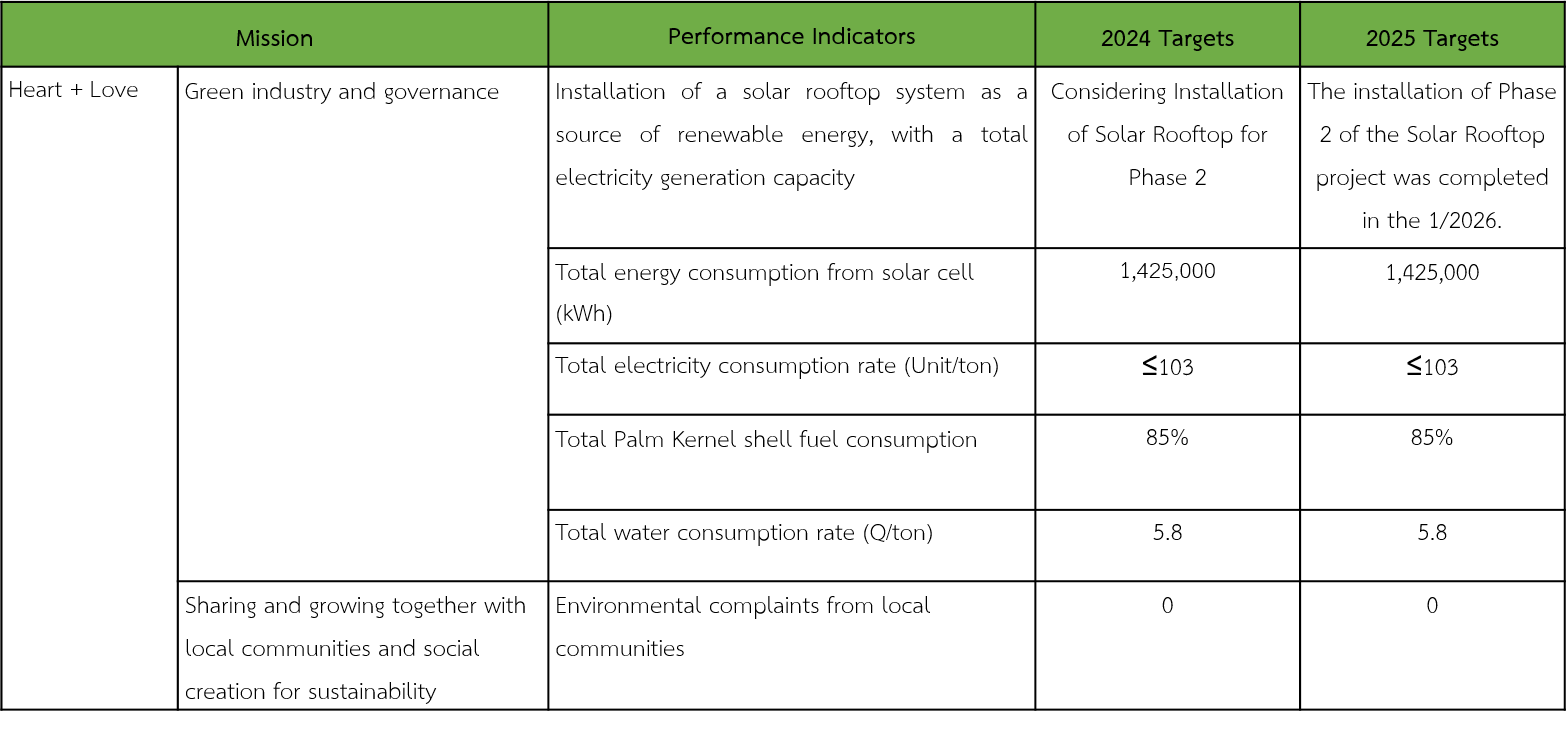
Has an Environmental Policy
Yes
Policy Description
Environmental Management Plans
Reviewing the environmental policy to align with both internal and external factors of the organization
The company has participated in the "Solar Orchestra" project, a collaboration between the Export-Import Bank of Thailand (EXIM Bank) and leading organizations to support investment in the installation of solar power systems
Planning to use lightweight glass packaging and plastic packaging to replace glass packaging, which has a high level of greenhouse gas emissions during the production process
Developing a greenhouse gas emissions accounting system for the organization, based on calculation methods according to the ISO 14064-1:2018 standard
Achieved ISO 14001:2015 certification for the organization’s environmental management system
Received ISO 14064-1:2018 certification, an international standard for verifying the measurement and reporting of greenhouse gas emissions and reductions at the organizational level
Elevated the factory to Green Industry Level 3
Promoting environmental management training programs for employees and executives at all levels to raise awareness of environmentally friendly and climate-conscious business practices
Setting performance indicators for the organization’s energy use to reduce electricity consumption and fuel use per unit of production.
Implementing Phase 2 of the Solar Rooftop project to increase the proportion of renewable energy consumption and expects to commence utilization of the generated electricity within 2026.
Introduced electric forklifts (EV Forklifts) into its factory operations to enhance material handling efficiency, reduce reliance on fossil fuels, and continuously lower greenhouse gas emissions
Determine water management indicators to mitigate the Company's water consumption per unit produced
There are no complaints, cases, and penalties of non-compliance with environmental laws.
Environmental Guidelines
| Guideline |
|---|
| Electricity Management |
| Fuel Management |
| Renewable/Clean Energy Management |
| Water Management |
| Waste Management |
| Greenhouse Gas and Climate Change Management |
Environmental Policy Review
Policy Reviewed This Year
Yes
Review Details
-
Policies & Guidelines Changed
| Change |
|---|
| Electricity Management |
| Fuel Management |
| Water Management |
| Waste Management |
| Greenhouse Gas and Climate Change Management |
Energy — Plan & Guidelines
Has an Energy Management Plan
Yes
Plan Description
Energy Management
The Company is committed to reducing its reliance on electricity generated from fossil fuel sources by driving the adoption of renewable energy across all operational processes. This initiative aims to minimize pollution that impacts the environment and contribute meaningfully to climate change mitigation. The Company remains firmly dedicated to sustainable operations for the benefit of communities and the planet in the long term
In 2025, the Company placed strong emphasis on systematic energy management, focusing on energy efficiency while reducing costs and environmental impacts. Key measures included monitoring and analyzing energy consumption in core processes, upgrading equipment to higher-efficiency technologies, promoting the use of renewable energy, and fostering energy conservation awareness among employees. The Company remains committed to continuously improving and enhancing its energy management system to achieve long-term efficiency gains and support the organization’s sustainable growth. Accordingly, the Company established organizational performance indicators for Green Industry and Good Governance, and formulated an energy conservation policy to serve as a guideline for all employees across the organization.
Energy Conservation Policies
1. The Company will develop an energy management system appropriately by embracing energy conservation as a part of the Company’s operations in accordance with law and other related regulations.
2. The Company will continuously improve energy efficiency, which aligns with business operations, technology adoption, and good practice guidance.
3. The Company will lay out the plan and energy conservation targets annually and communicate to all employees to enhance understanding and practice precisely.
4. The Company will hold that the energy conservation is the responsibility of the business owner, executives, and employees across the levels to cooperate in the Company’s energy management measures, monitor, and report to the Energy Management Committee.
5. The Company will uphold necessary resources, including human resources, budget, operational time, training, and listening to feedback for further improvements in energy management.
6. The executives and Energy Management Committee will revise and improve on energy targets and plans annually.
Energy Management Plans
1. The replacement of lighting devices with more energy-efficient ones across the organization.
2. The replacement of the previous fixed speed air compressor with a variable speed drive (VSD) air compressor helps to control production output to match demand.
3. The installation of exterior lighting by using devices primarily powered by solar energy.
Energy — Electricity Consumption
Electricity Consumption
| Metric | Current Year | Previous Year | Two Years Ago |
|---|---|---|---|
| Total electricity consumption within the organization (Kilowatt-Hours) | 11,616,542.61 | 11,562,688 | 7,228,414.25 |
| Electricity purchased for consumption from non-renewable energy sources (Kilowatt-Hours) | 10,399,622 | 10,387,388 | 6,086,005.01 |
| Electricity purchased or generated for consumption from renewable energy sources (Kilowatt-Hours) | 1,216,920.61 | 1,175,300 | 1,142,409.24 |
Energy — Fuel Consumption
Fuel Consumption
| Metric | Current Year | Previous Year | Two Years Ago |
|---|---|---|---|
| Crude oil (Barrels) | |||
| Coal (Metric tonnes) | |||
| Jet fuel (Litres) | |||
| Diesel (Litres) | 5,504.48 | 17,080.97 | 23,296.33 |
| Gasoline (Litres) | 372.09 | 231.65 | 33,598.83 |
| Fuel oil (Litres) | 540,000 | 1,002,000 | 591,500 |
| Natural gas (Standard cubic feet) | |||
| LPG (Kilograms) | 13,335 | 31,305 | 24,285.93 |
| Steam (Metric tonnes) |
Energy — Targets
Introduction
Performance Targets
Highlighting energy management efficiency, the Company established agreed targets across the operations.
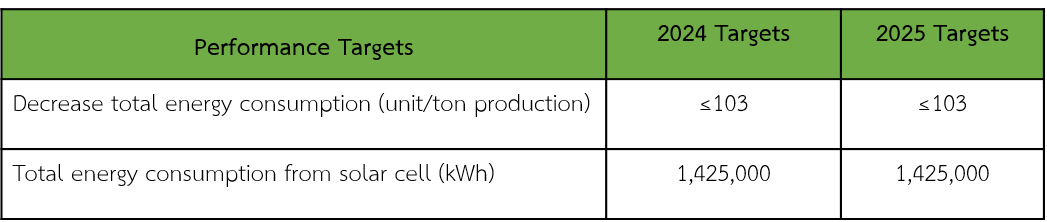
Has Set Targets
Yes
Targets
| Target | Base Year | Base Year Value | Target Year | Target Change (%) | Unit |
|---|---|---|---|---|---|
| Increase of electricity consumption from renewable energy sources | 2,023 | 1,142,409.24 | 2,026 | 10 | Kilowatt-hour |
Energy — Performance & Outcomes
Has Performance Results
Yes
Performance Description
Key Performance
• The total amount of non-renewable energy consumed 10,399,622 kWh (electricity)
• The total amount of non-renewable energy consumed 540,000 LTR (furnace oil)
• The total amount of non-renewable energy consumed 7,621,430 kg. (Palm Kernel shell)
• Total energy consumption from solar cells 1,216,920.61 kWh
• Total Palm Kernel shell fuel consumption in the manufacturing process accounts for 96.55%
Water — Plan & Guidelines
Has a Water Management Plan
Yes
Plan Description
The Company places great importance on sustainable water resource management by striving to reduce water consumption across all operational processes. This is supported by the development of water-related infrastructure, including the construction of water storage facilities to enhance utilization efficiency and the installation of wastewater treatment systems in compliance with applicable legal standards. In addition, the Company has established clear water usage targets to maximize efficiency, minimize environmental impacts, and support the long-term conservation of water resources.
In 2025, the Company continued to prioritize effective water resource management by implementing water stewardship practices to address water security risks, reduce environmental impacts, and support the Sustainable Development Goals (SDGs). The Company focused on responsible water use, reducing water consumption in production processes, and treating wastewater prior to discharge into the environment. The Company remains committed to continuously enhancing its water management systems to ensure efficient and sustainable use of water resources, minimize impacts on ecosystems, and contribute to long-term environmental conservation According to the pivot product of the Company “Beverage,” it is undeniable that the production process consumes a large amount of water. As a leading beverage company, the Company recognizes and places importance on efficient water management. Moreover, the Company is conscious of the water shortage situation, which can threaten the business in the future. Therefore, the Company strictly complies with regulations and related laws. Additionally, our commitment extends to proactive water management practices aimed at optimizing efficiency, reducing water consumption, and minimizing environmental and societal impact.
Water Management Plans
The Company systematically manages water used in its production processes, beginning with monitoring water conditions in the public canal adjacent to the plant to assess potential water scarcity risks. Surface water is then pumped and stored on-site through the Company’s water reservoirs and backup ponds. The stored water is subsequently treated through a Reverse Osmosis (R.O.) high-pressure system to ensure appropriate quality for use in production.
At the end of the production process, wastewater is treated to meet legally prescribed standards prior to discharge. Strict water quality monitoring is conducted before releasing treated water into the public canal. Responsible personnel are assigned to oversee internal water quality control, and formal procedures are established for wastewater management and emergency response. In addition, the Company conducts annual inspections in accordance with its internal measures. The results confirm that the water management system complies with required standards, with no community complaints and no water shortages reported in the area.
In parallel, the Company implemented a new groundwater well project to serve as the primary water source for production, replacing the use of municipal water supply. This initiative has significantly reduced water costs due to its lower cost per liter. The new well has a pumping capacity of 100 cubic meters per hour, strengthening raw water stability, reducing reliance on external utilities, and contributing to long-term greenhouse gas emission reduction. This initiative aligns with the Company’s sustainability objectives.
Water — Withdrawal, Discharge & Consumption
Water Withdrawal, Discharge & Consumption
| Metric | Current Year | Previous Year | Two Years Ago |
|---|---|---|---|
| Total water withdrawal (Cubic meters) | 467,306 | 246,773 | 285,610 |
| Total water withdrawal by third-party water (Cubic meters) | 184,505 | 11,235 | 75,509 |
| Total water withdrawal by surface water (Cubic meters) | 282,801 | 235,538 | 210,101 |
| Total water withdrawal by groundwater (Cubic meters) | |||
| Total water withdrawal by seawater (Cubic meters) | |||
| Total water withdrawal by produced water (Cubic meters) | |||
| Percentage of wastewater treated before discharge (%) | |||
| Total water discharge (Cubic meters) | 147,604 | 112,020 | 138,550 |
| Total water discharge to third-party water (Cubic meters) | |||
| Total water discharge to surface water (Cubic meters) | 147,604 | 112,020 | 138,550 |
| Total water discharge to groundwater (Cubic meters) | |||
| Total water discharge to seawater (Cubic meters) | |||
| Total water consumption (Cubic meters) | 319,702 | 134,753 | 147,060 |
| Recycled water (Cubic meters) |
Water — Targets
Introduction
Performance Targets

Has Set Targets
Yes
Targets
| Target | Target Year | Target Year Value | Unit | Per Unit (Intensity) | Per Unit — Please Specify |
|---|---|---|---|---|---|
| Reduction of water withdrawal | 2,025 | 5.8 | Cubic meters | Tonne-kilometer | Tonne-kilometer |
Water — Performance & Outcomes
Has Performance Results
Yes
Performance Description
Key Performance
• The total water consumption 467,306 cubic meter, which accounted for water consumption quantity per unit produced, equal to 9.23 (cubic meter/ton)
• The total water discharged 147,604 cubic meter, which accounted for water discharged per unit produced, equal to 3.20 (cubic meter/ton)
Water Management Projects
1. The Company installed a water circulation system for the water used in the production process.
2. Improve the efficiency of the R.O. water production system to maximize water-generating capability.
Waste — Plan & Guidelines
Has a Waste Management Plan
Yes
Plan Description
The Company is committed to effectively managing both hazardous and non-hazardous waste by integrating the 3Rs principles (Reduce, Reuse, Recycle) with the Circular Economy approach. This aims to maximize resource efficiency, minimize waste generation at the source, and reduce environmental impacts. The Company seeks to decrease the volume of waste sent to landfill and promote the recirculation and reuse of resources to the greatest extent possible
The Company prioritizes waste management, including industrial waste, by adhering to the principle of maximizing resource utilization based on the 3Rs (Reduce, Reuse, Recycle). Emphasizing the significance of minimizing waste in the production process, the company advocates for efficient waste management, encompassing the reuse of raw materials and waste throughout the supply chain, detailed in the following measures:
1. The Company has consistently advanced and enhanced operational processes in both production and production support activities. The primary objective is to minimize waste generation, and when waste does occur, the company meticulously manages each type based on its potential for reuse or recycling. This approach aims to minimize the volume of waste requiring disposal in landfills.
2. The Company ensures environmentally responsible disposal of non-recyclable industrial waste, following strict compliance with legal requirements and Department of Industrial Works guidelines. This involves efficient waste sorting by type, and subsequent transportation and disposal in accordance with established standards.
3. The Company prioritizes strict adherence to air pollution control laws to ensure occupational health and safety while minimizing environmental impact. Recognizing potential pollution effects on nearby communities, the Company proactively collaborates with them to implement measures and establishes a mechanism for community feedback or complaints on environmental issues caused by factory activities.
4. The Company will assess the effectiveness of the factory's waste management system, analyzing the root causes of any inefficiencies or deviations from its objectives. This evaluation will encompass continuous improvement and the ongoing development of waste management activities within the factory, guided by the principles of 3Rs.
The Company has determined that employees at all levels within the organization, including staff, directors, and executives of Royal Plus Public Company Limited, are obligated to endorse, advocate, and align their actions with the prescribed environmental policy. The Company is committed to collaborating, supporting, and actively participating in initiatives led by various entities, both public and private, aimed at advancing environmental practices and ongoing energy conservation.
Waste — Generation, Disposal & Recycling
Waste Generation, Disposal & Recycling
| Metric | Current Year | Previous Year | Two Years Ago |
|---|---|---|---|
| Total waste generated (Kilograms) | 642,255 | 214,988 | 189,311 |
| Non-hazardous waste (Kilograms) | 639,735 | 211,790 | 187,380 |
| Non-hazardous waste - Landfilling (Kilograms) | |||
| Non-hazardous waste - Incineration (with energy recovery) (Kilograms) | |||
| Non-hazardous waste - Incineration (without energy recovery) (Kilograms) | |||
| Non-hazardous waste - Other disposal operations (Kilograms) | |||
| Hazardous waste (Kilograms) | 2,520 | 3,198 | 1,931 |
| Hazardous waste - Landfilling (Kilograms) | |||
| Hazardous waste - Incineration (with energy recovery) (Kilograms) | |||
| Hazardous waste - Incineration (without energy recovery) (Kilograms) | |||
| Hazardous waste - Other disposal operations (Kilograms) | |||
| Total reused/recycled waste (Kilograms) | 639,735 | 420,438 | 351,620 |
| Reused/Recycled non-hazardous waste (Kilograms) | 639,735 | 420,438 | 351,620 |
| Reused non-hazardous waste (Kilograms) | |||
| Recycled non-hazardous waste (Kilograms) | |||
| Reused/Recycled hazardous waste (Kilograms) | |||
| Reused hazardous waste (Kilograms) | |||
| Recycled hazardous waste (Kilograms) |
Waste — Targets
Introduction
Performance Targets
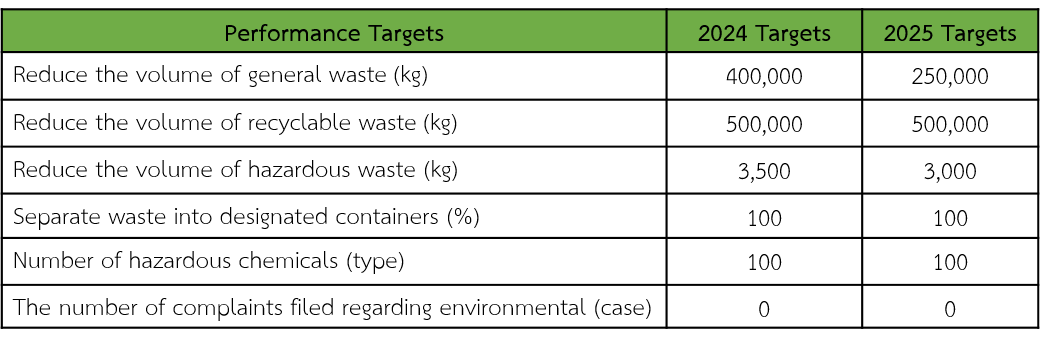
Has Set Targets
Yes
Targets
| Waste Type | Disposal Approach | Target | Base Year | Base Year Value | Target Year | Target Year Value | Unit |
|---|---|---|---|---|---|---|---|
| Non-hazardous waste | 2759 · Description: Recycle · 2760 · Description: Landfilling | Reduce waste volume | 2,024 | 500,000 | 2,025 | 100,000 | Kilograms |
Waste — Performance & Outcomes
Has Performance Results
Yes
Performance Description
Key Performance
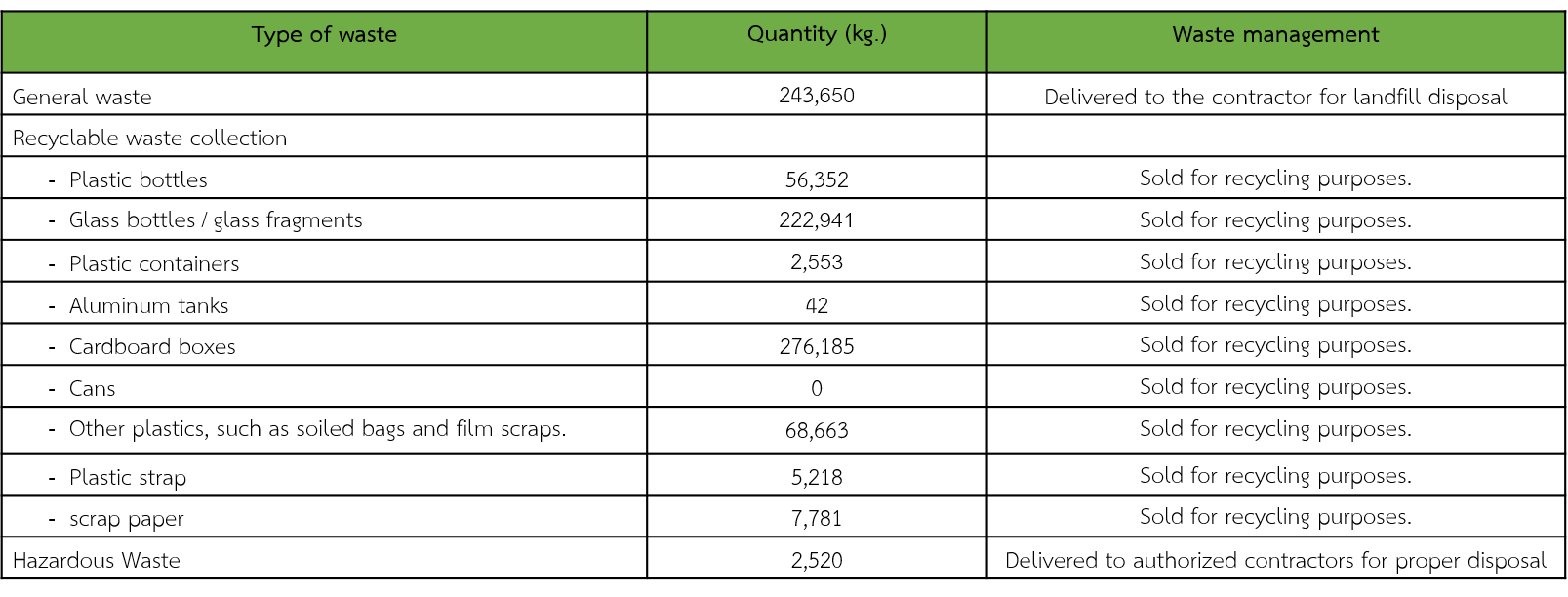
• The company has general waste was 243,650 kg. from the target of 250,000 kg.
• The company has recyclable waste was 639,735 kg. from the target of 500,000 kg.
• The company has hazardous waste was 2,520 kg. from the target of 3,000 kg.
• All employees understand and are able to separate waste according to specified containers, achieving a rate of 100%.
• Number of hazardous chemicals of 75 types.
• There are no environmental complaints from neighboring communities.
GHG — Plan & Guidelines
Has a GHG Management Plan
Yes
Plan Description
Climate Change and Greenhouse Gas Emissions
The Company places strong emphasis on energy conservation by promoting the efficient and effective use of resources, while continuously advancing the adoption of renewable energy in its operations. In addition, the Company leverages modern technologies and innovations in both production systems and management processes to enhance efficiency in reducing greenhouse gas emissions in a tangible manner. These efforts support the Company’s sustainable growth and create long-term value for communities and society
In 2025, the world continued to face ongoing natural and environmental challenges, including natural disasters such as earthquakes, heavy rainfall, flash floods, forest runoff, and rising sea levels in many regions. These events have had direct impacts on the global economy, society, and quality of life people worldwide. Such circumstances reflect the escalating effects of climate change, primarily driven by the continuous increase in greenhouse gas emissions resulting from human activities. Despite efforts by many countries to reduce emissions, there remains an urgent need to accelerate the transition to clean energy, develop sustainable environmental policies, and strengthen concrete international cooperation to address the risks that may intensify in the future. The Company places strong emphasis on greenhouse gas emissions and ongoing environmental changes by aligning with government policies aimed at reducing national greenhouse gas emissions and establishing guidelines for the Company’s greenhouse gas management. In 2025, the Company conducted audits, maintained standards, and achieved certification under ISO 14001:2015 (Environmental Management System), providing an internationally recognized framework to enhance the Company’s environmental performance and support environmental sustainability. In addition, the Company obtained certification under ISO 14064-1:2018 and upgraded its Green Industry Factory level to Level 3, demonstrating the Company’s commitment to greenhouse gas emission reduction and its contribution to addressing global warming and climate change. In 2025, the Company conducted internal training on environmental management for employees and executives at all levels to ensure alignment with the Company’s environmental management policies and practices. Training materials were disseminated through the Company’s intranet and notice boards. Approximately 80% of employees participated in the training.
Climate Change and Greenhouse Gas Emissions Management Plans
In 2025, the Company set the indicators for efficient resource consumption and lowered the impact on the environment in relation to the Company's operations as well as monitored and enhanced the efficiency of the performance.

GHG — Emissions
GHG Emissions
| Metric | Current Year | Previous Year | Two Years Ago |
|---|---|---|---|
| Total GHG emissions (Metric tonnes of carbon dioxide equivalent) | 56,684 | 39,885 | 30,905 |
| Total greenhouse gas emissions 1 (Metric tonnes of carbon dioxide equivalent) | 2,350 | 3,745 | 2,297 |
| Total greenhouse gas emissions 2 (Metric tonnes of carbon dioxide equivalent) | 5,078 | 5,300 | 3,043 |
| Total greenhouse gas emissions 3 (Metric tonnes of carbon dioxide equivalent) | 49,256 | 30,840 | 25,565 |
GHG — Emissions Verification
Emissions Verified by a Third Party
Yes
Verifying Body
2648
GHG — Principles & Standards
Principles & Standards Applied
| Standard |
|---|
| 2671 |
| 2677 |
GHG — Targets
Introduction
Performance Targets

Has Set GHG Targets
Yes
GHG Targets — Net Zero
Net Zero Targets
| Emission Scope | TGO Certification | Base Year | Base Year Emissions | Near-term Target Year | Near-term Target Change (%) | Long-term Target Year | Long-term Target Change (%) | Target Year | Target Change (%) | Unit |
|---|---|---|---|---|---|---|---|---|---|---|
| 2716 | Net zero | 2,022 | 37,918 | 2,027 | 20 | 2,030 | 40 | 2,027 | 20 | Metric tonnes of carbon dioxide equivalent |
GHG Targets — Carbon Neutrality
Carbon Neutrality Targets
| Emission Scope | Carbon Neutrality Certified | Target Year | Unit |
|---|---|---|---|
| 2716 | N | 2,050 | Metric tonnes of carbon dioxide equivalent |
GHG — Performance & Outcomes
Has Performance Results
Yes
Performance Description
Solar Rooftop Power Generation System Installation Project - Phase 1
Aligned with our commitment to promote the use of renewable energy in accordance with circular economy principles and the organization's sustainable development guidelines, the company achieved a significant milestone in 2023. A rooftop solar capacity of 984.96 KWP was successfully installed at the main production building in Amphawa District, Samut Songkhram Province. This initiative serves as an alternative source of electrical energy for the production process, contributing to a substantial annual reduction of 666 tons of CO2 greenhouse gas emissions. Moreover, it plays a pivotal role in decreasing overall electricity consumption, resulting in a positive impact on energy costs. The project has been officially registered as a carbon dioxide reduction initiative with the Thailand Greenhouse Gas Management Organization (Public Organization) or TAO and has successfully reached completion.
Solar Rooftop Power Generation System Installation Project – Phase 2
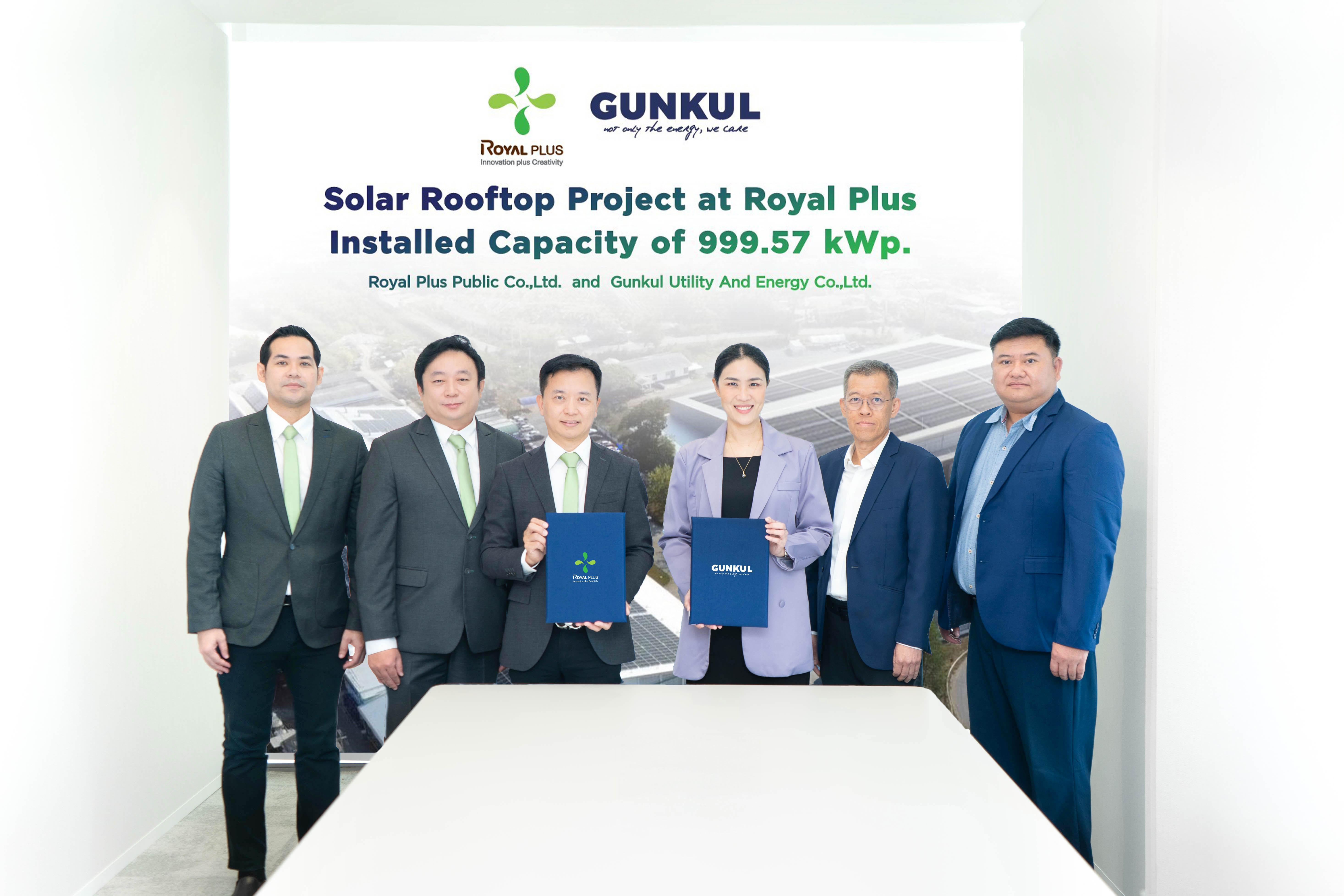
The Company has entered into a Memorandum of Understanding (MOU) with Gunkul Engineering Public Company Limited (GUNKUL) to implement Phase 2 of the Solar Rooftop power generation project, with a total installed capacity of 999.57 kilowatts. The system will be installed on the warehouse building of the PLUS factory located in Amphawa District, Samut Songkhram Province. The project commenced in the third quarter of 2025, and the Company expects to begin utilizing electricity generated from the Solar Rooftop system within 2026. Phase 2 builds upon the success of Phase 1, which was installed on the Company’s main production building and has significantly increased the proportion of renewable energy consumption within the organization. The collaboration between PLUS and GUNKUL, a leading renewable energy company in Thailand, reflects a shared vision to create a cleaner, safer, and more sustainable future. The project also plays an important role in advancing Thailand’s food and beverage industry toward a low-carbon economy through the adoption of green technology and clean energy innovation across all dimensions.
Reducing the use of glass for packaging
The Company is environmentally conscious and has a sustainability management policy that aligns with its business direction and strategy. The Company reduced the thickness of glass for bottle packaging, decreasing the amount of glass used from 185 grams to 170 grams while maintaining product quality. The Company also focused on applying technology and innovation in modern production processes to reduce the environmental impact caused by its packaging production.
EV Forklift Project
The Company has deployed 24 electric forklifts (EV Forklifts) to enhance logistics efficiency while reducing reliance on fossil fuels. This transition minimizes greenhouse gas emissions and air pollution, fostering a safer, more sustainable working environment. This initiative directly aligns with our long-term environmental goals and commitment to sustainable operations.
Key Performance
• Total GHG emissions Scope 1 was equal to 2,350.00 tons of CO2 equivalent
• Total GHG emissions Scope 2 was equal to 5,078.00 tons of CO2 equivalent
• Total GHG emissions Scope 3 was equal to 49,256.00 tons of CO2 equivalent
• Total GHG emissions intensity was equal to 0.00000171 tons of CO2 equivalent per liter
Roles of the Board of Directors and Management on Climate Change
The Company recognizes the impacts of climate change across both its glass and PET packaging production lines. Senior management has been assigned to closely oversee environmental and energy matters, with energy and water consumption indicators for each production line monitored and reported regularly to the Corporate Governance and Sustainability Committee, as well as to the Board of Directors on a quarterly basis. In addition, the Procurement and Quality Assurance functions play a key role in selecting environmentally friendly packaging and raw materials, such as recyclable packaging, reducing excess material usage, and sourcing from suppliers that meet recognized environmental standards. These efforts support the reduction of climate-related impacts throughout the Company’s supply chain.
Climate Change Risks
Physical Risks
The Company may be affected by climate variability, such as rising temperatures, which could increase energy consumption for cooling systems and boilers. Drought conditions may impact the availability of raw water used in production, while extreme weather events, including heavy rainfall or flooding, could disrupt the transportation of key raw materials, resulting in delays or increased logistics costs.
Transition Risks
The Company faces risks arising from evolving regulations and stakeholder expectations, particularly requirements for increased recyclability of packaging materials, especially PET, which may lead to higher raw material costs. In addition, consumers and business partners increasingly expect environmentally friendly products, requiring the Company to adapt its operations and supply chain to meet higher environmental standards.
Opportunities
The adoption of lightweight packaging and increased use of recyclable materials can reduce raw material consumption and carbon emissions. Collaboration with packaging manufacturers to develop sustainable packaging solutions further supports these efforts. Moreover, the Company can reduce energy costs through efficiency improvements in production lines and enhance its competitive advantage through a strong environmental corporate image.
Management Measures
Energy and Production Processes
The Company has implemented initiatives to enhance machinery efficiency, such as the installation of variable speed drives (VSD) and optimization of cooling system settings to ensure efficient energy use. Improvements to wastewater treatment systems have also been undertaken. The Company continuously monitors water and energy consumption across each production line to drive ongoing efficiency improvements.
Packaging and Supply Chain
The Procurement Department and the Quality Management Department play a critical role in mitigating climate-related impacts by selecting 100% recyclable PET packaging, considering the use of lightweight glass and PET bottles, and evaluating suppliers based on environmental standards. The Company also reduces excessive packaging materials, such as shrink wrap and pallets, and promotes the reuse of glass bottles. These initiatives help reduce resource consumption and greenhouse gas emissions across the value chain.
In 2025, the Company had no incidents of non-compliance or misleading disclosures related to its environmental performance (greenwashing). The Company developed its GHG emissions report in 2024, and the GHG emissions inventory was verified and certified for its carbon footprint according to the ISO 14064-1:2018 Standard. The verification process was conducted by Bureau Veritas Certification (Thailand) Company Limited. Additionally, the company proceeded with the carbon footprint label registry for the Carbon Footprint of Organization (CFO) through the Thailand Greenhouse Gas Management Organization (TGO).
Environmental Legal Incidents
Legal Violation Incidents
| Metric | Current Year | Previous Year | Two Years Ago |
|---|---|---|---|
| Number of cases or incidents of legal violations or negative environmental impact (cases) | 0 | 0 | 0 |
Social Policy Review
Policy Reviewed This Year
Yes
Review Details
Overall Goal on Social Dimension
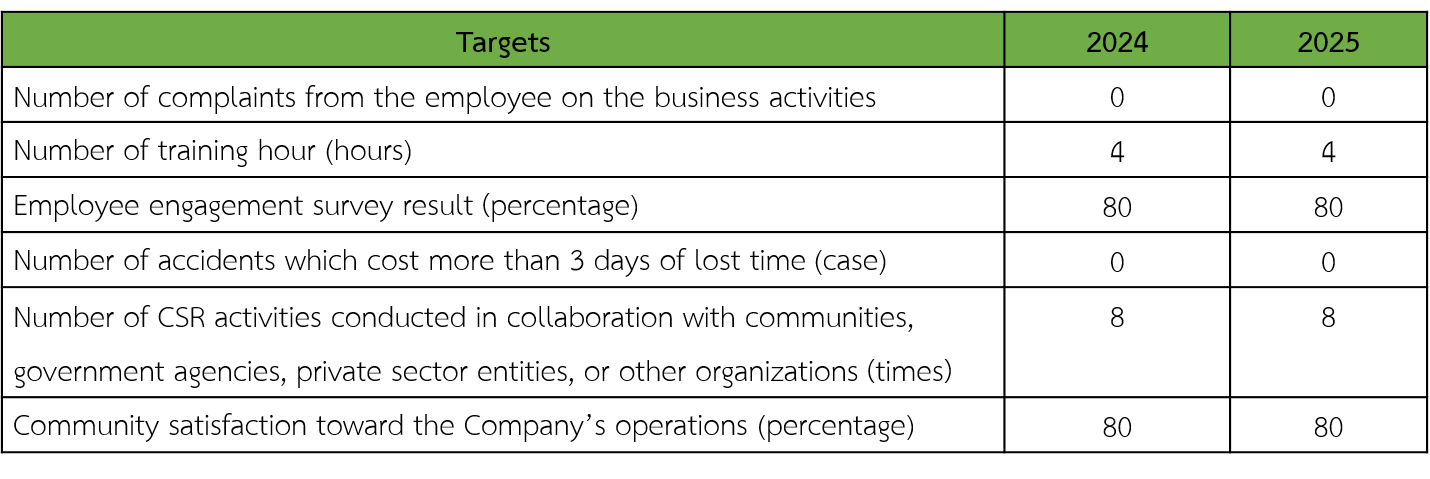
The Company is committed to driving the organization toward a sustainable future by fostering awareness of occupational health and workplace safety, promoting employee well-being, and enhancing employee capabilities through a strong learning culture. The Company also upholds human rights throughout its value chain and collaborates with communities and society to improve quality of life and overall well-being.
Policies & Guidelines Changed
| Change |
|---|
| Employee Rights |
| Child Labor |
| Consumer Rights |
| Community and Environment Rights |
| Safety and Occupational Health at Work |
| Non-discrimination |
| Business Partner Rights |
Human Rights Due Diligence
Conducts Human Rights Due Diligence
Yes
Due Diligence Description
Human Rights Risk Assessment
Since 2024, the Company has implemented a comprehensive human rights due diligence process across its value chain in alignment with the United Nations Guiding Principles on Business and Human Rights (UNGP). This aims to prevent and mitigate human rights violations affecting employees within the Group, business partners, suppliers (including contractors and customers), and local communities. The Company has established the following principles: (1) The company has a responsibility to protect and uphold the human rights of all employees, ensuring that there are no human rights violations from any parties involved in the company's operations.
(2) The company has a duty to respect human rights and comply with applicable laws, avoiding actions that violate or contribute to human rights impacts.
(3) In cases where human rights violations occur due to the company or its business group, the company provides channels for remedying the victims whose rights have been violated.
1. Objective To identify and assess human rights risks arising from the Company’s business operations, and to establish preventive, mitigation, and corrective measures to ensure alignment with the UN Guiding Principles on Business and Human Rights, labor laws, applicable regulations, customer requirements, and international standards.
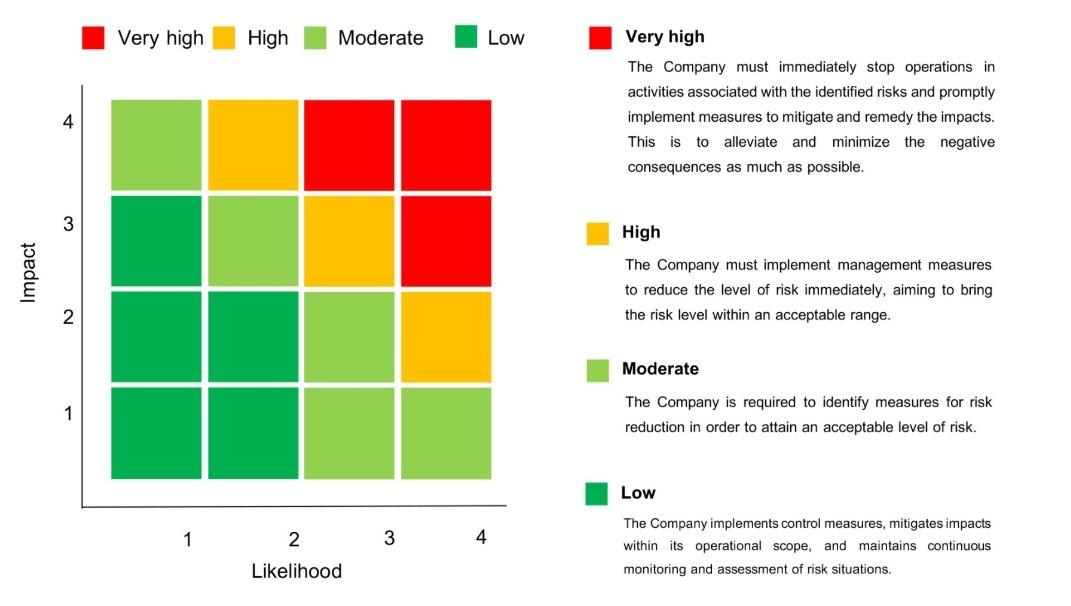
2. Risk Assessment Criteria Risk Assessment Criteria: Likelihood of Occurrence
Levels of Likelihood | Characteristic of Likelihood |
4 High Probability | The event is likely to occur in industries of the same type as the operational area, but the likelihood of it occurring in the operational area is low. |
3 Moderate Probability | The event is very unlikely to occur in the operational area, but there is a possibility it could happen. |
2 Low Probability | The event may occur occasionally in the operational area. |
1 Very Low Probability | The event is likely to occur multiple times per year within the operational area. |
Risk Assessment Criteria: Impact Severity
Levels of Impact | Characteristic of Impact |
4 High Impact |
|
3 Moderate Impact |
|
2 Low Impact |
|
1 Very Low Impact |
|
3. Risk Assessment Results
The Company recognizes the importance of conducting a comprehensive human rights risk assessment. In 2025, a total of 12 key risk issues that may impact employees, communities, and stakeholders throughout the Company’s supply chain were identified and assessed, as follows:
Medium-Level Risks (5 key issues):
1. Risk of unsafe working conditions
2. Risk of discrimination in the recruitment process
3. Risk of impacts on local communities
4. Risk arising from lack of community engagement
5. Risk of sexual harassment in the workplace
Low-Level Risks (7 key issues):
1. Risk of child labor
2. Risk of forced labor within the supply chain
3. Risk of inappropriate working hours
4. Risk of unfair or inadequate wages and benefits
5. Risk of discrimination and limited access to skills development opportunities
6. Risk related to workers’ living conditions
7. Risk concerning freedom of association and collective bargaining rights
Risk Assessment Results
Risk Issue | Affected Group | Causes | Risk Level | Control Measures | Preventive / Improvement Guidelines |
Child Labor | New employees |
| Low |
|
|
Use of Forced Labor in Supply Chain | New employees | Suppliers’ non-compliance with contractual requirements or deficiencies identified during audits | Low |
|
|
Excessive or Inappropriate Working Hours | Employees | Excessive overtime (OT) on a continuous basis; daily or weekly working hours exceeding legal limits; improper work scheduling (e.g., continuous shifts without sufficient rest); high workload with insufficient manpower; lack of clear OT approval process; employees unable to refuse overtime | Low |
|
|
Unsafe Working Environment | Employees |
| Medium | Implement occupational health, safety, and work environment standards; apply Safety Management guidelines |
|
Discrimination in Recruitment Process | New employees | Absence of clear selection criteria; reliance on personal discretion; lack of background checks | Medium | Establish standardized and transparent recruitment procedures |
|
Unequal Treatment and Lack of Skill Development Opportunities | Employees | Unclear policies / managerial bias / unequal access to opportunities | Low |
|
|
Inadequate and Unfair Compensation and Benefits | Employees |
| Low |
|
|
Employee Well-being | Employees |
| Low |
|
|
Employee Relations and Engagement | Employees |
| Low |
|
|
Community Impact | Communities |
| Medium |
|
|
Lack of Community Participation | Employee, Community |
| Medium |
|
|
Sexual Harassment in the Workplace | Employee |
| Medium |
|
|
The Company remains committed to continuously enhancing its risk management processes, with a focus on strengthening supply chain transparency, promoting community engagement, and ensuring operations that respect human rights across all sectors, in order to build trust and deliver sustainable positive impacts to stakeholders.
Risk Assessment and Prioritization Form For the Year 2025 Risk Management Framework Diagram
4. Risk Mitigation and Preventive Measures
The Company communicates relevant policies and practices to all stakeholder groups as follows:
1. Human Rights Policy
2. Occupational Health, Safety, and Work Environment Policy, and Safety Manual
3. Human Rights Contact and Grievance Channels
4. Compliance audits of policies and manuals conducted at least twice annually in accordance with the annual audit plan
5. Remediation The Company recognizes the importance of providing remediation and mitigating potential impacts arising from its business operations, particularly in matters relating to the rights of communities and all stakeholder groups. Clear channels for complaints and suggestions have been established and are outlined in the Company’s Human Rights Policy, which is publicly available on the Company’s website to ensure accessibility for both internal and external stakeholders. The grievance mechanism operates under strict confidentiality and non-retaliation principles, allowing individuals to raise concerns with confidence. The Company has also implemented transparent procedures for review and follow-up actions.
In 2025, the Company received no complaints related to human rights violations, reflecting its ongoing commitment to upholding human rights principles effectively and responsibly, and reinforcing its accountability to employees, communities, and society at large.
Employees — Plan & Guidelines
Has an Employee Management Plan
Yes
Plan Description
Employee Engagement and Development
The Company recognizes that employees are a key driving force behind its business operations. It firmly believes that fostering employee engagement and continuously enhancing employees’ capabilities are essential to achieving the Company’s objectives. Furthermore, strengthening employees’ competencies and promoting active participation help build strong employee engagement and loyalty. This not only reduces costs and opportunity losses associated with employee turnover but also enhances the Company’s ability to attract and retain talented professionals.
Sourcing and Recruiting Employee
The Company recognizes and acknowledges that “employee” is the key force to drive our business operations to achieve business goals and generate growth in this current situation, as well as support sustainable development. Therefore, the Company has committed and has given importance to efficient sourcing and recruiting employee, by complying with the related law, regulations, orders, and standards, so that the human resource management would create a great value to the Company.
In this regard, the Company has a recruitment plan which starts from planning the recruitment to fill out the vacancy by clearly set a time frame for recruitment process and qualification for each position, then start the recruitment process, both internally and externally. There is an evaluation before the selection process to ensure the most suitable employee to work with the Company.
Talent Attraction and Retention
The Company has committed to analyze employee capacity by using the in-depth information from the performance evaluation to elevate employee’s well-being, attract new talent and retain the existing talent, so that the employee would support in driving business to grow and advance, and create competitive advantage with other businesses. Therefore, the Company has developed the strategy, plan of action, and guideline by taking into account all welfare, compensation, benefit, equal treatment, recreational activities for employee, and encouraging collective bargaining.
In addition, the Company has established criteria to measure employee success and a system to evaluate employee performance in terms of both ability and potential. This approach aims to enhance company success and create fairness for employees, ultimately attracting and retaining current employees.
1. Create incentives and offer rewards for employees who meet or exceed performance standards.
2. Maintain fairness in salary management, compensation, and personnel management.
3. Use evaluation as a tool to teach and develop new employees, as it is a part of the process for developing employees at all levels.
4. Help employees understand their knowledge and abilities in the eyes of their supervisors, colleagues, and other relevant parties.
5. Assist in analyzing organizational issues, such as determining the goals of employee training, which may include improving employee knowledge, abilities, or skills.
6. Serve as information to prevent issues related to unfair employee assessment and management.
Welfare Committee in the Establishment
Royal Plus Public Company Limited has established a Welfare Committee in the Establishment since 2018. Each committee serves a two-year term, with members elected by employees to represent them in consultations and to provide recommendations on welfare matters that benefit both employees and the Company. The Company requires the Welfare Committee to convene at least once every three months to receive feedback, suggestions, and complaints from employees, as well as to assess the needs and concerns of different employee groups. All employees may submit welfare-related suggestions or raise concerns regarding the Company’s welfare management through the Committee. Such matters are compiled and presented at committee meetings for consideration, improvement, and development to ensure fair and equitable welfare benefits for all employees. Roles and Employee Development Guidelines of the Welfare Committee
1. Assessing Needs and Proposing Development-Oriented (Non-Monetary) Welfare: The Committee proposes welfare initiatives that enhance skills and quality of life beyond financial benefits, such as professional skills training programs, language development courses, and educational scholarships for employees and their children.
2. Serving as a Communication Channel: The Committee gathers employee feedback, suggestions, and needs, and presents them to management at least quarterly, ensuring welfare provisions effectively address employees’ quality-of-life concerns.
3. Promoting Health and Well-Being Initiatives: The Committee proposes annual health check-ups, nursing room facilities, fitness and wellness activities, and improvements to workplace safety and hygiene.
4. Enhancing Financial Security and Planning: The Committee supports initiatives related to the Provident Fund and provides knowledge on personal financial planning to promote long-term financial stability.
5. Organizing Recreational and Engagement Activities: The Committee participates in organizing employee engagement activities, such as sports events, New Year celebrations, and annual company outings, to strengthen morale and foster organizational unity.
The Company recognizes that the Welfare Committee is not merely responsible for statutory welfare compliance, but also serves as a key mechanism in driving “proactive welfare” initiatives that directly enhance employees’ quality of life and overall work performance.
The current Welfare Committee’s term will expire on 1 February 2026. The Company has scheduled an election on 19 January 2026 to appoint 11 members to serve on the new Welfare Committee.
Employee Training and Development
The Company is committed to enhancing employees’ capabilities and continuously strengthening their knowledge and professional skills. Development initiatives include structured training programs, on-the-job learning, study visits, and knowledge-sharing among employees. The Company believes that equipping employees with the necessary skills, knowledge, and positive attitudes toward work will maximize organizational benefits and enable the Company to achieve its objectives effectively. The Company also regularly reviews its operational plans and organizational structure to collect, update, and improve information across all functions. A performance appraisal system has been established with clearly defined key performance indicators (KPIs) at both the corporate and departmental levels. Job roles are periodically reviewed to align with business plans, forming a comprehensive and systematic employee development framework. Performance evaluation results are used to formulate annual training and development plans to further enhance employee effectiveness in supporting future business operations. The Company has set a target to provide an average of 12 training hours per employee per year by 2026.
Occupational Health and Safety
The Company is committed to elevating occupational health and safety standards across all work processes, with the goal of achieving zero workplace accidents and injuries. Safety measures are also extended to visitors and external contractors entering the Company’s premises to ensure that everyone can work in the safest possible environment
Occupational health and safety are crucial aspects of business operations. Accidents and other related risks can significantly impact operations, leading to expenses for remediation or mitigation. The company's occupational health and safety practices encompass the health and well-being of employees and contractors engaged in activities on the premises, as well as ensuring safe and conducive working conditions.
Operational Plan
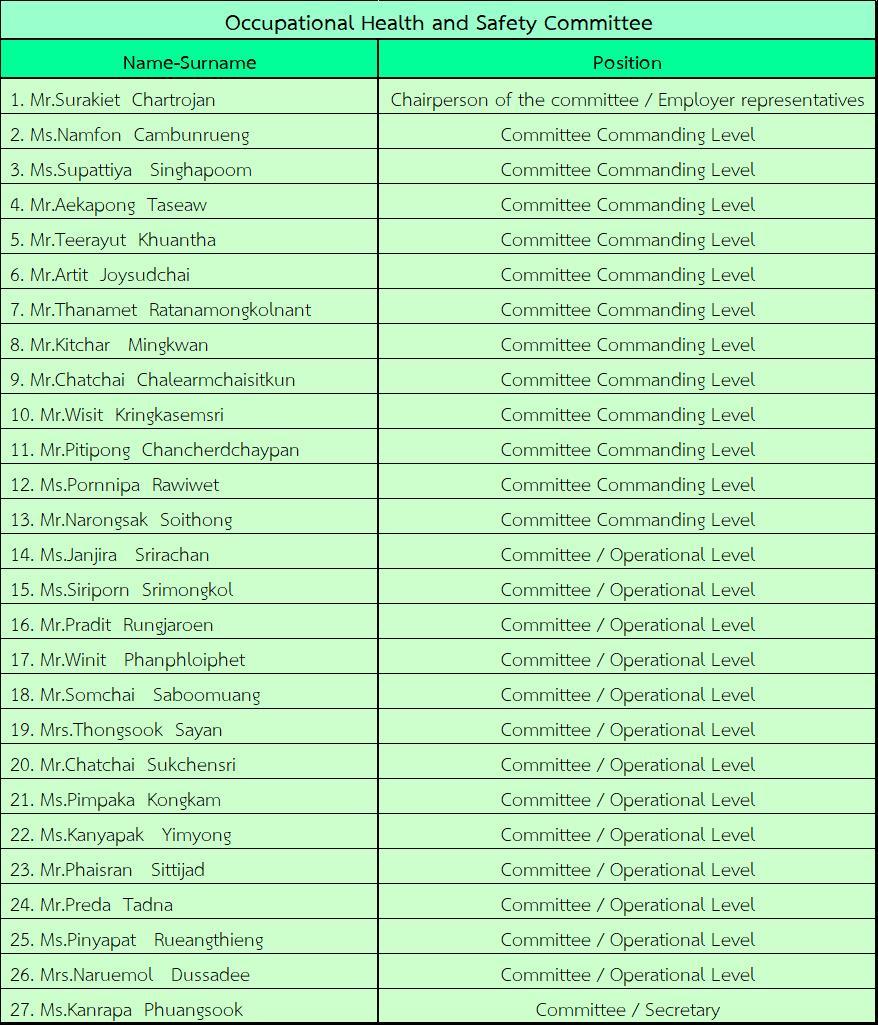
The Company has established the Committee on Occupational Health and Safety and Working Conditions which comply with Occupational Safety, Health and Environmental Act, and Labor Relation Act which require the composition of the Committee to include the representatives from both employer and employee, members of the Committee, the Secretariat, and the Occupational Health and Safety Officer. The regulations require the Committee to conduct the meeting once a month to discuss on the policy and plan of action regarding occupational safety, to prevent and reduce the accident to employee, contractor, as well as others who has an activity in the facility. The Committee has a responsibility to provide safety training as well.
Moreover, the Company has developed Occupational Health and Safety and Working Conditions Policy which is a guideline for preventing accident and other incidents and protecting life and property of employee, customer, and others who have an activity in the facility. Head of each unit will be responsible for implementing the policy continuously and efficiently. Employee, customer, and others who have an activity in the facility need to comply with these occupational health and safety law and regulations which the Company has complied with as follows.
1. Create a proactive culture in safety, occupational health, and working environment through the commitment of management and the participation of all employees in the company. Additionally, ensure that safety, occupational health, and working environment are the responsibilities of every employee.
2. Commit continuously improving its management systems to effectively prevent and reduce work-related accidents and occupational illnesses, with the goal of achieving zero accidents. Preventive measures are established as sustainable policies, and operations are conducted in strict compliance with applicable standards and relevant laws.
3. Strive to promote awareness among employees, contractors, customers, and external individuals who engage with the company regarding their responsibilities to themselves and their colleagues. Encourage employee participation in safety, occupational health, and working environment activities, fostering a safety-conscious mindset to enable continuous development and improvement.
4. Ensure that risk assessments are conducted regarding work activities and working conditions. Implement sufficient preventive measures to eliminate, reduce, and control potential hazards. Encourage and support employees to provide feedback, including rejecting tasks that involve high risks but lack proper assessment and/or preventive measures.
5. The Company promotes knowledge sharing and continuous learning in occupational health, safety, and the working environment by providing opportunities for external organizations, educational institutions, and interested groups to visit, observe, and exchange views. The insights gained are used to review and enhance the Company’s practices, while also serving as a reference for other organizations in developing their occupational safety management.
The Company’s occupational health and safety performance in 2025 can be categorized into three key areas as follows:
1. Safety
The Company has organized various safety training programs for employees to prepare them and enhance their skills in handling accidents and emergency situations, whether in the case of a fire, injured persons, or illness in the workplace. In 2025, the Company supported the following safety training activities:
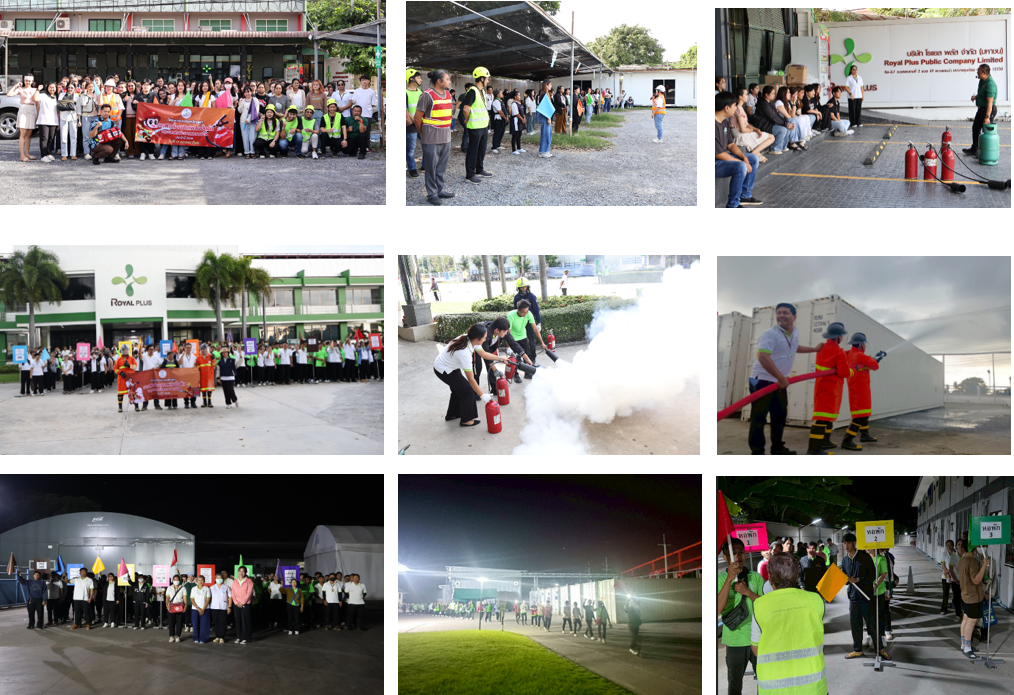
Fundamental Fire Drill and Annual Basic Fire Drill
The Company conducts organization-wide fire evacuation drills twice a year and an annual fire evacuation drill for the Company’s welfare dormitory. These drills aim to enhance employees’ knowledge and awareness of fire prevention and emergency response. The Company targets that more than 40% of employees in each department are trained and capable of using fire-fighting equipment to promptly control fire incidents and minimize potential loss of life and property.
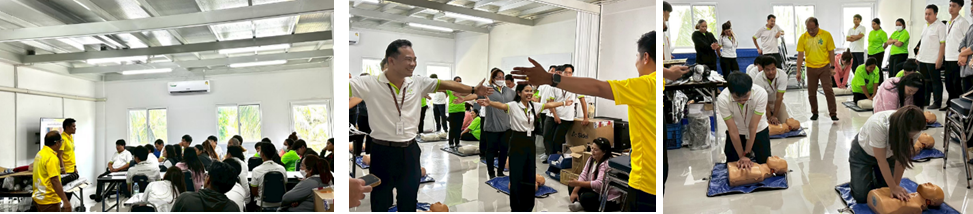
Fundamental First Aid and Life-Saving Training
The first aid training aims to equip employees with the ability to assist themselves and others in emergency situations. Participants gain knowledge of basic first aid and life-saving techniques, including bleeding control, cardiopulmonary resuscitation (CPR), artificial respiration, wound care, and proper patient handling prior to transfer to medical facilities.
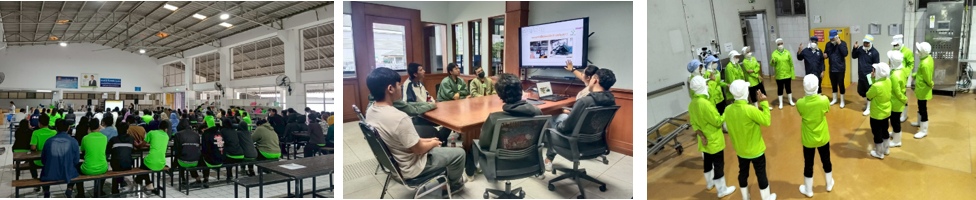
Workplace Safety Training
All employees must be trained on safety at work. New employee will be trained on safety in the workplace during the staff orientation. This training would enable the employee to understand more on safety at work and raise the awareness on the prevention of work-related injury.
Number of Employees Trained in Health and Safety Standards During the Past Year – Employees receiving occupational health and safety training: 100%
2. Occupational Health
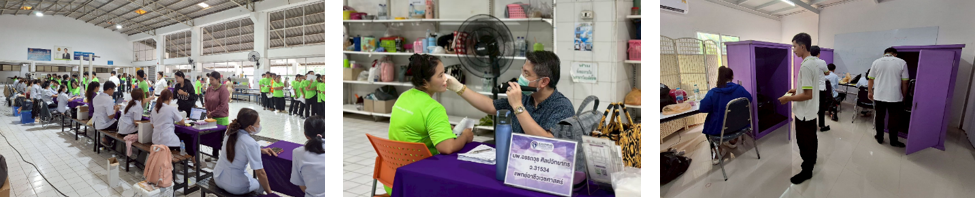
The Company complies with the related Occupational Health and Safety standards to ensure safety to our employee and prevent any accident which may impact the health of our employee and others who presence in the Company’s facility. The Company has provided Personal Protective Equipment (PPE) such as, earmuff, metal gloves, face mask, etc. to employee who work in the area where requires such equipment. The employee in such area need to wear PPE at all times while working in the area.
Moreover, the Company has provided medical check up to the current employee and new employee and specific medical checkup, apart from annual medical checkup. This specific checkup will be provided for workers who are exposed to risk at work, the specific medical checkup includes liver function test, urine test for Toluene, Acetone, and Ketone, blood test for lead, hearing test, and pulmonary function test, to find any impact which may related to work. For the prevention measures for work related ill-heath, the new employee in 2025 will have a medical checkup within 30 days from date of on boarding.
In addition to those activities mentioned above, the company has recorded data on work-related accidents, maintaining a record and comparing data over the past 3 years. For the year 2025, there were no work-related accidents reported (accident statistics = 0). The company remains committed to maintaining the goal of zero fatalities and permanent disabilities resulting from work-related incidents.
3. Working Conditions
The Company conducts annual working conditions inspection which includes light, noise, heat, dust, wastewater, and chemical, to ensure the safety working conditions. The result of inspection of all aspect meets the standards. The result will be included in the prevention and mitigation measures as well, to ensure safe working conditions and no risks of work-related ill-health.
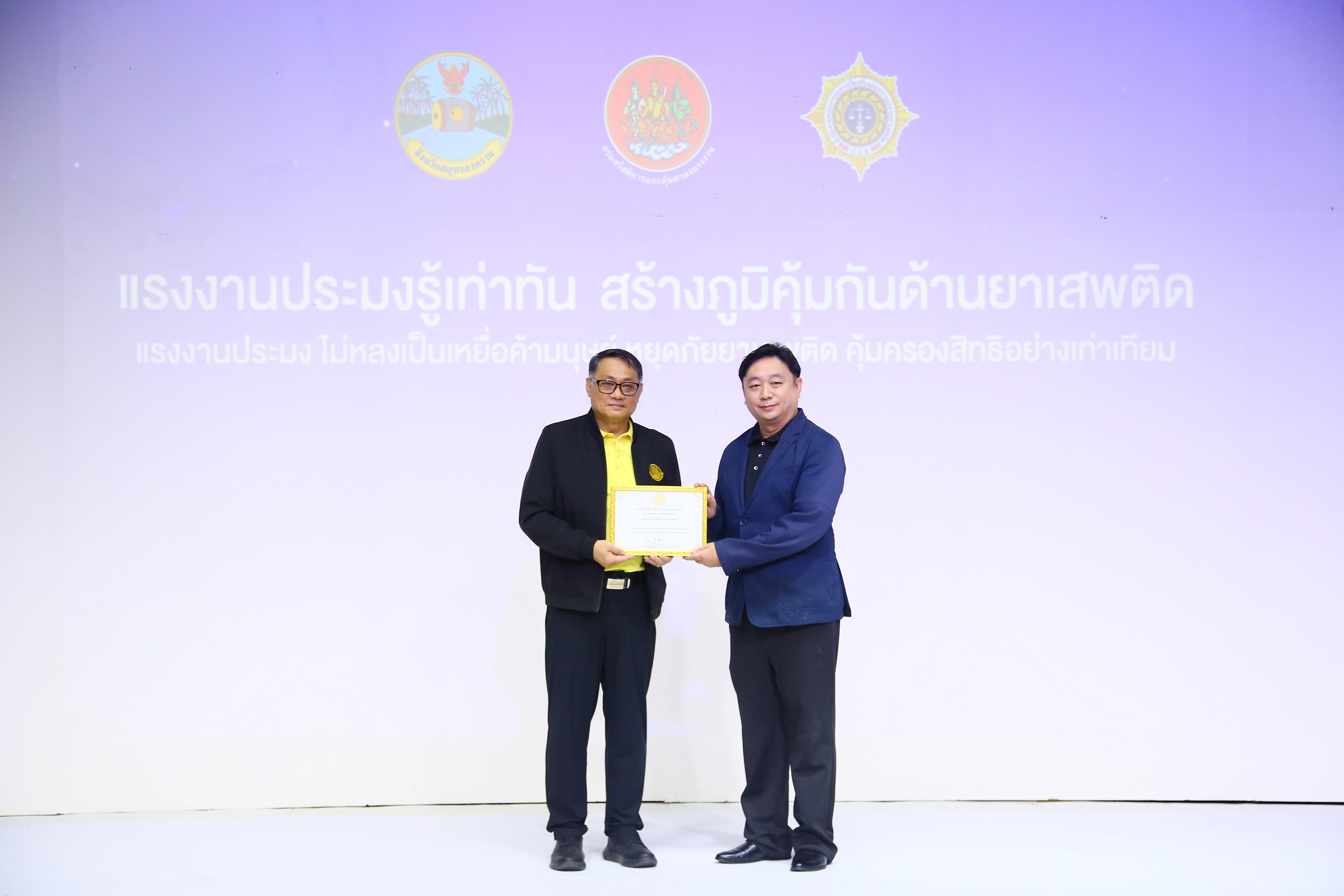
Outstanding Labor Management Organization Award 2025
The Company received the “Outstanding Labor Management Organization Award 2025” in the category of Excellence in Safety and Occupational Health at the Samut Songkhram Provincial level, presented by the Department of Labour Protection and Welfare. This prestigious award recognizes establishments with effective labor management systems. The award reflects PLUS’s strong commitment to systematic labor management, encompassing appropriate employee welfare and benefits, the provision of a safe and fair working environment, and the promotion of constructive cooperation between employer and employees. This achievement reinforces PLUS’s position as an organization that places “people” at the heart of sustainable business growth. Under its mission of “WORK PLUS HAPPINESS,” the Company strives to promote employee well-being, work-life balance, and quality of life, while fostering a strong, fair, and participatory labor community. PLUS remains committed to serving as a national model in labor management and to advancing toward stable and sustainable long-term growth.
Work Related Injury
Severity | No. of incidents / No. of employees/year | No. of incidents / No. of employees/year |
2024 | 2025 | |
Minor injury, no lost time (case) | 0 | 0 |
Serious case cause less than 3 days lost time (case) | 0 | 0 |
Serious case cause more than 3 days lost time (case) | 0 | 0 |
Number of fatalities as a result of work-related injury/ill-health (case) | 0 | 0 |
Total number of accident (case) | 0 | 0 |
Number of incidents segregated by injured body part | No. of incidents /year | No. of incidents / No. of employees/year |
2024 | 2025 | |
Head | 0 | 0 |
Eye, eyebrow | 0 | 0 |
Hand | 0 | 0 |
Finger | 0 | 0 |
Arm | 0 | 0 |
Body, hip | 0 | 0 |
Leg | 0 | 0 |
Foot | 0 | 0 |
Plan Areas
| Plan Area | Other — Please Specify |
|---|---|
| Fair employee compensation | |
| Employee training and development | |
| Promoting employee relations and participation | |
| Migrant/foreign labor | |
| Others | Human Resource Policy |
Employees — Workforce
Workforce Data
| Metric | Current Year | Previous Year | Two Years Ago | Remark |
|---|---|---|---|---|
| Total number of employees (Persons) | 821 | 799 | 712 | |
| Number of male employees (Persons) | 460 | 453 | 409 | |
| Number of female employees (Persons) | 361 | 346 | 303 | |
| Total employment of disabled persons (people) | 8 | 6 | 2 | |
| Total disabled employees (people) | 8 | 6 | 2 | |
| Total male disabled employees (people) | ||||
| Total female disabled employees (people) | ||||
| Total disabled workers who are non-employee (people) | ||||
| Contributions to the fund for promoting and improving the quality of life for disabled persons | 1 | 1 | 1 | In compliance with legal requirements regarding the employment of persons with disabilities, the Company contributed 240,900 baht to the Fund for Empowerment of Persons with Disabilities in 2025. |
| Total number of male employees in operational level (Persons) | 433 | 427 | 390 | |
| Total number of male employees in management level (Persons) | 24 | 22 | 16 | |
| Total number of male employees in executive level (Persons) | 3 | 4 | 3 | |
| Total number of female employees in operational level (Persons) | 318 | 309 | 268 | |
| Total number of female employees in management level (Persons) | 40 | 33 | 32 | |
| Total number of female employees in executive level (Persons) | 3 | 4 | 3 |
Employees — Remuneration & Provident Fund
Remuneration & Provident Fund
| Metric | Current Year | Previous Year | Two Years Ago |
|---|---|---|---|
| Total disabled employees (people) | 163,022,843.63 | 155,010,343.83 | 129,260,287 |
| Total male employee remuneration (Baht) | 90,625,072.12 | 84,512,064.83 | 68,471,407 |
| Total female employee remuneration (Baht) | 72,397,771.51 | 70,498,279 | 60,788,880 |
| Number of employees eligible to participate in PVD (persons) | 352 | 316 | 240 |
| Total number of employees joining employee provident fund (Persons) | 298 | 275 | 204 |
| Percentage of total number of employees joining employee provident fund to total number of employees (%) | 36.3 | 34.42 | 28.65 |
| Number of PVD members / Total eligible employees (%) | 84.66 | 87.03 | 85 |
| Total amount of provident fund contributed by the Company (Baht) | 2,344,288.13 | 1,941,944.53 | 1,547,485.07 |
| Total amount of provident fund contributed by employee (baht) |
Employees — Training & Development
Training Data
| Metric | Current Year | Previous Year | Two Years Ago |
|---|---|---|---|
| Average employee training hours (Hours / Person / Year) | 3.28 | 1.05 | 1.54 |
| Employee development and training expenses (baht) | 1,233,938 | 1,571,819.12 | 995,189 |
Employees — Occupational Health & Safety
Occupational Health & Safety Data
| Metric | Current Year | Previous Year | Two Years Ago |
|---|---|---|---|
| Total number of lost time injury incidents by employees (Cases) | 0 | 0 | 0 |
Employees — Labour Relations
Labour Relations Data
| Metric | Current Year | Previous Year | Two Years Ago |
|---|---|---|---|
| Total voluntary resignations (Persons) | 97 | 101 | 244 |
| Male employees who voluntary resigned (Persons) | 43 | 58 | 132 |
| Female employees who voluntary resigned (Persons) | 54 | 43 | 112 |
| Percentage of employee turnover leaving the Company voluntarily (%) | 11.81 | 12.64 | 34.27 |
| Evaluation result of employee engagement | 1 | 1 | 1 |
Employees — Employee Representation
Employees Are Represented Collectively
No
Employees — Targets
Introduction
Operational Goals of Employee Engagement and Development
• Reviewing operational structure, value, and corporate culture to facilitate effective change.
• Reducing and solve employee complaints regarding business operations.
• Conducting workforce planning to ensure appropriate staffing levels and readiness for organizational changes.
• Retaining high-potential employees, while maintaining and enhancing overall employee satisfaction. • Improving the employee performance appraisal process.
• Increasing the average number of training hours per employee.
• Regularly reviewing training and personnel development plans.
• Implementing effective Performance Management to achieve strong short-term and long-term results by enhancing employees’ skills, knowledge, and competencies to meet established performance targets efficiently.
• Promoting work-life balance to prevent employee burnout resulting from work-related stress.
• Establishing clear career paths for each position to provide employees with defined career progression goals and foster a sense of stability within the organization.
Operational Goals of Occupational Health and Safety
• Commit to reduce work-related accident which led to death to zero case.
• No record on work-related illness in 2025
• Provide occupational health and safety training prior to onboarding.
• Strictly adhere to the Occupational Health and Safety Policy in accordance with ministerial regulations and related laws.
Has Set Employee Targets
No
Employees — Performance & Outcomes
Has Performance Results
Yes
Performance Description
Overall Performance of Employee Engagement and Development
• Total number of employee : 821
• Complaint from employee : 0
• Employee satisfaction rate : 87.98%
• Average training hour : 3.28 hour/person/year
Overall Performance of Occupational Health and Safety
• Number of business units which has been assessed in safety and working conditions. 6 units
• Injury Rate (IR) 0 case
• Lost time injury frequency rate (LTIFR) 0 case
• Occupational Disease (ODR) 0 case
• Lost Day Rate (LDR) 0 case
• Number of fatalities as a result of work-related injury/ill-health. 0 case
• Complaint regarding occupational health and safety. 0 case
Customers — Plan & Guidelines
Has a Customer Management Plan
Yes
Plan Description
Customer Health and Safety
“Customer health and safety are at the core of Royal Plus’ business operations. We are committed to international quality standards and responsible practices in delivering clean, safe, and nutritious products that enhance the quality of life of consumers worldwide.”
Royal Plus Public Company Limited, as a leading manufacturer and distributor of beverages, recognizes that consumer safety is the foundation of long-term business sustainability. We are committed to continuously enhancing our production processes beyond conventional standards by integrating innovation with meticulous attention at every stage, ensuring that every product delivered to customers embodies quality, safety, and trust.
Strategies & Operational Plans
To achieve these objectives, the Company has formulated strategic plans aligned with global trends, as follows:
• Global Trend Alignment: In response to the growing global popularity of coconut-based products and the continued rise of health-conscious consumption, the Company plans to develop new coconut-based product offerings that balance great taste with health benefits. The Company aims to drive significant revenue growth from this product segment by 2026.
• World-Class Manufacturing Standards: The Company integrates its expertise in agricultural raw materials with advanced manufacturing technologies to ensure the highest levels of quality control and food safety. It remains committed to maintaining existing quality certifications while proactively preparing for more stringent international standards, supporting expansion into export markets with strict regulatory requirements.
• Feedback Management: The Company adopts a proactive consumer engagement approach through its sales and customer relations channels. Structured processes are in place to verify facts and address complaints promptly, mitigating potential impacts and reinforcing confidence among business partners and consumers in a timely manner.
Measures to Promote Responsible Advertising, Marketing, and Promotion
The Company has established comprehensive guidelines on advertising, marketing, and product labeling to ensure that all marketing communications for beverage products are accurate, transparent, and compliant with applicable laws and international standards. Key principles are as follows:
• Accurate and Verifiable Marketing Communications: All information used in advertising and promotional materials must be factual, not misleading or exaggerated, and supported by scientific evidence or verifiable data.
• Comprehensive and Accurate Product Labeling: The Company strictly complies with food labeling regulations by clearly displaying ingredients, nutritional information, manufacturing and expiration dates, and required warnings. The Company also adheres to labeling requirements of export markets, including the United States, Europe, and China, to ensure compliance with local laws in each jurisdiction.
• Guidelines on Health and Nutrition Claims: Health and nutrition claims are used with caution and must be reviewed and approved by relevant functions. All claims are substantiated by recognized scientific evidence to prevent consumer misunderstanding.
• Pre-Publication Review and Approval Process: All advertising content and product labels across channels are subject to review and approval by relevant departments, including Sales and Marketing, Quality Assurance, and Legal, to ensure compliance with applicable laws and international standards.
• Responsible Communication to Vulnerable Consumer Groups: The Company avoids content or imagery that may unduly influence children and youth and ensures that advertising does not encourage inappropriate consumption behavior.
• Regular Policy Review and Improvement: The Company regularly reviews and enhances its marketing communication and labeling policies to remain aligned with evolving legal requirements and international standards.
Responsible Communication and Promotional Activities
The Company places importance on responsible marketing communications that deliver value to consumers through the following actions:
• Promotion of Appropriate Consumption: The Company conducts campaigns that encourage moderate consumption and offers healthier product alternatives, such as low-sugar formulations, preservative-free products, and products made from natural ingredients.
• Fair and Accessible Promotional Activities: Promotional programs are designed to provide consumers with fair access to products at reasonable prices, while maintaining the Company’s quality standards.
• Communication of Sustainability Values: The Company integrates sustainability messaging into its communications, highlighting initiatives such as reduced packaging materials, the use of renewable energy in production (e.g., solar rooftop systems), and operations aligned with circular economy principles to strengthen its sustainable corporate image. • Compliance with Laws and Cultural Norms in Export Markets: Marketing content and product labeling are adapted to comply with legal requirements and cultural contexts in each export market to ensure effective and appropriate communication.
• Continuous Capacity Building for Employees: The Company provides ongoing training to employees in Marketing, Sales, Research and Development, Quality Assurance, and Legal to enhance awareness and understanding of advertising and labeling regulations, as well as responsible business conduct toward society and consumers.
Plan Areas
| Plan Area |
|---|
| Responsible production and services for customers |
| Communication of product and service impacts to customers/consumers |
| Development of customer satisfaction and customer relationship |
| Protection of customer personal information |
Customers — Satisfaction Results
Customer Satisfaction Results
| Metric | Current Year | Previous Year | Two Years Ago | Remark |
|---|---|---|---|---|
| Evaluation results of customer satisfaction | 1 | 1 | 1 | In 2023, Customer satisfaction rate with the products: 89% In 2024, Customer satisfaction rate with the products: 88% In 2025, Customer satisfaction rate with the products: 92% |
Customers — Targets
Introduction
Operational Goals
The Company has established clear directions and objectives for quality and safety to continuously elevate its standards, as follows:
• Short-Term Goals (3–5 years): To focus on research and development (R&D) of high-nutrition products that respond to the growing health-conscious consumer trend, particularly in the plant-based and functional beverage segments. This approach aims to position the Company’s products as sustainable choices that resonate with consumers across all generations.
• Long-Term Goals (5 years and beyond): To become a global leader in health beverage innovation by adhering to the philosophy of “Innovation Plus Creativity.” The Company is committed to developing differentiated products that meet international safety standards and to expanding its market presence across all regions worldwide.
• Customer satisfaction goal: To consistently maintain the customer satisfaction index for product quality at no less than 80% on an annual basis.
Has Set Customer Targets
No
Customers — Performance & Outcomes
Has Performance Results
Yes
Performance Description
Overall Performance
• Customer satisfaction rate with the products: 92%
• Compliance with safety standards: 100%
• Zero complaint from customer on the safety and the quality of our products.
Community & Social — Plan & Guidelines
Has a Community & Social Plan
Yes
Plan Description
In 2025, Royal Plus recognized the importance of contributing to community and social development, as these groups are considered key stakeholders of the Company. The Company has established a policy to foster positive relationships and create shared value with society, particularly with communities surrounding its manufacturing facilities, in order to build confidence and trust among local communities and the public. Such initiatives also enhance brand awareness among the wider public, thereby creating significant business value. In addition, these efforts help strengthen employee engagement and foster a stronger sense of commitment to the organization.
Operational Plan
The Company has established a plan to promote community engagement and development by responding to the needs of surrounding communities and fostering strong relationships with them. The Company actively engages with communities located around its manufacturing facilities by providing support for various projects, particularly those assisting communities affected by current challenges. In addition, the Company collaborates with local organizations and community agencies, while encouraging employees to continuously participate in community development activities.
Furthermore, the Company places ongoing emphasis on job creation for local residents by prioritizing the recruitment of individuals living in communities surrounding the manufacturing facilities. This approach not only generates income for local residents but also serves as a bridge to strengthen relationships with nearby communities. In particular, the Company employs local residents from Phraek Nam Daeng Subdistrict, Amphawa District, Samut Songkhram Province, which is located in close proximity to the Company’s manufacturing site.
Plan Areas
| Plan Area |
|---|
| Employment and professional skill development |
| Education |
| Religion and culture |
| Forests and natural resources |
| Sports and recreation |
| Occupational health, safety, health, and quality of life |
| Disadvantaged and vulnerable groups |
Community & Social — Targets
Introduction
Operational Goals
• Conduct business operations alongside active engagement with communities and society surrounding the Company’s manufacturing facilities, and extend such engagement to neighboring communities.
• Build strong community relationships and promote participation in joint activities between the Company and communities through projects and initiatives focused on quality-of-life development, stakeholder engagement, donations, and various forms of support to consistently contribute to community and social development.
• Responsibly consider and appropriately support community and social assistance requests, with due respect for local cultures, traditions, and customs.
• Promote local employment to provide job opportunities for people in surrounding communities, thereby reducing unemployment and labor shortages.
• Continuously support volunteerism initiatives related to community and social development, including CSR activities aimed at improving quality of life and community well-being.
• Establish plans to assess the impact of the Company’s operations on communities, conduct community satisfaction surveys, and implement measures to mitigate impacts and reduce community complaints.
• Encourage and instill a sense of social responsibility among employees at all levels, as well as suppliers, business partners, and contractors, to collaboratively care for and support communities and society.
• Organize at least 8 CSR activities per year in collaboration with communities, government agencies, private sector entities, or other stakeholders.
• Prioritize recruitment of employees from communities surrounding the Company’s manufacturing facilities and nearby areas.
• Continuously carry out CSR initiatives to support and enhance the quality of life and well-being of communities.
• Regularly assess community satisfaction and work to minimize operational impacts and related complaints.
Has Set Community & Social Targets
No
Community & Social — Performance & Outcomes
Has Performance Results
Yes
Performance Description
Overall Performance
No local community has been impacted from business operation.
1,306,242.38 THB has been spent on community support projects.
A total of 11 CSR activities were carried out in collaboration with local communities, government agencies, private sector organizations, and other relevant stakeholders.
No complaint has been raised from surrounding communities.
150 employees from the surrounding communities have been recruited.
Communities satisfactory toward the Company 85.90 %
Community Development Activities
Royal Plus Public Company Limited recognizes its responsibility for actions that generate positive impacts across multiple dimensions—for the Company, its employees, customers, business partners, competitors, communities, society, the environment, and other stakeholders. The Company takes into account the social, economic, and environmental impacts of its operations to ensure sustainable coexistence with all sectors of society.
The Company fosters relationships with organizations both within and outside the communities in which it operates, with a comprehensive approach to support. Such initiatives include supporting students as the future of the nation, assisting the elderly, enhancing the quality of life for persons with disabilities, providing relief to flood victims nationwide, and extending assistance to those affected by the conflict along the Thai–Cambodian border. These efforts aim to strengthen trust and confidence in the organization. In 2025, the Company undertook the following initiatives to build and maintain relationships with relevant organizations:
CSR Volunteer Initiative: Solar Power System Installation at Ban Praek Takro Border Patrol Police School under the “CSR GO SOLAR” Project PLUS, a manufacturer and distributor of fruit juice and coconut water beverages, continues to advance its corporate social responsibility (CSR) mission through the “CSR GO SOLAR” initiative under the concept of “Clean Energy, Empowering Learning Opportunities.” In collaboration with employee volunteers, the Company installed a solar power generation system at Ban Praek Takro Border Patrol Police School, Bueng Nakhon Subdistrict, Hua Hin District, Prachuap Khiri Khan Province. The Company also donated a television set and essential educational materials, organized recreational activities, and provided lunch for the students. The project aims to ensure that schools in remote areas have sufficient and reliable access to electricity, thereby enhancing the quality of life for both students and teachers. Clean solar energy serves as a source of sustainable power, creating “a light of opportunity” that enables students to continue their studies in the evening and gain access to technology and computer-based learning—an essential foundation in the digital era. This initiative also contributes to reducing educational inequality in remote communities. This activity reflects PLUS’s commitment to conducting business alongside creating shared value for society under the guiding principle of “PLUS+ Quality of Life for All,” which aspires to enhance the quality of life for people, communities, and the environment in a balanced and sustainable manner. The Company firmly believes that clean energy is the starting point for expanding learning opportunities and driving sustainable development, enabling every life to achieve a better quality of life in all dimensions.
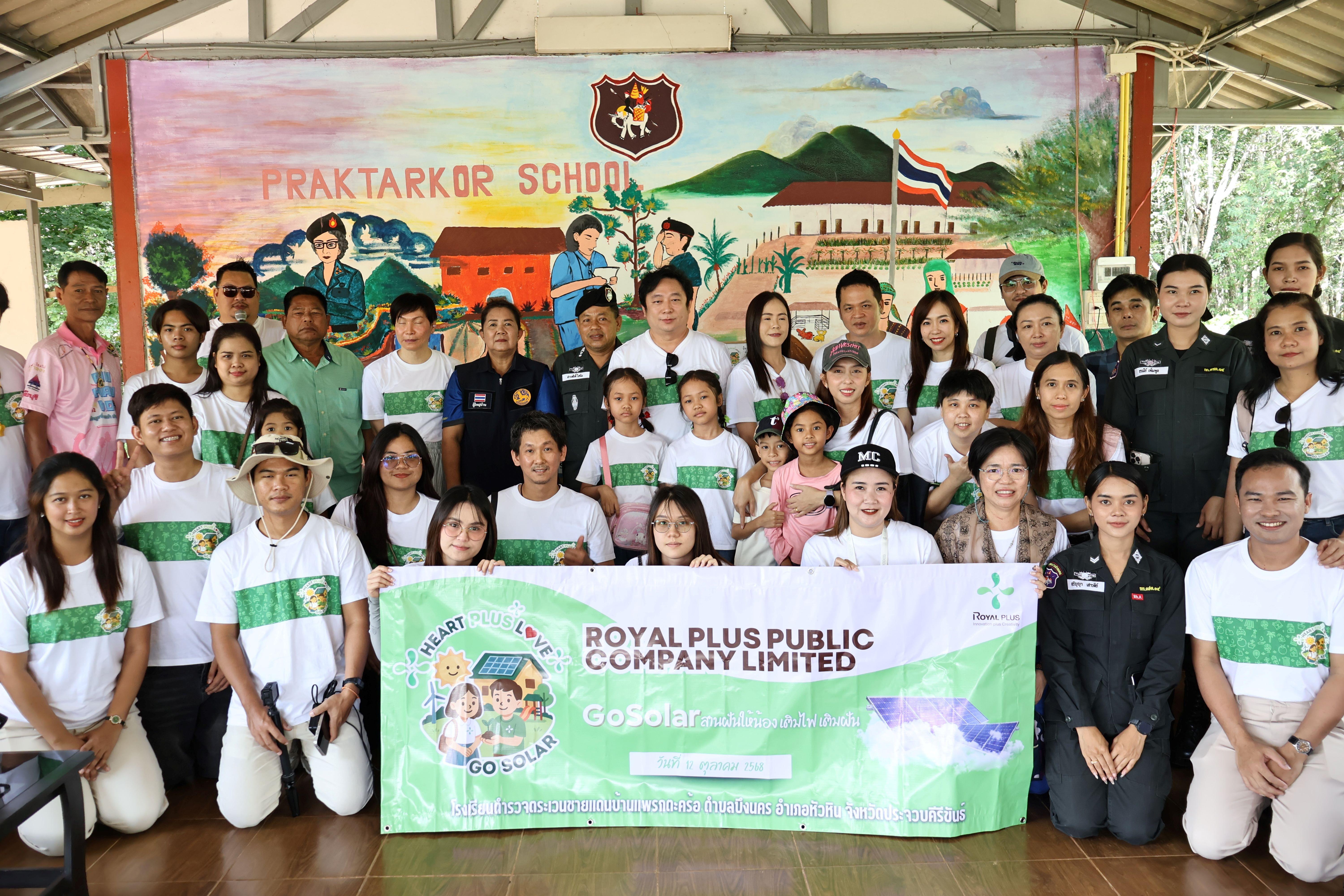
PLUS Partners with BJC Glass to Launch the “PLUS Glass” Project: Growing Together with the Community PLUS, in collaboration with BJC Glass, represented by Ms. Tippawan Angsiri, Safety, Occupational Health and Environment Group Manager of Thai Glass Industries Public Company Limited, officially launched the “PLUSGlass” project to promote community engagement and foster environmental and social development in balanced growth alongside the community. The project was inaugurated at Praeknamdaeng School, Samut Songkhram, on 16 September 2025. This initiative reinforces PLUS’s vision of conducting business in tandem with corporate social responsibility (CSR), with a focus on expanding equitable access to education and empowering youth to become a vital driving force in national development. The project reflects PLUS’s role as a trusted partner of the community, committed to advancing forward together with stability and sustainability.
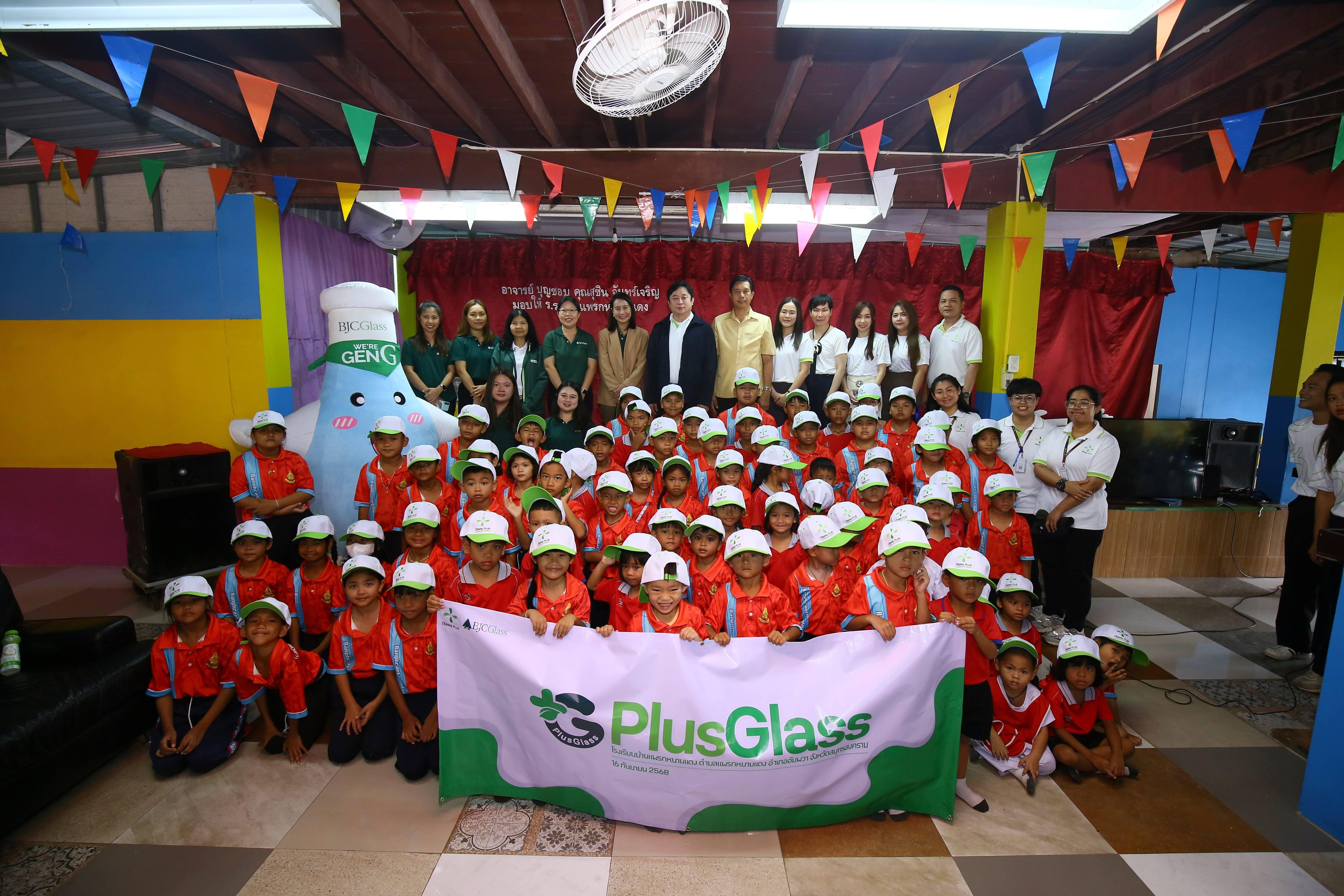
PLUS Collaborates with the Samut Songkhram Provincial Industry Office to Promote Sustainable Environmental Management PLUS, in collaboration with the Samut Songkhram Provincial Industry Office, organized a special initiative to promote participation from the industrial sector and local communities in sustainable environmental management. The activity aimed to raise awareness and encourage concrete actions toward effective environmental stewardship. The program was held at Praeknamdaeng School and the Praeknamdaeng Community Learning Center in Amphawa District, Samut Songkhram.
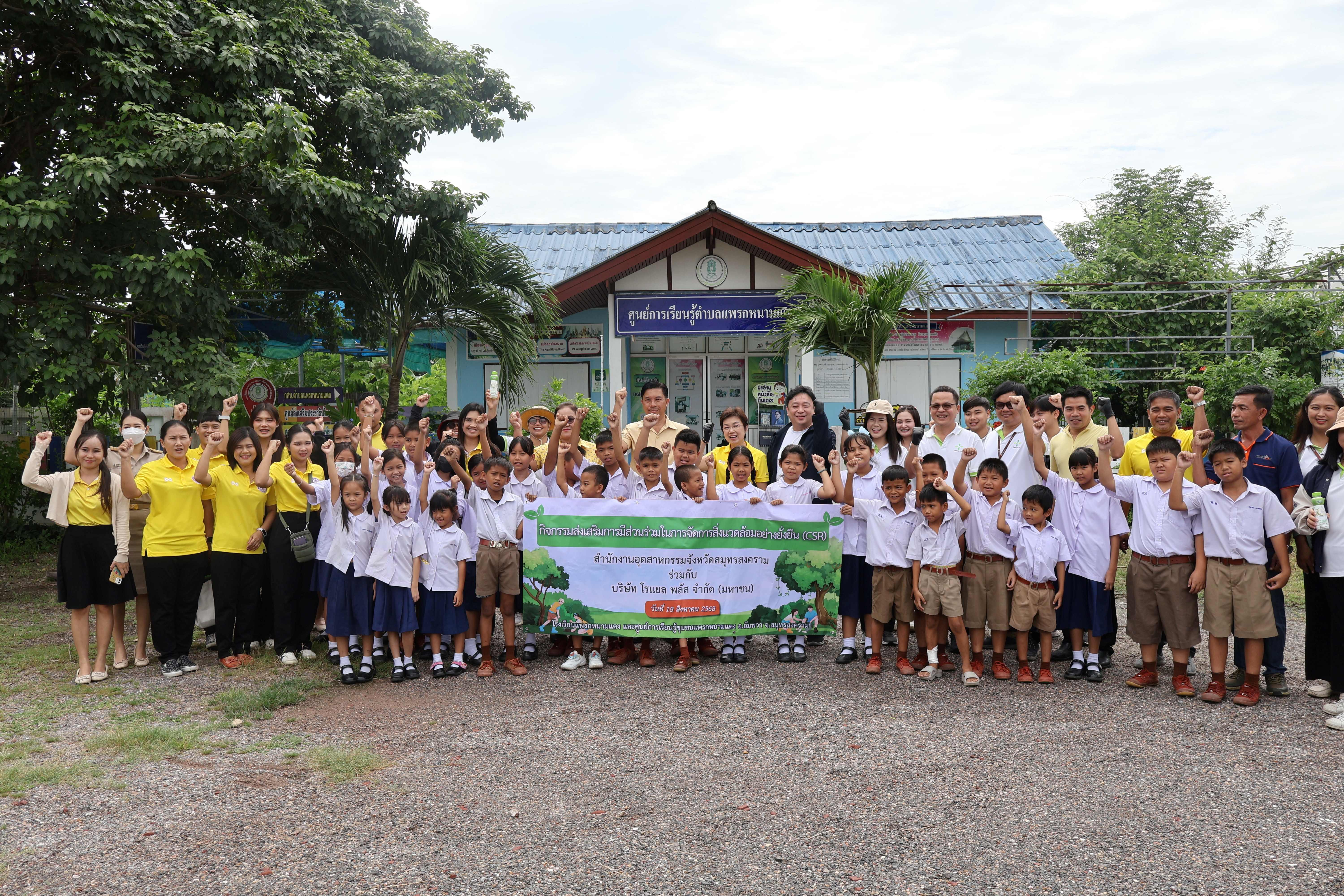
Support for National Children’s Day 2025 The Company supported National Children’s Day 2025 by donating Mabu Boba beverage products, educational supply sets, and dolls to students at Ban Praeknamdaeng School and Ban Khlong Sombun School in Samut Songkhram. This initiative aimed to encourage children’s participation in National Children’s Day activities and contribute to their development, recognizing them as the future of the nation.
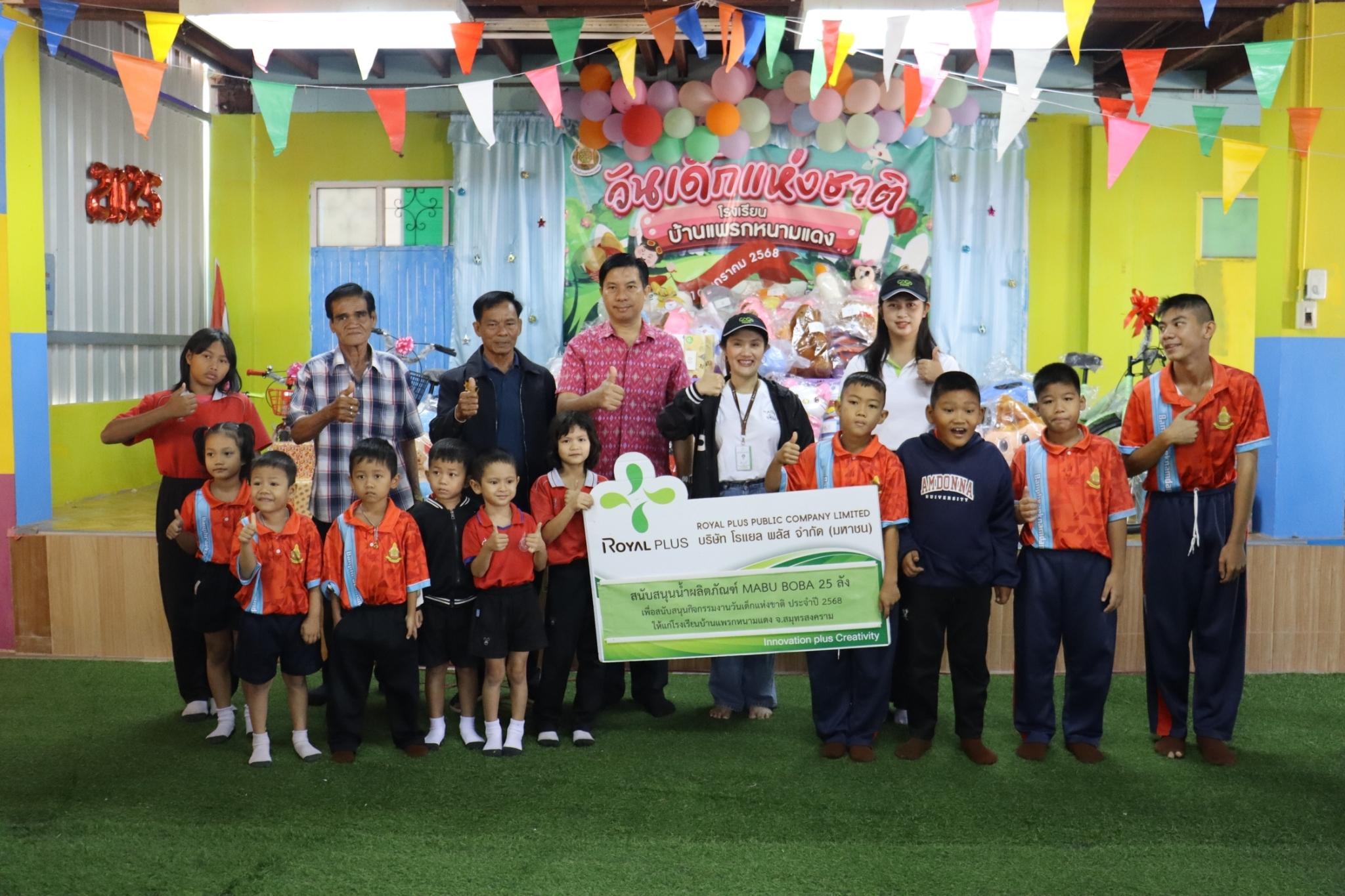
Support for the “PLATOO HALF MARATHON No. 9: New Generation 2025” PLUS proudly participated in the “PLATOO HALF MARATHON: New Generation 2025” by providing Coco Royal 100% coconut water beverages to refresh runners with natural energy under the slogan “Fresh from the tree to the bottle.”In addition to beverage support, participants enjoyed special activities organized by PLUS, with opportunities to win various prizes. This initiative aimed to enhance enjoyment and refreshment at the event while promoting health and well-being among runners and attendees.
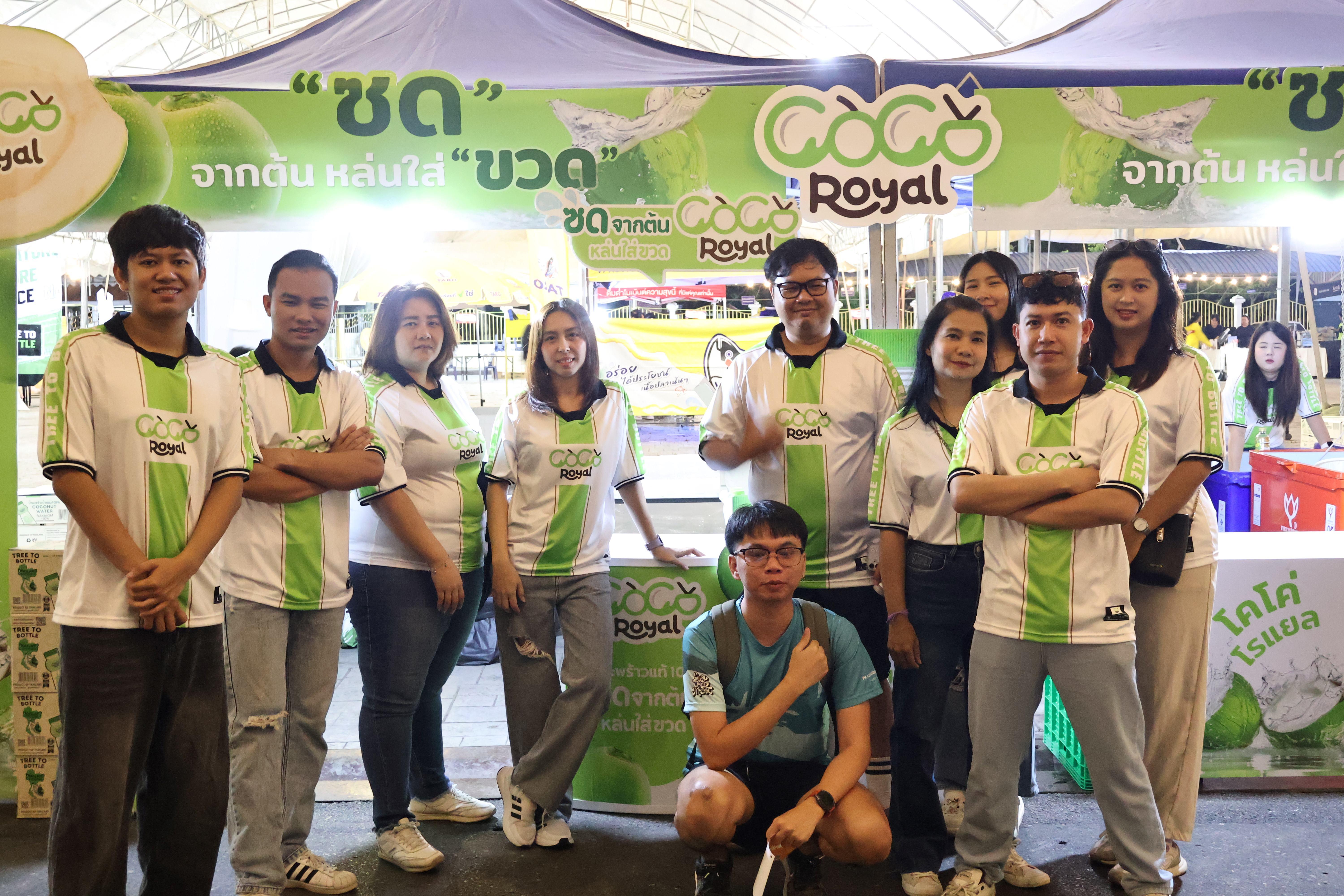
Support for Relief Missions along the Thai–Cambodian Border and Flood-Affected Areas in Nan Province. On 30 July 2025, PLUS donated 15,648 bottles of 100% coconut water, with a total value of Baht 384,000, through the Ongkorn Tham Dee Foundation at the Foundation’s head office. The donation was intended to support relief operations along the Thai–Cambodian border and in flood-affected areas in Nan. This contribution formed part of the Company’s efforts to provide refreshment and encouragement to officers and personnel dedicating themselves to maintaining national peace and order, while expressing support for all sectors performing their duties with resilience amid challenging circumstances.
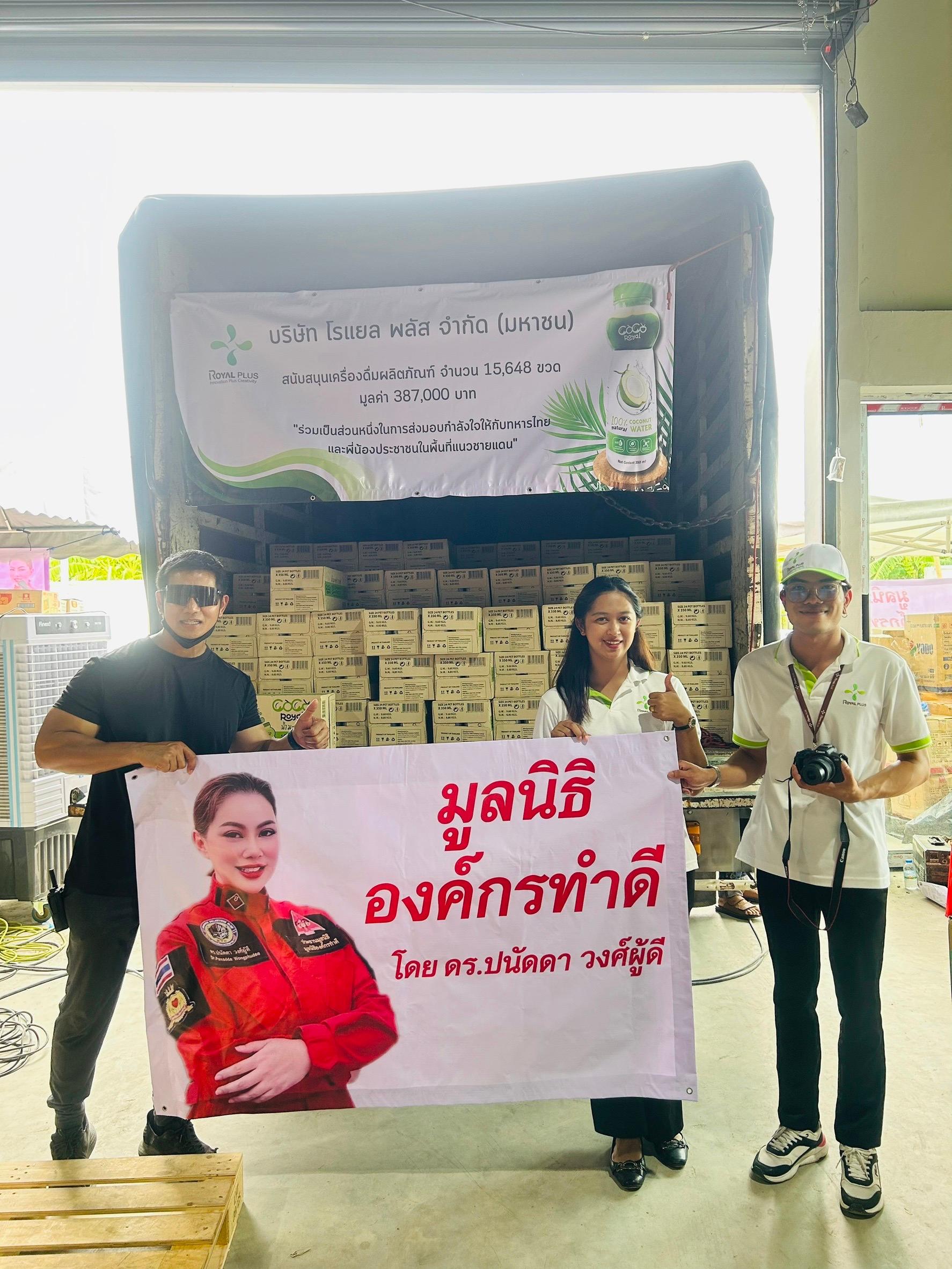
Support for the Shell Eco-marathon Asia 2025 Energy-Efficient Vehicle Competition PLUS provided financial support to a team of students from Amphawa Vocational College, Samut Songkhram Province, to participate in the Shell Eco-marathon Asia 2025, an innovation-focused energy-efficient vehicle competition held in Doha, Qatar. Demonstrating remarkable dedication and capability, the Thai youth team achieved Second Runner-Up in the Asia-Pacific region among a total of 95 participating teams. This accomplishment represents a shared pride for the community and reaffirms the Company’s commitment to supporting education, innovation, and the creative potential of Thai youth.
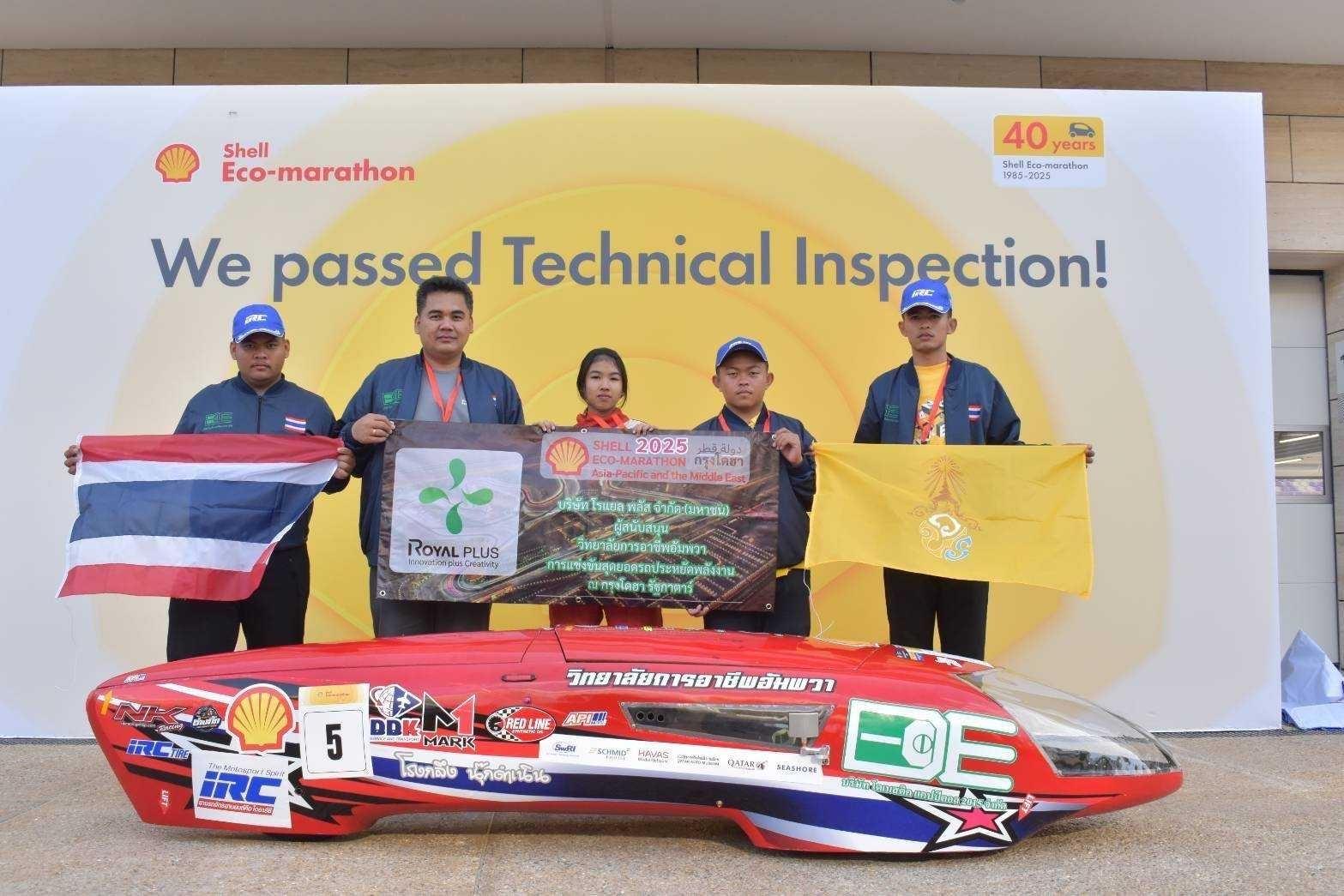
Support for the “Community-Based Learning Opportunity Enhancement” Project under the Concept “Turning Waste into Art, Creating Value for the Community” PLUS supported the “Community-Based Learning Opportunity Enhancement” project under the concept “Turning Waste into Art, Creating Value for the Community,” covering areas in the Central, Western, and Eastern regions of Thailand. The initiative is driven through collaboration among six key partners: the Equitable Education Fund (EEF), Kao Mai Pla Mun Amphawa Co., Ltd., Suan Sunandha Rajabhat University, Kasetsart University, the Local Research Coordination Center Samut Songkhram, and the Company. The project aims to create stable and sustainable livelihood opportunities, beginning with children with special needs and low-income families (earning less than Baht 6,500 per month) in the Praeknamdaeng community, Samut Songkhram Province—where the Company’s factory is located. PLUS’s support extends beyond financial contributions, focusing on establishing a long-term “livelihood structure” grounded in the Circular Economy concept. This approach emphasizes efficient resource utilization, waste reduction, and the upcycling of materials into value-added products—for example, transforming plastic strapping into chairs or watch straps, repurposing cardboard boxes into packaging, and converting glass bottles into decorative vases. The project also enhances practical skills through intensive training programs that can be directly applied, empowering participants to further develop small-scale, self-sustaining businesses. In the same year, the Company initiated Phase 1 of a community workshop to strengthen the capabilities of vulnerable households in the Praeknamdaeng community. The program provided vocational skills training, product design development, and Micro SME business development, while creating a collaborative platform for community members, academics, and private sector partners to exchange knowledge. The initiative continues to be guided by Circular Economy principles, promoting efficient use of local resources, reducing reliance on external inputs, and minimizing production waste. These efforts reflect the Company’s strong commitment to enhancing quality of life and building long-term resilience within communities surrounding its operations.
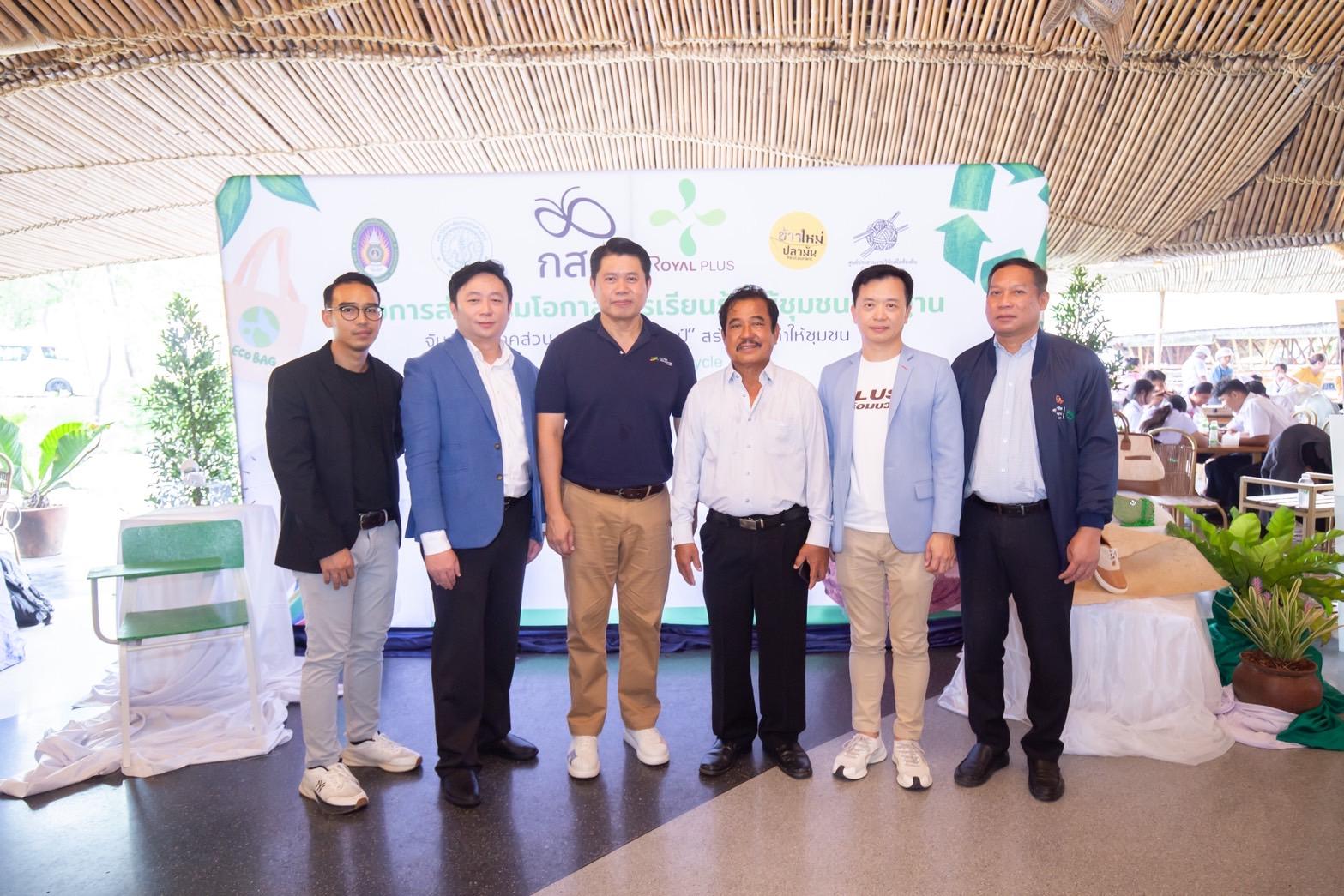
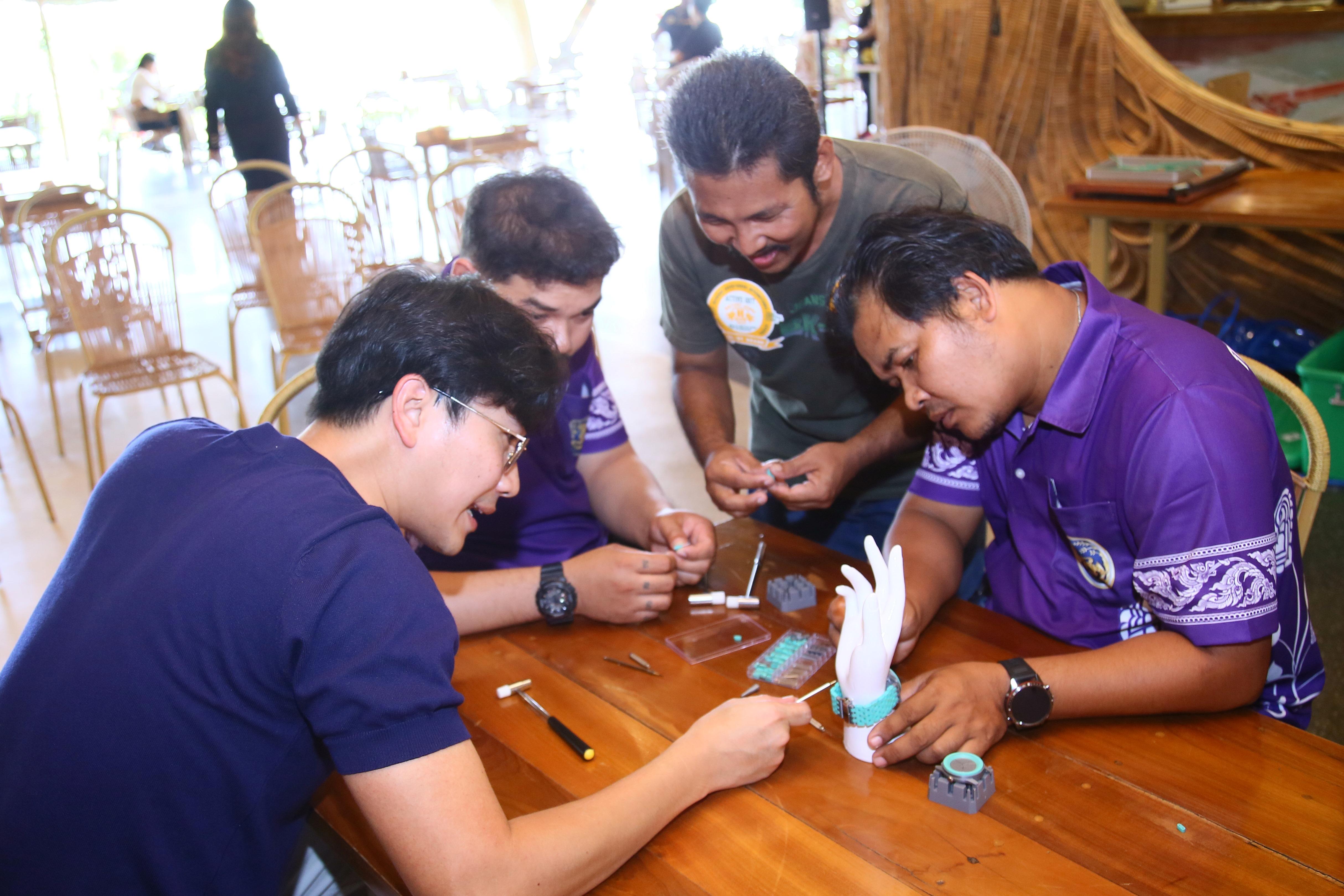
Other Social Management
Plan & Outcomes — Introduction
Good Corporate Governance
The conducting a good governance in business is a key mechanism for driving the country’s economy in terms of income generation, employment, as well as contributing to social and environmental responsibility. To narrow a focus to the private sector, employees or workers play a crucial role in promoting good corporate governance practice to boost sustainable value for its company and society. This requires an establishment of efficient structures and systems for corporate governance practice, and monitoring and evaluation process to ensure that all parties follow the same principles/procedures of good business governance.
The company recognizes the importance of creating benefits for various stakeholders to achieve balance, with a focus on understanding the different needs and expectations of each group. It also clearly defines roles, duties, and responsibilities in its governance system in a transparent, ethical manner,
in compliance with relevant laws and standards. Furthermore, the company is committed to developing governance in line with best practices, emphasizing transparency, accountability, and sustainability, while driving the organization towards stable growth through the collaboration of all sectors. This aims to create true value and balance for the economy, society, and the environment in a sustainable way.
Governance Performance Targets
The Company has established governance-related targets to enhance corporate governance standards, ensuring transparency, credibility, and alignment with international best practices. Key performance outcomes are reported as follows:
Target to achieve a full score of 100 on the AGM Checklist by 2025
The company received the quality assessment of the 2025 Annual General Meeting of Shareholders (AGM Checklist) 100 full scores as “Excellent and Exemplary” for the second consecutive year by the Thai Investor Association (TIA).
Target to achieve a 5-star rating (“Excellent”) on the CGR assessment Checklist by 2025
The company received the Corporate Governance Scoring Report for Thai Listed Companies 2025, achieving a 5-star rating or “Excellent” the third consecutive year, and ranked in the TOP QUARTILE within the same Market Capitalization group which includes companies with a market capitalization between 3,000 - 9,999 million baht by the Thai Institute of Directors (IOD) with support from the Stock Exchange of Thailand.
Target to achieve an upgraded status as a CAC Change Agent at the 3-star level under the Thai Private Sector Collective Action against Corruption (CAC)
The Company received upgraded to a CAC Change Agent at the 3-star level under the Thai Private Sector Collective Action against Corruption (CAC). This recognition reflects the Company’s strong commitment to fostering a transparent organizational culture, upholding business ethics, and extending transparency-driven practices to its business partners throughout the supply chain.
Target to achieve in the list of sustainable stocks under the SET ESG Rating.
The Company received a SET ESG Rating of “A” from the Stock Exchange of Thailand, reflecting strong performance across environmental, social, and governance (ESG) dimensions, as well as effective risk management and a systematic approach to sustainability communication.
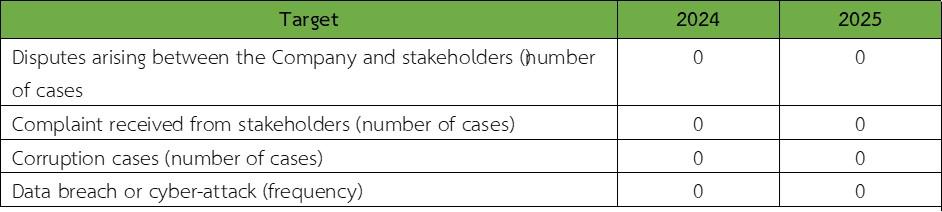
Corporate Governance Action Plan
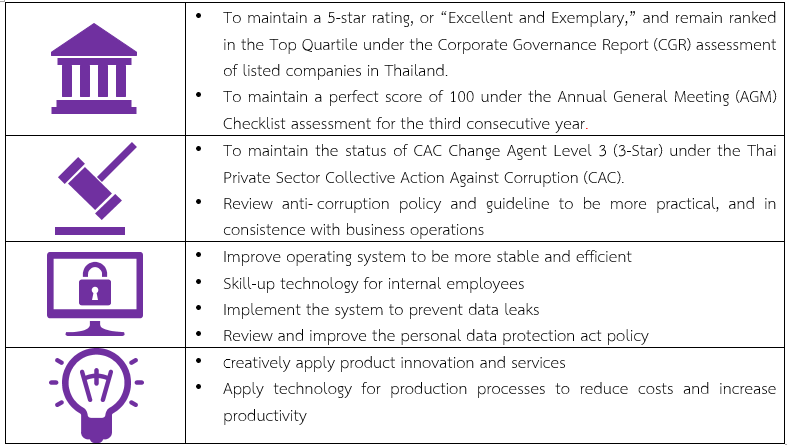
Overall Governance Performance
• Zero disputes and complaints from stakeholders.
• There have been no complaints regarding human rights issues.
• The company received a perfect score of 100 in the AGM Checklist assessment for the year 2025, earning an "Excellent and Exemplary" rating from the Thai Investor Association (TIA).
• The company also maintained a "5-star" or "Excellent" rating in the corporate governance assessment for listed companies in 2025 for the third consecutive year. Additionally, it ranked in the Top Quartile within the same market capitalization group for the second consecutive year, as organized by the Thai Institute of Directors (IOD) with support from the Stock Exchange of Thailand.
• Zero case of occurred within the organization.
• The company was upgraded to a 3-star “CAC Change Agent” certification the Thai Private Sector Collective Action Against Corruption (CAC Certified).
• The Company received SET ESG Rating of level A by The Stock Exchange of Thailand.
• The company's anti-corruption policy has been communicated to 100% of all employees within the organization.
• Increased number of business partners – new 257 business partners.
• Conducted the annual supplier assessment according to the Quality Control Department’s Plan.
• Zero cases of cyber theft and data leak.
Good Corporate Governance / Business Ethics
The Board of Directors has established a policy for corporate governance under the principles of good corporate governance, rules and regulations of the Stock Exchange of Thailand, and the Office of the Securities and Exchange Commission, to be used as a guideline for business operations.
The Company firmly believes that a good corporate governance will significantly enhance the business operations in the long run, and it is a crucial factor that leads to the ultimate success and achievement of the Company's highest goals. Besides, the Company's practices in corporate governance will help ensure that all business operations are transparent, ethical, and comply with the laws strictly.
Operational Targets
• No disputes arising in operational process
• No disputes from the stakeholders
• No disputes complaints regarding human rights issues
• Received the results of the survey project and monitor the development of corporate governance of Corporate Governance Report of Thai Listed Companies (CGR) is score level "Excellent” and to be ranked Top Quartile
• Received the results of the Annual General Meeting Checklist (AGM Checklist) is 100 full scores scores to the second consecutive year
• Received SET ESG Rating of level A assessment by The Stock Exchange of Thailand.
Action Plan
The Company has developed a corporate governance policy by utilizing the Principles of a Good Corporate Governance for Thai Listed Companies of year 2017, which covers the structure of good corporate governance, roles and responsibilities of the Board of Directors, as well as principles of transparency and management practices that can be audited. This serves as a guideline for effective management procedure to ensure that all operations of the Company are conducted with fairness, trustworthiness, and for the benefit of a sustainable growth. Further information in Royal PLUS Policy / Guidelines for a good corporate governance can be found in Section 2 of the 56-1 One Report 2024, under the topic of "Corporate Governance".
Overall Performance
• Zero complaints arising from a failure to comply with the principles of good corporate governance
• Zero legal disputes
• No disputes complaints regarding human rights issues
Anti-corruption
The Company has a process for auditing, monitoring, and assessing the risk of corruption. A prevention plan for such risk has been developed, and the Head of Internal Audit is responsible for auditing and presenting to the Audit Committee to verify the internal control system and monitor the results of internal audits.
The Company is committed to conduct business with integrity and transparency. It adheres to the principles of a good governance, altogether with the socially responsible, and building trust with stakeholders to enable business operational efficiently. The Company has demonstrated its attitude and determination towards anti-corruption in all forms by establishing policies to combat corrupt practices and providing guidelines for the Board of Directors, Executives, and employees to follow strictly.
Operational Targets
• No corruption at any of our operations
• Establishing an anti-corruption policy that align with the business operations
• Raising anti-corruption awareness among employees at all levels and all operational divisions
Action Plan
The Company has established an anti-corruption policy and procedures as a guideline for preventing and fighting all forms of corruption. The policy aims to create a ‘culture of compliance’ where everyone is aware of the drawbacks of corruption, promotes the right values, and builds confidence in all stakeholders. Failure to comply with this policy will result in disciplinary action, and legal action may also be taken. In addition, appropriate roles, responsibilities, and accountability have been defined to ensure adequate protection to prevent corporate corruption that may occur within the Company’s operations.
The Company focuses on the importance of implementing anti-corruption policy as follows:
1. To promote a sense of ethics and morality among employees to perform their duties with integrity, as well as to conduct themselves in accordance with moral and ethical standards
2. To ensure transparency and accountability in employee operations that can be monitored and audited
3. To create motivation for behavioral change by prioritizing the benefits of the Company and the collective
4. To foster a culture of collaboration in preventing corrupt and unethical behavior among employees
5. To establish mechanisms for preventing and combating corruption
The details of the Company's anti-corruption policy can be found at the www.royalplus.co.th under the heading "Corporate Governance - Corporate Governance Policy".
Besides, the Company has a process for investigating, monitoring, and assessing the corruption risks by implementing corruption safeguarding plan, performed by the Manager of Internal Audit Control Department. The corruption prevention plan includes auditing, verifying, and tracking of internal control results. In case of any instances of corruption are discovered, the Internal Control Department will report directly to the Internal Audit Committee, who will in turn report to the Company's Board of Directors. Over the past 10 years, neither the Company, its directors, nor its executives have been found guilty of any corruption-related offenses by regulatory authorities or official agencies, either in Thailand or abroad, and there have been no instances of misconduct.
In 2025, the Company disseminate knowledge information about corruption to directors’, executive and employees, covering 100% of the target participants through the Company's intranet and website channel. For directors, executive and employees acknowledge to aware of the potential risks of corruption and methods for preventing it, including the whistleblowing channels for reporting any suspicious or unethical.
In addition, the Company organized quarterly Town Hall Meetings throughout 2025 to provide an opportunity for executives to communicate with, meet, and exchange ideas directly with employees. These meetings help foster a transparent and participatory organizational culture. The Company also promoted and invited its business partners and collaborators to participate in educational activities organized by the Thai Private Sector Collective Action against Corruption (CAC) initiative.
Whistleblowing Channels
The Company has developed a comprehensive and systematic anti-corruption and misconduct prevention plan, starting from the review of external data, reporting of non-corrupt complaints, and defining the scope of complaints or reports of misconduct, parties involved, procedures for handling complaints, and protective measures for whistleblowers. Details are as follows:
The Company provides channels for stakeholders to report clues and complaints in case of inspecting misconduct in the Company’s operations, internal control deficiencies, violations of law and company regulations, corruption or involve in bribery or any dishonest actions, violations of the human rights, unfair treatment, or witnessing any wrongful activities via channels as follows:
1. In person or in writing, addressed to the person receiving the complaint:
- Company Secretary : Tel. 0-2416-9209 ext. 1108
- Legal Manager : Tel. 0-2416-9209 ext. 1110
2. E-mail: chairman.ac@royalplus.co.th
3. Website: https://www.royalplus.co.th/en/investor-relations?complaint_channel
4. Suggestion Box
5. Post: Royal Plus Public Company Limited (Head Office)
No. 84/3-7 Rama II Soi 69, Samae Dam Sub-district, Bang Khun Thian District, Bangkok 10150
6. In case the complainant chooses not to disclose their name, they must provide sufficient details of the facts or clear evidence to show that there is a reasonable cause to believe that there has been involvement in giving or receiving bribes or corruption.
The Company will keep the reported information confidential and prioritize the safety of the complainant or witnesses, except in cases where disclosure is required by law.
Anti-Corruption Investigation Procedure
1. Upon receiving a complaint, the recipient of will investigate and gather all related information / facts or will appoint a trusted person or investigation committee to determine and investigate the facts.
2. The appointed person or investigation committee may invite the alleged person to provide information or request the submission of the relevant documents for fact-checking.
3. If the alleged person has been proven committing the wrongful activities against the Company’s Anti-Corruption Policy and code of business, the Company will process as follows:
3.1. In cases where the complaint involves violations of laws, regulations, policies, or ethical standards of the Company, the recipient of the complaint will propose the matter along with their opinions and suggested actions to be taken to the authorized persons, the Audit Committee, or the Board of Directors for consideration.
3.2. In case of significant issues, such as those that affect the reputation, image, or financial status of the Company, or are in conflict against the policies or related to the senior executive’s position, the recipient of the complaint will propose the matter to the Internal Audit Committee or the Board of Directors for consideration.
3.3. In case where the complaint has caused damages to any parties, the recipient of the complaint will provide their opinions and suggested guideline for mitigation appropriately and fairness to the alleged parties, the recipient of the complaint will propose the matter to the authorized persons, the Audit Committee, or the Board of Directors for consideration.
4. If the investigation reveals that the information or evidence found is reliable and trustworthy that the accused party has committed wrongful activities, the Company will provide the alleged party with the right to know the charges, and to prove themselves by finding additional information or evidence that shows that they are not involved in the fraudulent activity that they are accused of.
5. If the alleged person has committed the fraudulent act, such fraudulent act is deemed violation against the Company’s Anti-Corruption Policy and code of business conduct, the disciplinary actions shall be determined according to the Company’s relegations. If such fraudulent activity is illegal, the wrongdoer shall be given legal punishment.
6. The Company will only inform the complainant who has disclosed their name, address, telephone number, and email through the contact channels provided, of the progress and results of the investigation regarding the complaint, misconduct, or fraudulent activity. Alternatively, the complainant can follow the investigation status through the channels provided by the Company. However, if it is necessary to protect personal information and maintain confidentiality, the Company may not be able to provide details about the investigation or disciplinary action taken.
Measures of Whistleblower Protection
1. The Company will fully protect the complainant and the informant as possible, without disclosing any information that could identify the informant, and will keep the information confidential by limiting access to the information to only those responsible for investigating the complaint. Only these individuals will have access to the relevant information.
2. The Company will disclose information to the extent necessary, considering the rights of individuals, the safety of the informant, the source of the information, and the individuals involved.
3. The complainant, information provider, data source, and related individuals have the right to receive compensation and relief for damages through appropriate and fair protection processes.
4. The recipient of the complaint information and those involved in the process of investigating will have a duty to keep confidential all details of the complaint, including all relevant evidence. It is strictly prohibited to disclose information to any unauthorized persons unless required by law.
The company has established policies and measures to prevent and control corruption, ensuring that all directors, executives, and employees strictly adhere to them. As a result, in 2025, there were no reports of whistleblowing or complaints regarding corruption, violations of the law, human rights infringements, or breaches of business ethics and conduct. The company reports the results of whistleblowing or complaints to the Audit Committee every quarter.
Anti-corruption Performance
• Performed risk assessment regarding corporate corruption internal the organization
• No incidents of corporate corruption were found within the organization
• Directors, executives, and employees have been communicated the anti-corruption policy, representing 100%.
• More than 90% of business partners have been communicated the anti-corruption policy.
• New employees received training on anti-corruption during orientation, and current employees were informed about the policy against corruption.
Cyber Security and Personal Data Privacy
The Company recognizes and values cyber threats and data privacy. Results are closely monitored and measured and there are plans to optimize it in order to reduce the risk level of such threats and their ongoing impacts.
The importance of maintaining cybersecurity cannot be overstated for companies, as their business operations rely heavily on collecting, storing, and processing large amounts of data on computers and other devices. This data may include sensitive information such as intellectual property, financial data, and personal information that can be accessed or disclosed without authorization by others, potentially having negative impacts on the Company. Therefore, companies place great importance on protecting and preserving their data, especially in an era where technology and cyberattacks are becoming increasingly complex.
The Company has established information technology security control processes as an operational framework emphasizing the confidentiality, integrity, and availability of information. The Information Technology Security Policy serves as a set of requirements and guidelines for the development of the information security management system. In addition, the Company complies with the Personal Data Protection Act B.E. 2562 (2019) (Personal Data Protection Act: PDPA) by implementing a Personal Data Protection Policy applicable to personal data that is of importance to the Company both at present and in the future. Furthermore, the Company participated in the Cybersecurity Maturity Assessment Program organized by The Stock Exchange of Thailand in collaboration with AC Infotech Co., Ltd. The objective of the program was to enable the Company to assess its overall cybersecurity maturity level and support effective operational planning. The assessment results indicated that the Company has implemented cybersecurity control practices in most areas, which have been systematically developed into clear policies and procedures. The Company also has comprehensive basic infrastructure, as well as sufficient personnel and resources to manage cybersecurity risks, and is capable of establishing appropriate control measures in alignment with the defined policies and processes.
Operational Targets
• Improving the operational system to increase stability and implementing multi-factor authentication (MFA) for general users to enhance identity verification
• Preventing data leakage of the beneficiaries
Action Plan
Cyber Security
The Company prioritizes the standardization and efficiency of managing, controlling, and securing information technology operations. Therefore, the Company has developed guidelines for controlling operations and maintaining information technology security, and analyzing risks related to information technology, to ensure that the Company can effectively prevent and manage information technology risks effectively. Moreover, the Company follows the operational control and information technology security standards as a procedure for conducting business, in term of building a sustainable organization. The policy covers the following topics:
1. Information System Security Policy
2. Information Technology Security Policy
3. Information Technology Risk Management Policy
4. Data Classification & Information System Policy
5. Firewall Security Policy
6. Intrusion Prevention System Policy
7. Access Control Policy
8. Backup Data Policy
9. Standard Software Usage and Software Copyright Policy
10. Corporate Usage E-mail Policy
11. Internet Usage and Security Policy
12. Internal Wireless Network Usage Policy
13. Unusual Incident Reporting Policy
Personal Data Privacy
The Company has established a Personal Data Protection Policy in compliance with the Personal Data Protection Act 2019 and other related laws. This policy specifies the details of collecting, using, and disclosing personal data to ensure that relevant departments and employees of the Company operate in strict compliance. The policy aims to minimize the risk of personal data breaches, enhance the security of personal data, and build trust to the public.
In addition, the Company has appointed responsible persons to oversee and provide guidance on the data collection, data usage, and personal data disclosure. The person in charge will ensure that relevant units and employees of the Company comply with the Personal Data Protection Policy, with the aim of reducing the risk of personal data breaches, enhancing the security of personal data, and building trust in the Company. The Company also coordinates and cooperates with the Office of the Personal Data Protection Commission and implements appropriate technical and managerial measures to secure personal data throughout encryption for data transmitted over the Internet network, both in document and electronic formats. Further details of the Personal Data Protection Policy can be found on the Company's website at www.royalplus.co.th.
Cyber Security Awareness & Personal Data Privacy
The Company has developed communication channels, including internal intranet system and Line@ Application for sending instant message, news, or information to raise awareness and understanding regarding cybersecurity and data privacy. Additionally, the Company conducts training sessions to provide knowledge on data security to new employees.

Cyber Security and Personal Data Protection Performance
• Number of cyber-attacks incidents: 0
• Number of customer data breaches incidents: 0
• Duration to recover SAP System in case of emergency incidents: 5 hours
Preparation for Recovery of Critical Organizational Systems
The Information Technology Department has performed a recovery test for critical systems of the organization to ensure business operations continuity in the event of an emergency. The Company has also conducted simulations of computer security threats and has been able to recover the system in about 5 hours, restoring it to its normal state.
Sustainability Management in the Economic Dimension
In today’s highly competitive and fast-evolving beverage industry, driven by rapidly changing consumer behavior, differentiation through innovation and technology has become a critical foundation for sustainable growth. Modern consumers place increasing importance on product quality, health-conscious ingredients, environmentally responsible production processes, and lifestyle-oriented experiences. As a result, operators must continuously adapt by developing new product formats, enhancing production efficiency, and implementing innovations that minimize environmental impact. Strengthening competitiveness in the beverage business therefore requires the integration of advanced technologies with creativity to anticipate trends, deliver relevant products, and create distinctive consumer experiences. The key objectives are as follows:
Research and Development (R&D): The Company prioritizes the development of innovative products that meet the evolving needs of modern consumers, including health-oriented beverages, plant-based products, reduced-sugar formulations, and preservative-free offerings. These initiatives aim to provide healthier and more environmentally friendly alternatives.
Operational Excellence and Production Efficiency: The Company leverages advanced technologies such as automation and data analytics to enhance manufacturing efficiency, reduce waste, optimize resource utilization, and continuously improve product quality.
Promotion of the Circular Economy: The Company emphasizes the development and adoption of sustainable packaging innovations, including the use of recycled materials, waste-reduction design, and the industrial reuse of by-products from production processes. These efforts help minimize environmental impact and promote efficient resource utilization.
Learning and Innovation Culture: The Company fosters an organizational culture that encourages continuous learning and creativity. Employees are empowered to contribute ideas and drive ongoing improvements that create value across products, operational processes, and customer experiences.
Recognizing the importance of this, the company places a strong emphasis on driving innovation and technology. This includes investing in research and development, applying highly efficient technologies in the production process, and creating products that meet international quality standards to satisfy consumer demands. Additionally, the company is focused on building a unique identity for its products and promoting a competitive advantage in the food and beverage industry in a sustainable manner.
Operational Goals
• Launch at least 20 new SKUs of products.
• Allocate an investment budget to support research and development of innovations, accounting for 0.2% of total revenue.
Operational Plan
Research and Development to Create Distinctive Products
The company places great importance on product research and development, focusing on creating distinctive, diverse products that meet the needs of target consumers. The meticulous approach in research and development, along with attention to detail in gathering in-depth data, enables the company to understand the true needs of its target audience. Additionally, the company emphasizes analyzing global consumer behavior and conducting thorough market research, which is crucial for creating value and new experiences for consumers. In 2024, the company developed innovative and outstanding products, including "MABU COCO," a fruit juice mixed with coconut jelly, and "COCO ROYAL," 100% coconut water in high-quality PET plastic bottles. Both products received excellent feedback from consumers and were successfully distributed to 30 countries worldwide within less than a year. This achievement underscores the success of the company's product development, aligning with market demands and its ability to compete on an international stage.
Modern Production Process
The company is one of the pioneers in the beverage industry, being among the first to adopt the innovative beverage filling process with pulp inclusion. This process not only enhances the flavor and texture of the product but also meets the demand from consumers seeking unique and novel drinking experiences. With advanced production technology and specialized expertise, the company is able to develop beverages containing fruit pulp or unique ingredients, such as coconut jelly or fresh fruit pieces, while maintaining quality, freshness, and the authentic taste of the raw materials. The production process complies with international standards in terms of safety and sustainability. This innovation is a significant step in strengthening the brand’s identity and making the company’s products memorable both domestically and internationally. It reinforces the company’s leadership in the beverage industry, focused on continuous development to ensure the highest consumer satisfaction.
In 2023, the company invested in innovative cold aseptic filling technology, which is the most advanced production technology in the beverage industry, meeting international standards. With a production capacity of up to 48,000 bottles per hour, this technology enhances the company’s ability to meet the increasing demand both domestically and internationally. It also helps reduce production costs, increase efficiency, and promote sustainability through the development and investment in modern technologies. In 2024, the company launched new products in the global market, including "MABU COCO" (fruit juice mixed with coconut jelly) and "COCO ROYAL" (100% coconut water), both produced using advanced PET production processes. These products have received excellent feedback from consumers worldwide.
In Present, the company operates a total of 7 production lines, including 5 glass bottles production lines and 2 PET plastic bottles production lines, with a total production capacity of up to 450 million bottles per year. The focus on innovation, technology, and sustainability allows the company to maintain its leadership in the food and beverage industry and be poised for sustainable growth in the future.
Plus It Happen – Your Idea, Our Future
In 2025, the Company launched the “Plus It Happen – Your Idea, Our Future” initiative as a platform to foster employee creativity and innovation. The program encourages employees at all levels to propose new ideas that can be further developed into future products, in line with the Company’s Innovation Plus Creativity concept, which positions employees as key drivers of organizational growth. In its inaugural year, a total of 12 cross-functional teams participated in the program. Beyond serving as a forum for creative idea exchange, the initiative also reinforces motivation through a clear incentive mechanism. Should any proposal be successfully commercialized and launched to market, the originating employees will receive a share of the product’s sales revenue. This reflects the Company’s commitment to transforming “employees’ ideas” into “the Company’s future” in a tangible and meaningful way.
Kaizen Award Initiative
The Company is committed to enhancing operational efficiency and excellence through the Kaizen Award initiative, a key mechanism for driving process innovation. The program encourages employees to continuously develop and implement practical improvements within their respective work areas. In 2025, a total of 13 cross-functional teams participated, reflecting a strong culture of organization-wide engagement. The initiative focuses on reducing waste, increasing efficiency, lowering costs, and improving quality and safety, while fostering a sense of ownership and creativity among employees. It also promotes the adoption of new innovations and technologies to streamline workflows, enhance production agility, and optimize resource utilization. The Kaizen Award serves as a vital driving force in cultivating a culture of continuous improvement and strengthening PLUS’s competitive capabilities in a sustainable and resilient manner.
Overall Performance Results
Number of New Products Sold in 2025: 24 SKUs
Expenditure on Product Research and Development in 2025 accounted for 0.82% of total revenue.
Tax Compliance
The Company is committed to conducting its business with transparency and integrity, while recognizing its duties and responsibilities regarding tax compliance. The Company therefore strives to establish clear tax planning principles, operational guidelines, and relevant tax policies. In addition, procedures for tax risk management have been implemented, including measures to manage tax-related risks and the proper and complete utilization of tax incentives to achieve maximum efficiency under applicable legal requirements. The Company also complies with regulations regarding the disclosure of financial and tax information to government authorities and all relevant stakeholders. These practices are aligned with the principles of good corporate governance, the Company’s code of business conduct, and its sustainability framework. The objective is to ensure that the Company’s economic growth progresses alongside development and full social responsibility. The Company believes that responsible tax practices contribute to the overall economic and social development of the country in the long term. Therefore, in order to achieve these objectives, the Company has established the following tax policy:
Tax Planning and Tax Practice Guidelines
1) Comply with applicable tax laws and regulations in each country where the Company operates, ensuring accuracy and completeness in tax management.
2) Conduct tax planning and utilize tax incentives in accordance with applicable laws and regulations, including the adoption of structures that do not result in tax avoidance.
3) Submit tax payments and file tax refund claims within the timeframes prescribed by law, in order to maximize benefits for the Company, government authorities, and the country.
4) Regularly study and assess tax impacts in cases where new tax laws or policies are enacted, or when the Company undertakes new transactions, with due consideration given to the Company’s best interests.
5) Establish responsible units with appropriate tax knowledge and understanding to ensure accurate compliance and to minimize the risk of tax disputes, including the designation of responsible persons to provide factual operational information of the Company when requested or audited by government authorities.
6) Encourage relevant personnel to continuously develop their tax knowledge to ensure accurate and complete performance of their duties.
Tax Reporting
The Company manages its corporate income tax in compliance with the applicable tax laws of the country in an accurate, transparent, and fair manner. The Company regularly monitors and evaluates its operations in accordance with relevant tax laws, regulations, and procedures to ensure that all responsible parties are informed and comply appropriately. In 2025, the Company did not engage in any activities that violated tax laws or regulations; therefore, no tax-related penalties were incurred. The Company reported a net loss before tax of 80,034,572 baht and, as a result, did not record any corporate income tax expense for the year. However, the Company reported an Effective Tax Rate of 2.2%, which is lower than the statutory corporate income tax rate in Thailand of 20%. This difference arose from the variations between accounting and tax treatments in the calculation of taxable income.
Supply Chain Management
The Company treats all suppliers with equality, fairness, and mutual respect, prioritizing shared benefits. Our procurement guidelines ensure that suppliers within the supply chain operate in compliance with the law, occupational health and safety standards, and environmental regulations. We emphasize enhancing supplier potential alongside sustainable growth. To ensure efficient procurement and minimize environmental impact, the Company integrates ISO 9001:2015 Quality Management and ISO 14001 Environmental Management systems into our selection process. This includes Green Procurement practices, systematic supplier evaluation, work delivery monitoring, and approved vendor listing (AVL) procedures. Further details on our Supplier Code of Conduct are available on the Company’s website at https://investor.royalplus.co.th/storage/document/cg/supplier-code-of-practice-th.pdf
Operational Targets
• 100% of new vendors or service providers qualified the supply-chain selection criteria
• 100% On-Site Audit for new partners
• Increasing number of suppliers for the main raw materials such as coconut water and coconut meat to reduce a shortage of main raw materials during off-season
• Providing annual training on quality and safety to vendors
Action Plan
The Company has established a code of conduct for its partners with the objective of ensuring fairness and honesty, maintaining mutual benefits with integrity and ethics. Moreover, the Company and business partners will not engage in any unethical practices, such as receiving or providing any benefits that are illegitimate. The Company will also strictly adhere to the terms and conditions of the agreements and work together to find solutions to any issues that may arise. In case of any breach of the agreement, the Company will report the business partner in advance and work towards finding a resolution.
Supply-chain Selection Criteria
Currently, the Company’s procurement process categorizes suppliers into 2 main types: 1) Production Group, including Main Raw Material and Main Packaging, and 2) Service & Maintenance Group. The Company will evaluate the new prospect suppliers (only for those in the Production Group) via the Evaluation Assessment Form submitted by the suppliers or service providers. The assessment will be performed only for agricultural raw materials. For suppliers who do not meet the criteria, they will need to make corrections as specified by the Company. Once they have passed the evaluation and verification process, they can then register as a supplier with the Company.
New Supply-chain Selection
The company gives importance on the process of selecting new partners, adhering carefully and systematically to established criteria. All new partners must undergo evaluation based on criteria related to their potential and qualifications concerning ESG (Environment, Social, Governance) aspects. The evaluation considers various factors, such as
• Environmental management, such as receiving Green Industry certification or ISO 14001
• Organizing training to raise awareness of energy conservation
• Workplace and building infrastructure, including cleanliness and readiness of public utilities
• Expertise and skill development of personnel
• Efficient production process control
• Safe and effective transportation management
The company will evaluate and select partners based on the criteria mentioned above. Partners who pass the evaluation must score at least a B grade or achieve a total score of over 70%. This is to ensure that the company’s partners possess the capabilities and quality that align with the company’s standards and operational goals.
Existing partners (partners on the Approved Vendor List, or AVL)
The company has established a systematic and consistent process for evaluating current partners, considering key factors such as product quality and safety, pricing appropriateness, operational efficiency, and ESG (Environment, Social, Governance) assessments, which are conducted annually. This is to maintain standards and strengthen effective collaboration between the company and its partners. All partners must undergo an annual quality assessment, including an on-site audit for key partners at least once a year, conducted according to the company’s random inspection plan. The evaluation criteria include:
• Environmental management: For example, receiving Green Industry certification or ISO 14001
• Product quality: Products must meet the specified standards, be safe, and comply with legal requirements
• Delivery: Products must be delivered on time and in the quantities specified in the purchase order
• Communication: Coordination must be convenient, fast, and efficient
• Pricing and payment terms: Must be reasonable and in accordance with the agreed terms These criteria enable the company to maintain partner standards, promote sustainability, and build trust for ongoing and sustainable business collaboration.
Criteria for Evaluating Key Partner
The company has established guidelines for effectively managing and evaluating both existing and new partners by categorizing them into different groups to determine appropriate operational approaches, as follows:
• Critical Tier 1 Partners are those with high order volumes, supplying essential raw materials or specific materials critical to the company's product strategy, which cannot be easily replaced. The loss of such partners would pose a high to very high level of risk. Examples include partners who supply key raw materials and packaging. In 2025, the Company had 1,339 Critical Suppliers, representing 56.3% of the total number of suppliers.
• Critical Non-Tier 1 Partners are those with lower order volumes, supplying goods that are easily replaceable. In 2025, the Company had 1,038 Critical Non-Tier 1 Suppliers, accounting for 43.7% of the total number of suppliers.
• Partners Subject to On-Site Audits: The company places special emphasis on auditing Critical Tier 1 partners, particularly in terms of production processes and raw material sourcing, to assess their ability to provide products or services in compliance with the company’s requirements and standards. These guidelines are part of the company's sustainable partner relationship management, focusing on reducing risks in the supply chain and supporting business operations to be efficient and aligned with the company's strategy.
Supply-chain Management Performance
Total number of suppliers: 2,377
Number of key suppliers related to the core business operation: 1,339
Number of new suppliers: 257
Supplier evaluation and assessment
The Company conducts an annual audit for suppliers according to the Audit Supplier Plan of the Quality Control Department and the Supply Chain Management Department. The objective is to inspect and improve the standard operating procedures of suppliers to comply with the Company's standards. In 2025, there were 1,339 main suppliers, representing 56.3%of the main suppliers evaluated. Over 90% of these suppliers were able to improve and adjust their operations to comply with the standards set by the company. Additionally, the Company provides communication channels to suppliers through telephone, email, and online platforms such as Line and WeChat. It also performs onsite visits to inspect the suppliers' operations.
Green Procurement
The Company has established its policy of “Green Procurement” for implementation within the organization, along with its supply chain. This policy is the mechanism created to reduce resource usage and minimize release of waste and pollution, including the abolition and reduction of hazardous chemicals use, and the goal to reduce greenhouse gas emissions. The Company also encourages its internal operational units to gain knowledge and understanding of the criteria and regulations related to environment-friendly procurement. The Company proactively cooperates with its trade alliances in its initiatives relating to environmental protection. The Company determines and requests its sellers to comply to its practices, starting by laying out environmental qualifications as the regulations for submission of tenders or as its conditions and demands. This includes the plan for the establishment of Green Purchasing Guidelines in order for sellers to conduct socially responsible businesses that do not affect the environment and the community. Guidelines for new trade partners are as follows:
1. Find resources from the trade companies which give serious concern to environment preservation by selecting partners who have been certified with ISO 14001, Green Industry, Green Label in its crucial goods and services. As for recycling process, there are considerations of the effects throughout the products’ life cycle, including preparation of an environmental management system along with continuous compliance with any laws and regulations relating to environmental issues.
2. Has an environmental management system in place, with effective natural resources and energy monitoring for any products sent to the Company.
3. Initiate environmental activities of the producers and procurers of goods and services for the Company.
4. Reduce carbon dioxide and component parts of packaging, with consideration to their usage on materials and parts of packaged products shipped including in delivery to the Company
In addition, the company plans to increase the number of environmentally-friendly partners by sourcing partners certified with international environmental standards such as ISO 14001 and Carbon Footprint certification. The company also supports the use of eco-friendly packaging, such as Preform PET (RPT) caps, among others.
The payment terms for partners (Credit Term)
The company has established clear policies and practices for managing the payment system to partners, setting appropriate and fair payment terms. According to the company's policy, the average payment term to partners should not exceed 45 days, in order to support the partners' financial liquidity and enable continuous business operations. The determination of the payment term takes into account various key factors, including the type and quantity of goods, product quality, and the management of the partner's liquidity. The company adheres to practices that align with good corporate governance principles, implementing thorough checks to ensure transparency and fairness between the company and its partners. In 2025, the average payment term to partners was 45 days, which is consistent with the policy that the company has strictly established
Law Violation Incidents
Law Violation Incidents
| Metric | Current Year | Previous Year | Two Years Ago |
|---|---|---|---|
| The total number of cases or incidents of significant violations of laws or regulations regarding social and human rights (Cases) | 0 | 0 | 0 |
| The total number of cases or incidents that cause significant labor disputes (Cases) | 0 | 0 | 0 |
| The total number of cases or complaints related to consumer rights violations (Cases) | 0 | 0 | 0 |
| The total number of cases or complaints related to partner rights violations (Cases) | 0 | 0 | 0 |
| The total number of cases or incidents that cause disputes with the community/society (Cases) | 0 | 0 | 0 |
| The total number of cases or incidents related to cyber security or customer data breaches (Cases) | 0 | 0 | 0 |
| The total number of cases or incidents related to safety and occupational health at work (Cases) | 0 | 0 | 0 |